Pulse 57: Strategy Execution Risk - Spot Issues Earlier
Strategy execution risk rarely appears for the first time in the board deck. It usually shows up earlier as stale updates, unclear owners, missing metric context, or blockers that no one has escalated. The operating question is not only, "Is the plan on track?" It is, "What changed, what is at risk, who owns it, and what support is needed?"
Elate helps leadership teams connect priorities, owners, updates, metrics, risks, and executive-ready reporting so risk shows up inside the operating rhythm instead of at the end of the quarter.
As we welcome 2026, for many organizations it’s not only the start of a new calendar year, but also a new fiscal year.
With that comes a new strategic plan. Or the next phase of your long-term direction. And with it, hope and excitement as teams embark on a journey to turn vision into reality.
As I’ve written in the past, the beginning of the year is the perfect time to harness the electricity and ensure everyone is playing from the same sheet of music. Company kickoffs, all-hands meetings, and leadership offsites are designed to do exactly that: drive clarity, alignment, and focus, so teams can confidently say ‘yes’ to the right priorities and ‘not now’ to everything else.
However, as a Leadership team, our responsibility doesn’t end once the strategy is set and shared.
Execution requires more than alignment and optimism. It requires a clear understanding of where risk lives, and the systems to surface and address it before it derails progress.
Whether you’re entering the year with a well-defined plan or playing a bit of catch up, here are three ways leaders can proactively identify and manage execution risk to start 2026 off on the right foot.
3 Ways to Identify and Manage Risk in Early 2026
Establish the Right Structure to Support Your Themes
One of the best ways to align teams around a new strategy is through clearly defined Themes.
Sometimes called Pillars or Strategic Imperatives, Themes serve as the annual rallying cries that help employees prioritize Objectives that matter most.
But one of the most common breakdowns we see is that organizations set Themes, yet the underlying Objectives across teams don’t actually support them.
The issue isn’t perfection or balance, it’s infrastructure. When Objectives don’t clearly ladder up to Themes, alignment erodes quickly.
A pattern we’re seeing more frequently today is the rise of new strategic themes without clear ownership or supporting Objectives underneath. Leaders may know a priority matters, but the connection between aspiration and execution is often missing at the team level.
That disconnect is an early risk signal. And it’s one that can usually be spotted quickly by looking at how Objectives map - or fail to map - back to your Themes.
Pair Sentiment with Measurable Outcomes
Once Themes and Objectives are in place, the execution framework you use to track progress becomes one of your most important sources of insight.
Whether your org uses EOS, OKRs, 4DX, or a hybrid approach, the framework itself isn’t the differentiator. Commitment to using it well is the table stakes.
Where strong Strategy teams pull ahead is how they use their framework to drive decisions, not just updates.
We encourage leaders to think about Objective updates through two lenses:
- Employee sentiment
- Measurable outcomes
A single status indicator-green, yellow, or red-rarely provides enough context to guide meaningful action. For the most critical areas of the business, leaders need to understand not just where something stands, but why.
When sentiment is captured alongside outcomes, we get a full picture. Leaders gain insight into what’s happening beneath the surface, while still anchoring decisions in measurable progress.
With the help of AI, it’s easier now to support higher quality updates by providing context, surfacing related dependencies, and prompting more thoughtful reflection without increasing the burden on employees.
The result is better signal, earlier visibility into risk, and a stronger foundation for proactive leadership.
Engage Risk Early
Once leaders have a clear view of execution, the real value comes from how that information shapes decisions and conversations.
Too often, leadership meetings become a roll call of status updates; brief confirmations that work is “on track,” without enough context to understand what might be at risk.
Instead, we recommend structuring leadership conversations around areas of uncertainty or exposure.
One effective approach is sharing a leadership pre-read that highlights not only top-level Objectives, but also the supporting work beneath them that could introduce risk. When teams have context before the meeting, discussions can shift from updates to intervention.
For example, if a product release delays, downstream teams across other areas like Marketing, Sales, and Customer Success, need to know early. Without shared visibility, organizations are left reacting instead of planning.
A strong operating rhythm can surface these dependencies and patterns sooner. But it only creates value when those signals are in the hands of leaders who are empowered to act.
Understanding Your Plan in Motion
As leaders, part of our role is developing an honest understanding of how our organization operates in motion.
If we think of leadership as air-traffic control, guiding the organization toward successful outcomes, then we can’t afford to ignore what’s in flight, where paths intersect, or where risk is building.
That requires more than a static plan. It requires a regular view, clear visibility, and the willingness to engage with risk before it becomes reality.
So as you begin executing in 2026, a simple question to consider is:
How effectively does your leadership team identify and navigate risk? And how early?
The answer often reveals more about the execution capability than the strategy itself.
-Brooks
Upcoming Webinar: Beyond the Kickoff: The First 90 Days of Strategy Execution
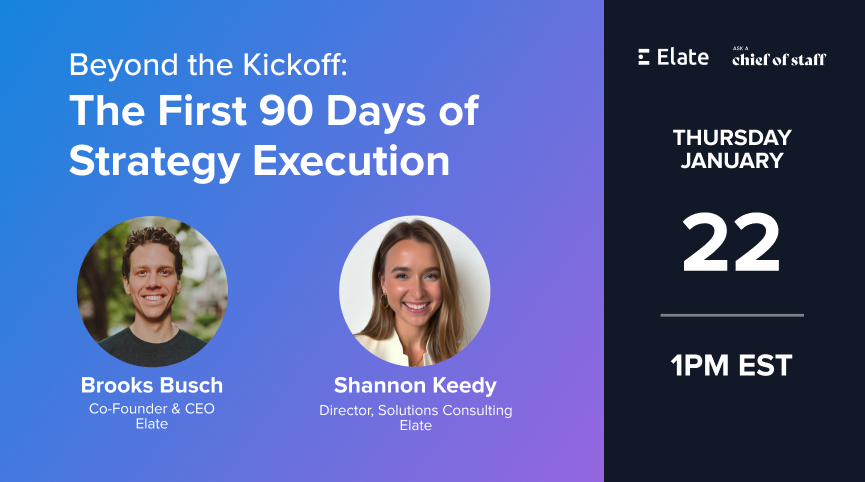
We’ll be digging deeper into this topic in an upcoming live session, focused on the first 90 days of execution. We’ll unpack why so many strategic plans stall by March, and how Strategy leaders can spot early warning signs, create real visibility, and keep strategy moving forward during this critical period.
📅 Thursday, January 22, 2026
⏰ 1:00 PM ET
Video: How Strategy Leaders Turn Plans Into Execution
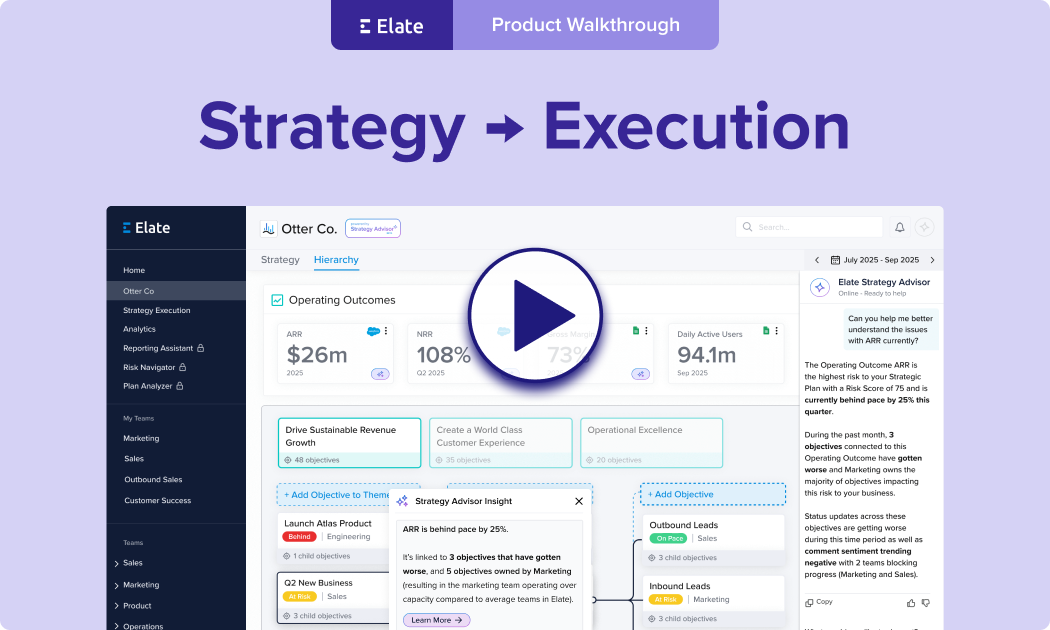
We put together a quick product walkthrough that shows how Strategy and Operations teams use Elate to keep objectives connected, surface risk sooner, and keep execution moving throughout the year. If this edition resonated, the video offers a helpful look at how those ideas come to life in practice.