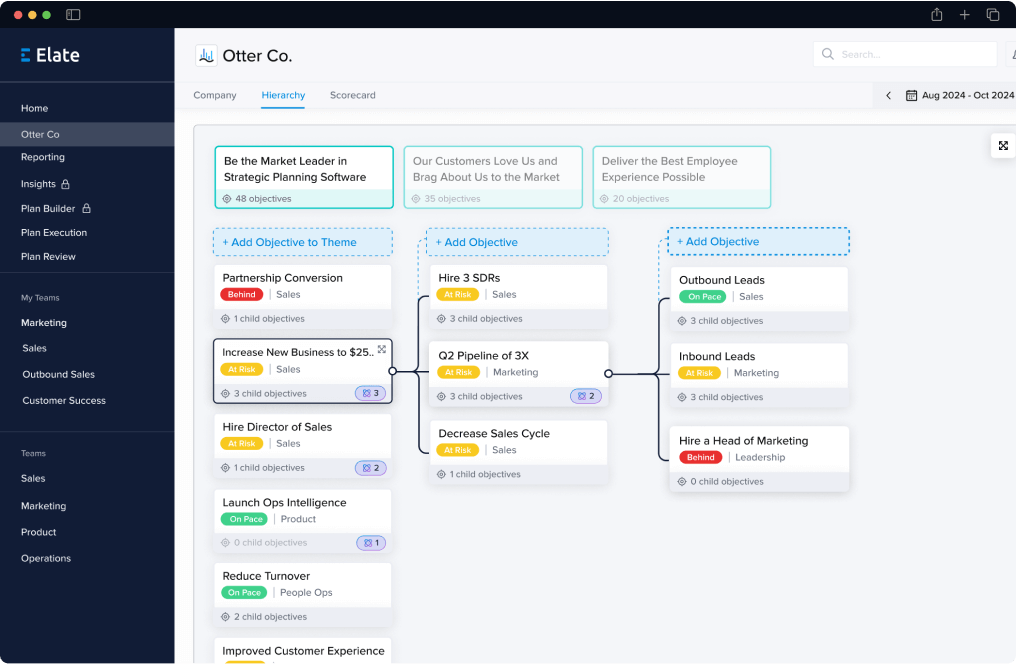











A useful community college strategic planning dashboard should help leaders understand progress before the next cabinet, president, trustee, or institutional effectiveness review. It should not try to display every institutional metric. It should show the few measures leadership uses to make decisions, along with the owner, status, narrative context, risks, and next action behind each priority.
Elate helps community colleges turn a static dashboard into a reviewable operating rhythm. Instead of keeping KPIs in one place, owner updates in another, and board progress in a slide deck, Elate connects priorities, selected measures, risks, updates, and leadership-ready reporting so progress is easier to explain and act on.
What a community college dashboard should make clear
The best dashboard is not the busiest dashboard. It gives cabinet and institutional effectiveness teams a clear read on what is moving, what is behind, and what needs leadership attention.
- Strategic priorities and annual focus areas.
- Student success, enrollment, workforce, community impact, and financial health measures.
- Clear status definitions so green, yellow, and red mean the same thing across departments.
- Responsible owner and supporting team for each priority or initiative.
- Short narrative explaining what changed since the last review.
- Risks, blockers, or decisions needed from leadership.
- Evidence notes or links for institutional effectiveness and board reporting.
- Last update date and next review date.
Where community college dashboards usually break down
Many community colleges already have dashboards in Power BI, spreadsheets, or institutional research tools. The problem is rarely that data does not exist. The problem is that the data is not always connected to the strategic plan, the accountable owner, the latest narrative update, or the next leadership decision.
When those pieces are disconnected, cabinet reviews become status collection exercises. Leaders spend time asking for context instead of deciding where to focus attention.
How to use this before the next review
- Choose 6 to 10 measures leadership actually reviews, not every metric available.
- Attach each measure to a strategic priority and responsible owner.
- Add a short update explaining what changed and why it matters.
- Separate cabinet operating updates from trustee-ready summaries.
- Review stale or missing updates before the next reporting packet is assembled.
- Use risks and blockers to shape the agenda, not just the appendix.
How Elate supports this workflow
Elate works best when a community college has an active strategic plan, a recurring review cadence, and multiple departments contributing updates. Teams use Elate to connect strategic priorities, owners, selected KPIs, progress updates, risks, and reporting outputs in one operating layer.
Elate is not a student information system, BI warehouse, accreditation platform, or task-level project management tool. Those systems can remain sources of data and evidence. Elate helps leadership teams turn that evidence into a repeatable strategy execution rhythm.
Related resources
- Elate for higher education
- Higher education strategic plan dashboard
- Institutional effectiveness strategic plan progress software
- Higher education strategy execution playbook
- See Elate in action
FAQ
What should a community college strategic planning dashboard include?
A community college strategic planning dashboard should include strategic priorities, a small set of leadership-level KPIs, owner updates, risks, narrative context, and the next actions needed before cabinet or board review.
Should a dashboard replace institutional research or BI tools?
No. BI and IR tools should remain important sources of data. The dashboard should connect selected measures to ownership, cadence, narrative, and reporting.
How does Elate help community colleges use dashboards better?
Elate helps connect the dashboard to the operating rhythm: owners update progress, leadership reviews status, risks are surfaced earlier, and reports are prepared from the same strategy execution context.