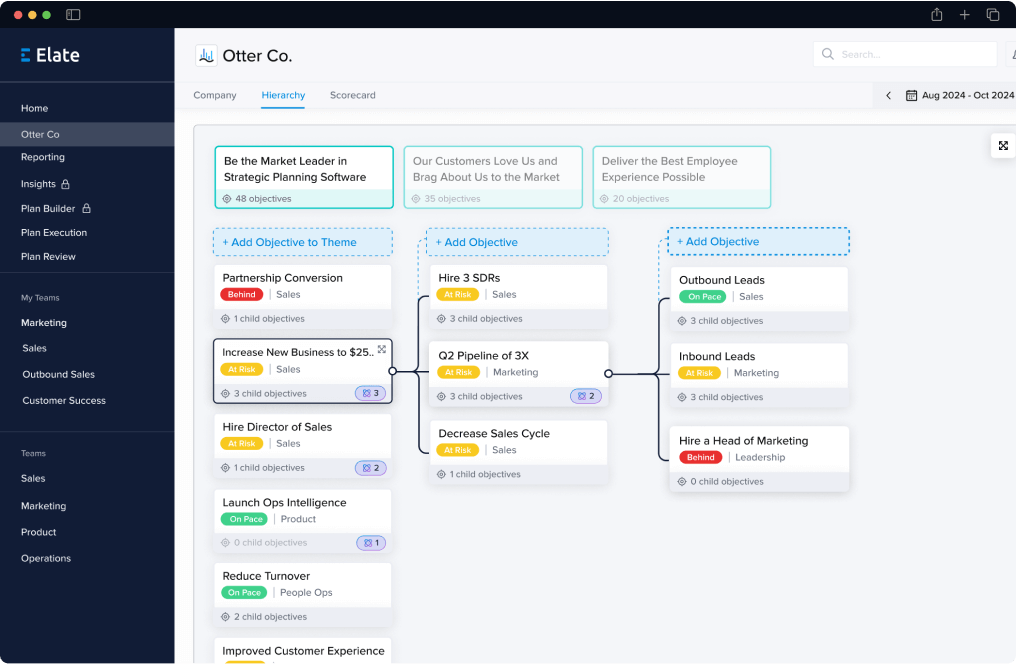











A higher education strategic planning cadence is the repeatable rhythm of updates, reviews, decisions, and reporting that keeps the institutional plan active after approval. It connects annual planning, cabinet review, trustee reporting, institutional effectiveness evidence, and owner follow-up.
Elate helps colleges and universities turn strategic planning cadence into an operating rhythm. Priorities, owners, KPIs, risks, updates, and reports stay connected so leaders can review progress without rebuilding the strategy story from scratch every cycle.
Higher education operating reality
Institutions often have multiple planning rhythms at once: weekly operational updates, monthly cabinet reviews, quarterly trustee packets, annual progress reporting, accreditation-adjacent evidence, and multi-year strategic plans. The cadence only works when each rhythm feeds the next.
A practical cadence structure
- Monthly owner updates for active initiatives and priorities.
- Quarterly cabinet reviews focused on changes, risks, and decisions.
- Trustee or board summaries that show progress without too much operational detail.
- Annual progress review before the next fiscal or academic year.
- Summer roll-forward to refresh owners, KPIs, and priority status.
- Fall launch cadence to restart updates before momentum fades.
What to review at each cadence
- Current status of each strategic priority.
- Owner update and what changed since last review.
- Selected KPI or evidence point with narrative context.
- Risks, blockers, or decisions needed.
- Items that should close, carry forward, pause, or reset.
- Follow-ups from the previous review.
What most institutions get wrong
The mistake is treating cadence as reminders alone. Reminders help, but the review has to be used by leadership. If cabinet or trustees do not consume the output, owners eventually stop updating.
Example annual rhythm
- Late spring: gather progress evidence and owner updates.
- Summer: close out the prior cycle, refresh KPIs, and prepare cabinet or trustee summaries.
- Early fall: relaunch owner updates and confirm review cadence.
- Midyear: review risks, stale updates, and progress against annual priorities.
- Year-end: decide what closes, carries forward, pauses, or resets.
This rhythm makes the strategic plan easier to manage across academic-year and fiscal-year realities. It also gives leaders a clearer path from annual reporting to next-year execution.
Best fit and not best fit
Best fit: Elate is a strong fit for higher education teams that need a repeatable cadence for cabinet updates, trustee reporting, institutional effectiveness evidence, and annual roll-forward.
Not the best fit: Elate is not a replacement for SIS, BI, accreditation, or project systems. It works best as the strategy execution rhythm that connects those inputs to ownership and reporting.
Related resources
- Higher education strategy execution
- Higher education operating guide
- Higher ed strategy execution playbook
- Higher education strategic plan reporting software
- Strategic plan roll-forward checklist for higher education
- Higher education summer strategic planning checklist
- Higher education fall strategy execution launch checklist
- Product demo
FAQ
What is a higher education strategic planning cadence?
It is the recurring rhythm of updates, reviews, reports, and decisions that keeps the strategic plan active across cabinet, trustee, institutional effectiveness, and departmental workflows.
How often should higher education teams review strategic plan progress?
Many teams use monthly or quarterly leadership reviews, with annual progress reporting and summer roll-forward before the next academic or fiscal year.
How does Elate help keep the cadence alive?
Elate connects priorities, owners, updates, KPIs, risks, and reports so progress can be reviewed on a predictable rhythm.