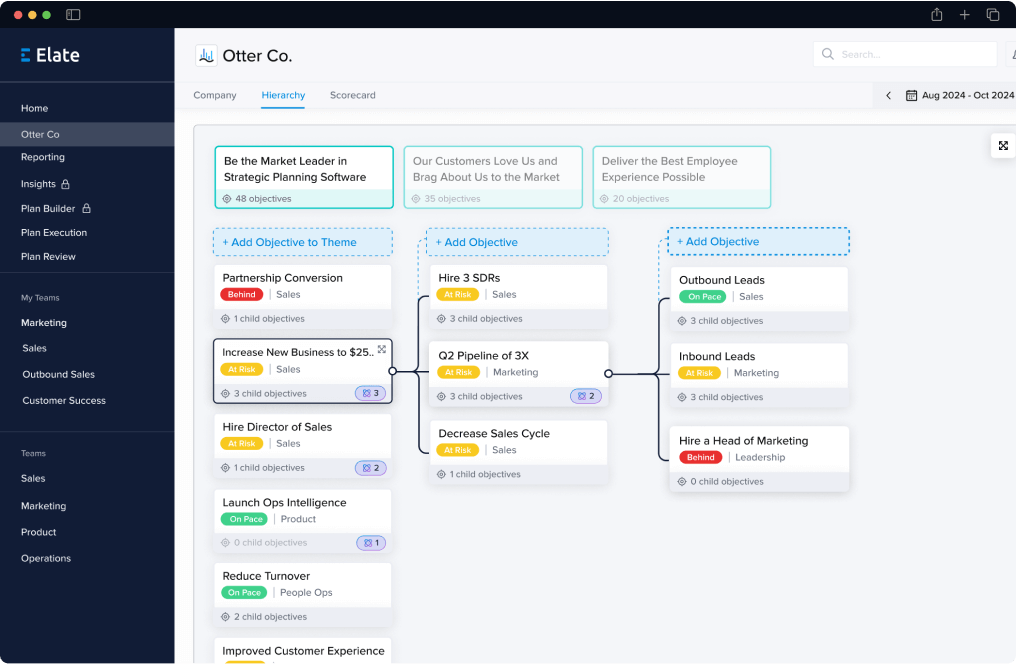







Quick answer: To roll forward a higher education strategic plan, close the current reporting cycle, preserve progress history, decide what continues, refresh owners and KPIs, and align the next update cadence to cabinet, trustee, and academic-year planning meetings. The goal is not to rebuild the plan from scratch. The goal is to carry forward the right work with cleaner ownership, stronger evidence, and a repeatable review rhythm.
Use this guide if: your institution is closing the academic year, preparing annual progress updates, planning for summer cabinet sessions, refreshing a strategic plan, or setting next-year priorities.
When to use it: late spring, summer planning, annual report preparation, trustee update cycles, accreditation evidence reviews, fiscal-year planning, or the first cabinet review before fall execution begins.
What this page gives you: a roll-forward checklist, a copyable working template, carry-forward decision rules, a practical timeline, sample completed entries, common mistakes, and a simple operating model for next-year execution.
Best next step: use the checklist to decide what closes, what carries forward, and what needs a refreshed owner before the next cabinet or trustee review.
Once the plan is rolled forward, most institutions need to turn that work into a trustee-ready progress update. Use the Annual Strategic Plan Progress Report Template for University Trustees to structure that report. IE teams often own the evidence layer behind this process. Use the Strategic Plan Progress Report Template for Institutional Effectiveness to connect KPIs, owners, evidence, and narrative updates.
Operator note: Roll-forward is not file migration. It is a prioritization moment. If every initiative carries forward, leadership has not made a decision.
What is strategic plan roll-forward in higher education?
Strategic plan roll-forward is the process of moving from one academic or fiscal year planning cycle into the next while preserving what happened, closing out completed work, carrying forward unfinished priorities, and resetting ownership, measures, timelines, and reporting cadence.
In higher education, this matters because strategic plans rarely live in one place. The plan may sit on the website, initiative updates may live in spreadsheets, KPIs may come from Power BI, Tableau, IR, SIS, finance, or departmental systems, and cabinet or trustee updates may be rebuilt manually every cycle.
A strong roll-forward process helps the institution answer six questions:
- What changed this year?
- What should be closed?
- What should carry forward?
- Who owns each priority now?
- Which KPIs still matter?
- What is the next review cadence?
The best roll-forward process is not just administrative cleanup. It is the bridge between annual progress reporting and next-year execution.
What most institutions get wrong
Most institutions treat roll-forward like a file migration. They copy last year's goals into a new document, update a few dates, and call it planning. That keeps the plan alive on paper but not in the operating rhythm.
Better approach: close the current cycle, preserve evidence, make explicit carry-forward decisions, reset owners and KPIs, and launch the next review cadence before fall execution begins.
The higher education strategic plan roll-forward checklist
Use this checklist at the end of the academic year, fiscal year, strategic planning cycle, accreditation update cycle, or annual cabinet review.
- Confirm the planning calendar: identify cabinet, trustee, accreditation, annual planning, and fiscal-year dates.
- Close the current reporting cycle: capture final owner updates, KPI snapshots, and year-end progress summaries.
- Archive prior-year evidence: preserve reports, KPI snapshots, owner updates, supporting files, and prior pre-reads.
- Identify what is complete: mark completed initiatives with final status, final outcome, and evidence.
- Decide what carries forward: identify continued priorities, delayed work, and renewed commitments.
- Remove or pause stale work: clean up initiatives that no longer map to strategy or lack ownership.
- Refresh ownership: confirm executive sponsors, department owners, and initiative owners.
- Reconfirm KPIs and data sources: validate owner, source, definition, refresh cadence, and target.
- Reset status definitions: define on track, at risk, off track, complete, paused, and deferred.
- Build the first next-year pre-read: prepare a cabinet or trustee-ready view of active priorities, risks, and decisions.
- Align the review cadence: set monthly, quarterly, cabinet, trustee, or accreditation review rhythm.
- Run the first review around risks and decisions: use the review to make tradeoffs, not just collect status.
Copyable roll-forward checklist
Strategic Plan Roll-Forward Checklist
- Planning cycle: [Year or academic year]
- Institution or division: [Name]
- Prepared by: [Owner]
- Date: [Date]
- Next cabinet or trustee review: [Date]
1. Close the current cycle
- Final owner updates collected
- Final KPI snapshots captured
- Final narrative updates reviewed
- Completed initiatives marked complete
- At-risk or off-track work summarized
- Cabinet or trustee progress update prepared
- Supporting evidence preserved
2. Decide what carries forward
- Strategic priorities reviewed for continued relevance
- Incomplete initiatives reviewed
- Duplicative or stale work removed
- Deferred work labeled clearly
- New or changed priorities identified
- Carry-forward decisions approved by the right leadership group
3. Refresh ownership and accountability
- Executive sponsors confirmed
- Initiative owners confirmed
- Department or unit owners updated
- Vacant or unclear ownership resolved
- Escalation path confirmed for blocked work
4. Reconfirm metrics and evidence
- KPIs reviewed for relevance
- Data sources confirmed
- KPI definitions updated
- Refresh cadence documented
- Evidence links preserved
- Measures without decision value retired or replaced
5. Prepare the next-year review rhythm
- Cabinet review cadence confirmed
- Trustee reporting schedule confirmed
- Owner update cadence confirmed
- Status definitions reset
- First next-year pre-read drafted
- First review focused on risks, decisions, and support needed
Sample completed carry-forward decision
Use this example to keep carry-forward decisions clear and actionable.
- Item: Student success advising redesign
- Decision: Carry forward
- Rationale: The initiative is still strategically relevant but behind schedule due to advising capacity constraints.
- Owner: Provost and VP Student Success
- KPI or evidence: Fall-to-spring persistence remains 2 points below target
- Next step: reset scope, confirm owner, and review revised milestones at the September cabinet meeting.
What should be archived before rolling the plan forward?
Before starting the next cycle, preserve enough history that the institution can explain what happened later. This matters for trustee reporting, accreditation evidence, institutional effectiveness reporting, leadership transitions, and future planning.
- Final status for each strategic priority
- Owner narrative updates
- KPI snapshots and source references
- Major risks, blockers, and decisions
- Completed initiatives
- Deferred or paused initiatives
- Prior cabinet or trustee pre-reads
- Evidence links used for accreditation or institutional reporting
- Notes on what changed from the original plan
- Decisions on what will carry forward, close, or reset
The mistake is treating historical evidence like clutter. It is not clutter. It is the institutional memory behind the next plan cycle.
What should carry forward into the next academic year?
Not everything should carry forward. Rolling everything forward by default creates a bloated plan and makes the new cycle feel stale before it starts.
Carry forward
- Strategic priorities that are still relevant
- Incomplete initiatives that still matter
- KPIs that are still decision-useful
- Risks or dependencies that need leadership attention
- Work that has a clear owner and next milestone
Close, pause, or remove
- Completed initiatives
- KPIs that no longer inform decisions
- Work with no owner
- Work that no longer maps to strategy
- Projects that are active but not strategic
- Initiatives waiting on a leadership decision with no deadline
A cleaner next-year plan is usually more valuable than a more comprehensive one. If everything carries forward, leadership has not made real prioritization decisions.
How do colleges roll forward strategic plans into the next academic year?
Colleges should roll forward strategic plans by treating annual review and next-year planning as one connected process. The annual review should show what happened. The roll-forward process should decide what continues, what changes, and how next-year execution will be reviewed.
- April to May: collect final updates, identify gaps, and confirm trustee or cabinet reporting needs.
- May to June: prepare annual progress report and archive current-year evidence.
- June to July: decide what closes, carries forward, pauses, or resets.
- July to August: refresh owners, KPIs, initiatives, reporting views, and update cadence.
- August to September: launch next-year cadence and first cabinet pre-read.
This timeline will vary by institution. The operating principle is the same: close the current cycle before launching the next one.
Common mistakes to avoid
- Rolling everything forward by default: carry-forward should be a decision, not an automatic migration.
- Losing prior-year evidence: if evidence is not preserved during roll-forward, future reporting becomes harder.
- Keeping old owners without reconfirming accountability: every new cycle should include an ownership reset.
- Treating KPIs as static: review KPIs for relevance, source quality, refresh cadence, and decision usefulness.
- Separating annual review from next-year planning: annual progress reporting should directly inform what carries forward.
- Building the next trustee update from scratch: the roll-forward process should preserve the reporting history needed for future updates.
A simple operating model for roll-forward
- Strategic priority: what remains important.
- Outcome: what success means.
- Initiative: what work supports it.
- Owner: who is accountable.
- KPI or evidence: what shows progress.
- Status: how progress is summarized.
- Narrative: what changed and why.
- Review cadence: where leadership reviews it.
This structure keeps the plan usable. Leadership can see the priority, owner, evidence, risk, and next step without reconstructing the story from multiple systems.
Where this fits in the higher education strategy system
The roll-forward checklist is the bridge between annual review and next-year execution. It should connect the year-end progress story to the operating cadence that will keep priorities visible through cabinet, trustee, and department reviews.
- Use the Higher Education Operating Guide to build the strategic cadence after roll-forward decisions are made.
- Use the Higher Ed Strategy Execution Playbook to understand why progress needs to be visible, comparable, and reviewable.
- Use the Higher Education Strategy Execution Software page to see how Elate keeps priorities, owners, updates, and reporting connected after the planning cycle resets.
How Elate makes annual roll-forward repeatable
The checklist above can work manually, but it becomes hard to sustain when annual planning, owner updates, KPI snapshots, evidence, and trustee reports live across spreadsheets, slide decks, BI dashboards, Teams folders, and email threads. Elate helps higher education teams turn annual plan review into a repeatable operating rhythm.
Teams can preserve historical reporting views, carry forward the right priorities, refresh ownership, connect selected KPIs, and generate cabinet or trustee-ready pre-reads from the same system.
See how Elate supports annual strategic plan review and next-year planning.
FAQ
What does it mean to roll forward a strategic plan in higher education?
Rolling forward a strategic plan means closing the current planning cycle, preserving progress history, deciding what continues into the next year, refreshing owners and KPIs, and setting the next review cadence.
When should colleges start rolling forward strategic plans into the next academic year?
Many colleges should begin in late spring or early summer, especially if they report annual progress to cabinet, trustees, or accreditation stakeholders. The exact timing depends on the academic calendar, fiscal year, board meeting cadence, and planning cycle.
What should be archived before starting a new strategic plan cycle?
Archive final priority statuses, KPI snapshots, narrative updates, evidence links, completed initiatives, deferred work, risks, decisions, and prior cabinet or trustee pre-reads.
How do universities decide which initiatives carry forward?
Universities should carry forward initiatives that still support active strategic priorities, have clear ownership, and remain relevant to next-year goals. Initiatives that are complete, stale, ownerless, or no longer tied to strategy should be closed, paused, or removed.
How do institutional effectiveness teams preserve evidence across planning cycles?
IE teams can preserve evidence by linking KPI snapshots, assessment artifacts, owner updates, narrative explanations, and final reports to the relevant strategic priorities.
What is the difference between annual progress reporting and strategic plan roll-forward?
Annual progress reporting explains what happened during the current cycle. Strategic plan roll-forward uses that review to decide what closes, what carries forward, what changes, and how the next cycle will be reviewed.
How can colleges avoid rebuilding strategic plan reports from scratch each year?
Colleges can avoid rebuilding reports by using a consistent structure for priorities, owners, KPIs, narrative updates, risks, and decisions throughout the year.
Related higher education resources
- Annual Strategic Plan Progress Report Template for University Trustees for turning roll-forward decisions into a board-safe annual update.
- Strategic Plan Progress Report Template for Institutional Effectiveness for preserving evidence, KPI context, and narrative updates across cycles.
- Higher Education Strategy Execution Software for seeing how Elate helps institutions plan, execute, and review strategy in one system.
- Creating a Sustainable Strategic Cadence for Higher Education for designing the operating rhythm that keeps next-year priorities moving.
- Higher Ed Strategy Execution: A Practical Playbook for a broader view of governance reporting, pre-reads, and execution cadence.