Industrial & Infrastructure Strategy Execution: A Playbook for Operations Leaders
TL;DR: Strategy doesn't break in industrial and infrastructure operations because the systems are missing. The systems are already there. It breaks because no single layer connects priorities, owners, updates, and selected metrics into a reviewable operating story leadership can act on. In this playbook, we walk through why that gap forms, the signs it's getting worse, and what it takes to build the operating review layer that closes it.
Why the Operating Review Breaks Down, and What It Takes to Run Strategy Like a System
Many industrial and infrastructure operators run some of the most complex operating environments in any sector. Distributed plants, regional teams, multiple business units, field operations, production schedules, capital programs. The work is happening. The systems are in place.
And yet, when the leadership team needs to understand the operating picture before the monthly review (what changed, what is at risk, who owns what, where support is needed), someone has to manually reconstruct that story.
They pull from BI. They chase owners. They clean up a spreadsheet. They format a PowerPoint. And by the time leadership sees it, the picture is already out of date.
This is the execution gap that Elate was built to close.
Quick Check: Signs Your Operating Review Rhythm Isn't Scaling
If you lead strategy, operations, or a Chief of Staff function in an industrial or infrastructure organization, some of these will feel familiar.
The pre-read for your leadership review gets rebuilt from scratch every cycle: same sources, same manual process, same time pressure.
Dashboards show what happened. They don't show who owns progress, what the context is, or what needs a decision.
Risks surface at the review meeting, when options are already limited.
Owners update when they're chased. Without a prompt, cadence decays.
Progress is visible inside operating units but hard to see across them. Leadership gets a fragmented picture.
You have strong systems (ERP, BI, PM, finance, safety) but the operating story still lives in Excel and PowerPoint.
If two or three of those sound accurate, the issue is not the quality of your systems or the effort of your teams. It's the absence of one repeatable layer above those systems that turns facts into a reviewable operating story.
The Pattern: Data-Rich, Story-Poor
Industrial operators tend to be well-instrumented. Production metrics. Safety dashboards. ERP data. Financial reporting. BI environments built over years. The data exists.
The operating story does not.
There is a consistent pattern across complex industrial organizations: the systems hold the facts, but the facts alone don't answer the questions leadership actually needs to answer before a review.
Which priorities changed status since last review?
What is at risk, and who owns it?
Which operating units need support?
What decisions need to happen this week?
Answering those questions still requires a person to pull from multiple sources, apply judgment, add context, identify the risks that aren't showing up as red in any dashboard, and assemble a picture that leadership can act on.
That translation happens manually. Every cycle. Even when the underlying data is excellent.
This is the operating story gap. The systems run the business. Elate makes the operating story visible, owned, and actionable.
The Hidden Cost: When Dashboards Become the Answer
When organizations try to close this gap with more dashboards, the problem doesn't get solved. It gets reframed.
Dashboards are valuable. They show what happened. They surface trends. They give leadership a data layer.
But a dashboard doesn't have an owner. It doesn't have context. It doesn't show whether a metric is trending the wrong direction because of a known temporary issue or an emerging problem nobody has flagged yet. It doesn't tell you which of the 12 things on the leadership agenda need a decision this week.
The result is that leadership meetings still start with a status chase. Someone explains the numbers. Someone else provides context. A third person flags a risk that wasn't in the report. The meeting runs long and ends without enough time for the decisions that actually needed to happen.
The hidden cost goes deeper than meeting efficiency.
When risks surface late, options are narrower. When owners update inconsistently, the operating picture goes stale and leadership loses confidence in what they're seeing. When the same person manually reconstructs the operating story every cycle, that dependency becomes a structural fragility.
And when the gap between data and leadership action stays manual, the organization's ability to run the plan at scale hits a ceiling.
Why Existing Tools Don't Fix the Operating Review
Industrial organizations rarely have a tool deficit. The challenge is that each system solves its layer, and none of them create the operating review above those layers.
ERP holds the record. It's the source of truth for transactions, inventory, financials, and production data. It's not designed to surface strategic priorities or tell leadership which initiatives are off track.
BI shows the number. Power BI, Tableau, and similar environments are excellent at displaying data. They're not designed to connect a metric to an owner, a risk flag, a contextual narrative, and a leadership ask in one reviewable view.
PM tools track tasks. They're useful for project execution at the team level. They sit too deep in the work to serve as an executive operating layer across multiple functions and units.
Finance systems own the budget. They hold the right numbers for forecasting and reporting. They're not the right place for tracking strategic initiative progress or surfacing operational risk.
Safety and quality systems manage compliance. They do their job well. They're not the missing operating review layer.
The gap isn't inside any of these systems. The gap is above them: the layer that connects priorities to owners to updates to selected metrics to leadership-ready reporting in one consistent view, on a cadence that actually holds.
That's what Elate creates. BI shows the number. ERP holds the record. PM tracks the task. Elate runs the review.
The Breaking Point: When Manual Reconstruction Stops Scaling
For a while, most organizations compensate through effort. A strong Chief of Staff or Strategy Ops person keeps the operating story current through discipline and manual coordination. Leadership gets what they need. The cycle repeats.
That model works until it doesn't.
The breaking point usually shows up in one of a few ways.
The organization adds operating units, regions, or business lines, and the manual effort required to produce the operating view multiplies faster than the team can absorb.
A new strategic plan launches and leadership realizes they don't want to spend the next three years rebuilding the operating update by hand every cycle.
The CEO, ELT, or board starts asking for a cleaner, more consistent view of progress and risk, and the current model can't produce that without significant manual effort before every meeting.
The person who owns the operating story leaves or takes on new responsibilities, and the fragility of depending on one person becomes visible immediately.
At that point, the organization has outgrown an informal operating model. The question shifts from whether to build a real operating review layer to how to do it without replacing systems that are working.
The Fix: Build the Operating Review Layer Above Your Systems
The organizations that close this gap don't replace their existing systems. They build the layer above them.
That layer does a few specific things:
Creates a shared structure for priorities, owners, updates, and selected metrics across operating units and functions.
Ties owner updates to a real cadence connected to when leadership actually reviews the output.
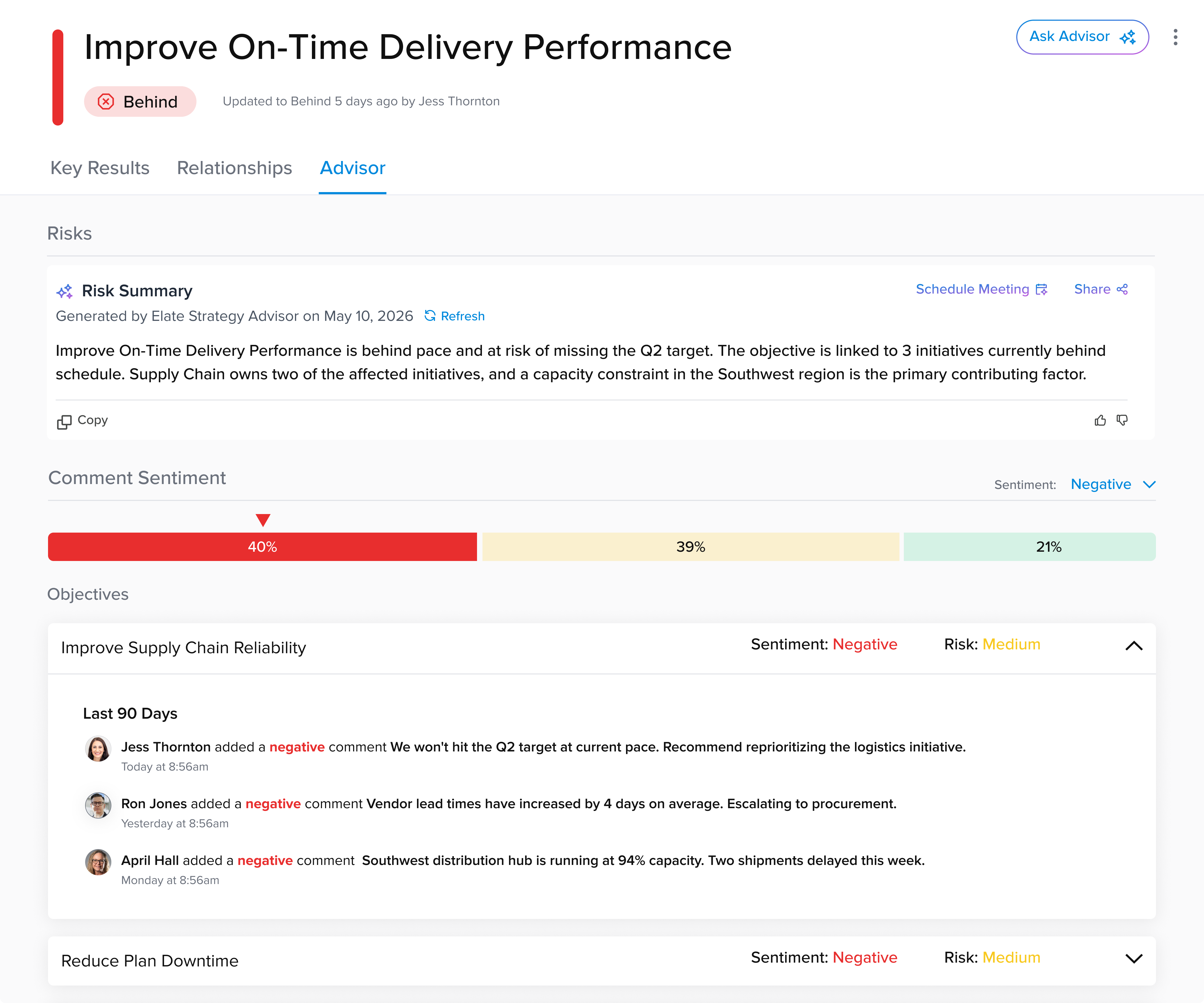
Surfaces at-risk priorities before the meeting, so leadership can start from the right questions instead of running a status chase.
Connects selected metrics to the owner, narrative, and context that make the number actionable, not just visible.
Packages everything into a leadership-ready view that doesn't require manual reconstruction each cycle.
The key principle is that this layer sits above the existing systems, not instead of them. ERP, BI, PM, finance, and safety tools stay in place as sources of truth. The operating review layer connects strategy to execution and makes the operating story visible, owned, and ready for the review.
A Simple Industrial Execution Model
Here's a structure that works well for industrial and infrastructure operators, particularly those who have strategy defined and systems in place, but need a more repeatable way to run the operating review.
1. Define the operating priorities leadership actually reviews
These are the strategic themes or focus areas the leadership team orients around for the year. Keep them focused enough to create real prioritization. Manufacturers, distributors, and infrastructure operators often have long lists of important work, but the operating review needs a short list of the things that define whether the strategy is working.
A good test: can every operating unit or function explain how their work connects to one of a small number of named priorities? If not, the list is too long or too vague.
2. Separate outcomes from operating activity
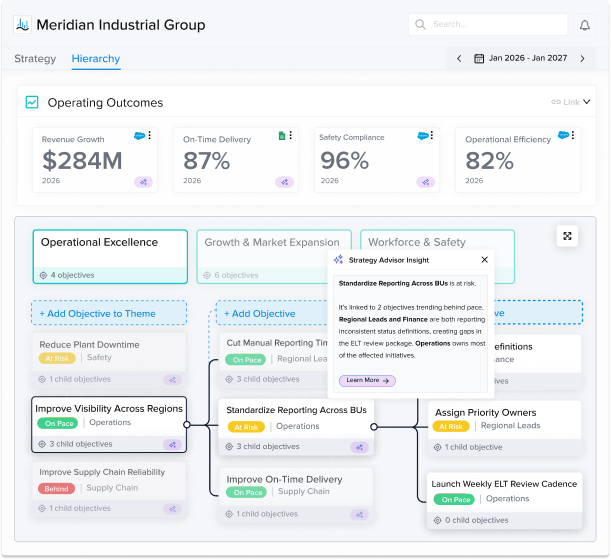
An Objective defines the outcome the organization is trying to create. A Tactic or Initiative defines the work supporting it.
Industrial operators often have strong project discipline but find it harder to define the actual outcome a project is meant to drive. The distinction matters for the operating review: it's the difference between tracking whether a capital program is on schedule and understanding whether it's creating the operational improvement it was funded to deliver.
A simple test: if you can complete the work and still not see the impact, it's probably not an Objective.
3. Assign ownership at the priority level, not just the task level
In distributed operations, work moves constantly. Projects shift. Teams change. Field conditions change plans. If ownership only exists at the task level, execution visibility breaks the moment anything changes.
Priority-level ownership creates continuity. One person is accountable for progress, responsible for surfacing risk early, and able to escalate when capacity or priorities conflict. That person doesn't have to do all the work. They have to own the operating story for that priority.
Common trap: distributed accountability that sounds collaborative but makes it impossible to know who to call when something slips.
4. Connect selected metrics to owner and context
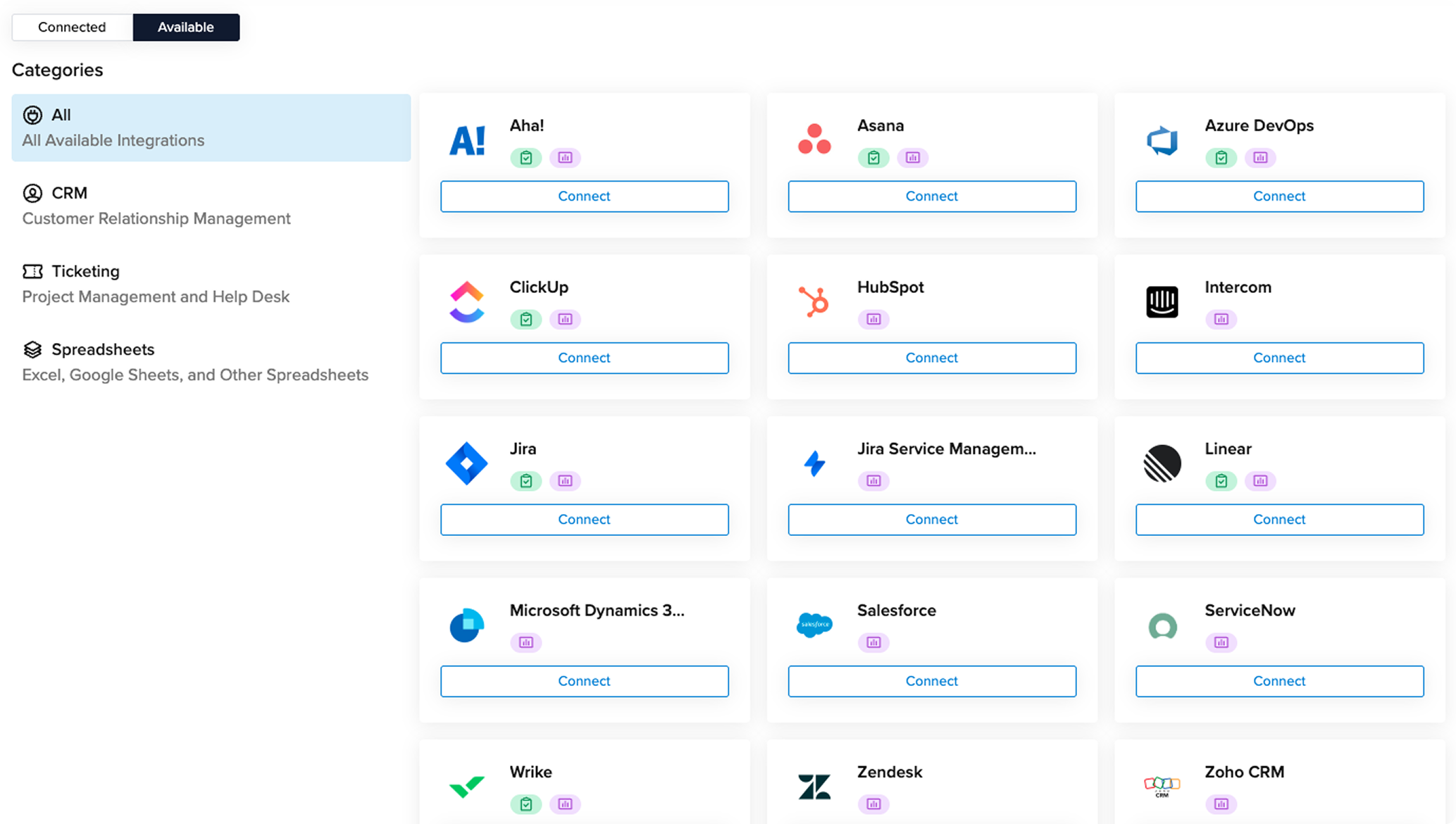
Metrics belong in the operating review, but not in isolation. The useful operating picture includes the metric, the owner, the narrative that explains what the number means in context, any risk signals, and the next action or decision.
That's the difference between a dashboard that shows the number and an operating review that tells leadership what to do about it.
5. Build a lightweight update cadence tied to the review
The cadence only works when it's connected to a real review moment. Owners update because leadership actually consumes the output. When that connection breaks, cadence decays.
A monthly rhythm works well for most industrial operators at the strategic level. The update cycle should happen before the leadership meeting, not during it, so the meeting can focus on decisions and exceptions rather than status collection.
Async updates for progress. Live time reserved for decisions, risks, and trade-offs.
6. Create the operating review artifact once, not every cycle
The operating pre-read should be a byproduct of the system, not a manual production task. When owners update on cadence and the structure is consistent, the leadership view builds itself. Leadership sees priorities, status, owners, at-risk flags, and selected metrics without someone rebuilding the deck.
That's the shift from reporting as a recurring fire drill to reporting as an output of execution.
7. Start with the executive layer, then expand
Industrial organizations with distributed operations often make the mistake of trying to roll out a new operating model across every plant, region, or business unit simultaneously. That creates adoption friction before the system has proven its value.
Start where strategic ownership is already strongest, usually the ELT or the team that owns the operating review. Establish the structure, cadence, and review rhythm at that level. Then expand once leadership can point to the operating review as something they actually use.
What Changes When Industrial Organizations Run Strategy Like a System
When industrial and infrastructure operators build a real operating review layer, a few things happen quickly.
Leadership stops spending review time on status collection and starts spending it on decisions.
Risks surface earlier, when the options for addressing them are still open.
Operating units have clarity on what leadership cares about most, and how their work connects to it.
The operating story stays current without depending on one person to manually reconstruct it before every meeting.
Reporting becomes faster and more credible because it's connected to real execution, not assembled from multiple sources under time pressure.
And the leadership team gains something harder to measure but more important: confidence that what they're seeing reflects what's actually happening across the organization.
The strategic plan stops acting like a document that gets reviewed once a year and starts functioning as a running view of the operating story. Priorities, owners, status, risk, and the next decisions the organization needs to make: visible, owned, and ready for the review.
That's what it means to run strategy, not just plan it.
If your organization is growing, adding operating complexity, or simply feeling the strain of a manual operating review process that no longer scales, the answer is the same: build the layer that makes the operating story visible without replacing the systems that run the business.
If that's the stage you're in, we'd like to talk. We can share what we're seeing across industrial and infrastructure operators and walk through what a consistent, leadership-ready operating review rhythm looks like in practice.
Frequently Asked Questions About Industrial Strategy Execution
What is strategy execution for industrial and infrastructure operators?
Strategy execution for industrial operators is the process of connecting strategic priorities to operating unit owners, progress updates, selected metrics, and a recurring leadership review, so the executive team can see what is happening, what is at risk, and what needs their attention without manually reconstructing that picture each cycle.
Why do industrial organizations struggle with strategy execution?
Most industrial operators don't struggle with building a strategy or setting up systems. They struggle with the layer between them: translating priorities into a reviewable operating story that leadership can act on. That translation still happens manually in most organizations, through meetings, Excel, and PowerPoint, regardless of how good the underlying systems are.
How is an operating review different from a dashboard?
A dashboard shows data. An operating review connects the data to an owner, a narrative, a risk flag, and a leadership ask. The goal of an operating review is not visibility into numbers. It's the ability for leadership to decide what to support, escalate, or adjust before the next cycle.
What is the difference between an objective and a tactic?
An objective defines the outcome the organization is trying to create. A tactic defines the work supporting that outcome. Confusing the two is common in operational environments where project discipline is strong but outcome framing is less natural. The distinction matters because it determines what leadership reviews and what they act on.
How often should industrial organizations review strategy progress?
A monthly operating review cadence works well for most industrial and infrastructure operators at the executive level. The update cycle should happen before the meeting, with async progress updates from owners, so live time focuses on decisions and at-risk priorities.
Does Elate replace ERP, BI, or other operational systems?
No. Elate creates the operating review layer above existing systems. ERP, BI, PM, finance, safety, and operational tools stay in place as sources of truth. Elate connects selected metrics from those systems to owners, narrative, and the leadership review without replacing or duplicating them.