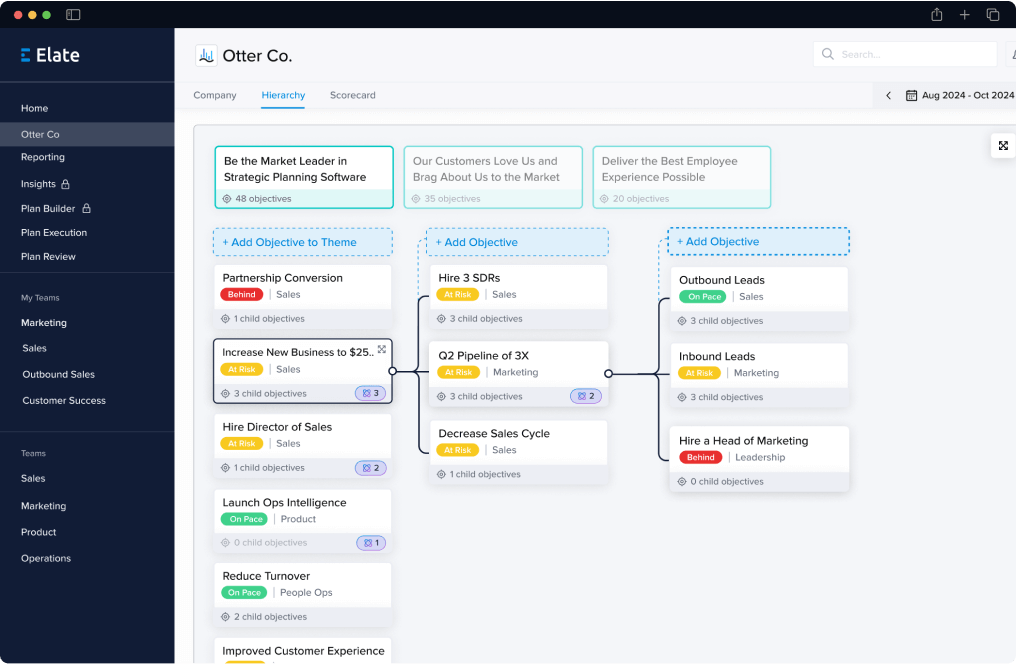











Accreditation, institutional effectiveness, and strategic planning work best when they are connected but not collapsed into the same process. Accreditation asks whether the institution can show evidence of progress and improvement. Institutional effectiveness organizes outcomes, assessment, and evidence. Strategic planning sets priorities, owners, initiatives, and the review cadence leadership uses to keep progress visible.
Elate helps colleges and universities connect the execution layer around these workflows. It does not replace an accreditation management system or assessment platform. It helps leadership teams connect priorities, owners, measures, updates, evidence notes, risks, and reports so strategic progress is easier to review before cabinet, trustee, or institutional effectiveness cycles.
The operating challenge
Higher education teams often have the evidence they need, but it lives across planning documents, spreadsheets, assessment systems, BI dashboards, Teams folders, and annual reports. The result is a manual translation process: someone has to connect what the plan promised, what departments updated, what outcomes changed, and what evidence is ready to share.
That translation work is where strategy often becomes harder to govern. The plan exists, but the operating rhythm around it is rebuilt every reporting cycle.
How the pieces should fit together
- Strategic planning: Defines priorities, owners, initiatives, outcomes, and the cadence for review.
- Institutional effectiveness: Organizes evidence, measures, assessment cycles, and improvement narratives.
- Accreditation: Requires credible evidence that the institution can plan, assess, improve, and document progress.
- Leadership reporting: Converts updates into cabinet, president, trustee, or board-ready summaries.
What to manage in an operating layer
- The strategic priority or objective each evidence item supports.
- The accountable owner for the work or outcome.
- The latest progress update and status.
- The selected KPI or evidence note that explains movement.
- The risk, blocker, or decision that needs review.
- The report or pre-read where the update needs to appear.
How Elate supports this workflow
Elate is strongest when institutions need the work around accreditation and institutional effectiveness to stay connected to strategic execution. It helps teams keep ownership, cadence, evidence notes, KPI context, risks, and reporting in one reviewable structure.
Elate is not the best fit if the primary need is a full accreditation evidence repository or assessment management system. It is a strong fit when the institution needs to make strategic plan execution visible, explainable, and reportable across leadership and IE workflows.
Related resources
- Elate for higher education
- Institutional effectiveness strategic plan progress software
- Institutional effectiveness progress report template
- Higher education operating guide
- See Elate in action
FAQ
How does institutional effectiveness connect to strategic planning?
Institutional effectiveness connects outcomes and evidence to the priorities an institution says it is trying to improve. Strategic planning defines the direction; IE helps show whether progress is happening.
Is Elate an accreditation software platform?
No. Elate is not designed to replace accreditation or assessment platforms. It helps institutions connect strategy execution, ownership, evidence context, and leadership reporting around those systems.
Why does this matter for cabinet or board reporting?
Cabinet and board stakeholders need a clear summary of what changed, what evidence supports progress, who owns the work, and what needs attention next.