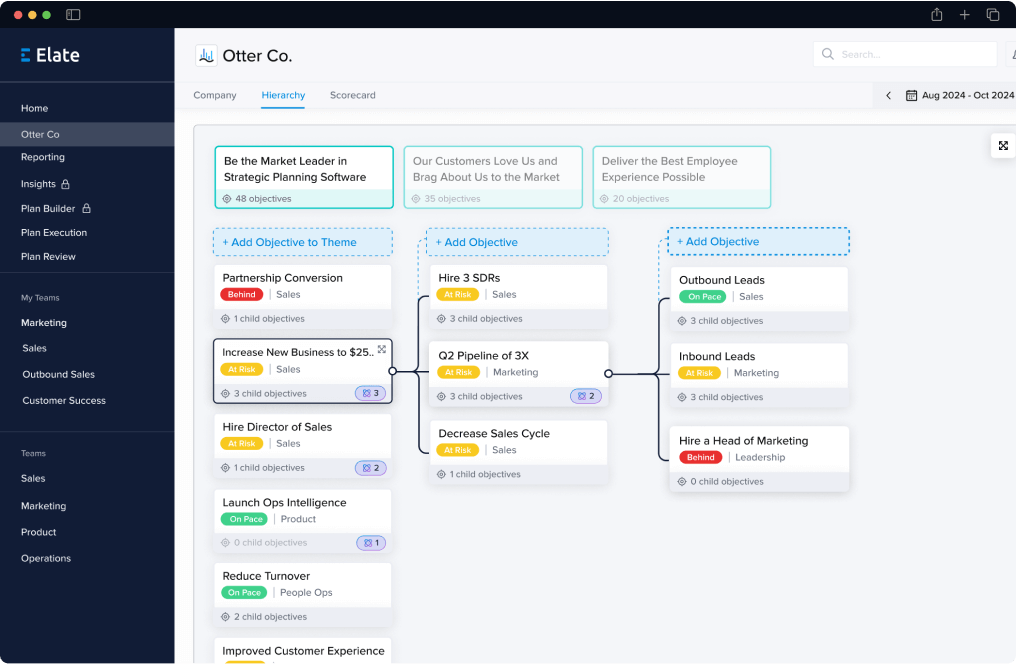







Quick answer: An institutional effectiveness dashboard is a structured view of the measures a college or university uses to assess performance against mission, goals, and stakeholder expectations over time.
Use this guide if: you need a stronger measurement backbone for planning, accreditation, annual reporting, or cabinet review and do not want “institutional effectiveness” to mean a disconnected spreadsheet archive.
Operator note: Institutional effectiveness dashboards are not just reporting tools. They are the evidence backbone behind governance, planning, and improvement. They help institutions connect planning, assessment, budgeting, accreditation, and improvement using a shared set of definitions and evidence.
You know it is working when:
- Measures have defined owners, formulas, data sources, and targets.
- Leaders can explain how metrics connect to the strategic plan and student outcomes.
- Assessment, planning, and budgeting use the same core evidence base.
- The dashboard reduces debate about definitions and increases discussion about decisions.
In this guide:
- What an institutional effectiveness dashboard is
- How it differs from a strategic plan dashboard
- What measures and metadata to include
- How accreditation and planning fit into the model
- A practical dashboard structure
- FAQs
What is an institutional effectiveness dashboard?
An institutional effectiveness dashboard is the evidence layer institutions use to evaluate whether they are performing as intended across student success, academic quality, finance, operations, and other mission-critical areas.
In higher education, “institutional effectiveness” is not a vague concept. It is usually tied to a documented planning and assessment process. A strong dashboard helps the institution track performance, set targets, examine gaps, and show how results inform decisions.
If you need the shorter leadership-facing layer on top of this, start with higher education strategic plan dashboards. If you need the formal measurement backbone, keep reading here.
What this page is not
An institutional effectiveness dashboard is not just a prettier dashboard skin and it is not a catalog of every metric the institution can produce. It is the formal evidence structure behind planning, assessment, and improvement. If you try to make it do everything, trust in the measures usually erodes.
How is an institutional effectiveness dashboard different from a strategic plan dashboard?
The two are related, but they are not interchangeable.
- Institutional effectiveness dashboard: measure framework, targets, data definitions, evidence of performance, and continuous improvement
- Strategic plan dashboard: leadership review view tied to institutional priorities, ownership, progress, and decisions
Put simply, institutional effectiveness answers, “How are we measuring institutional performance?” The strategic plan dashboard answers, “What does leadership need to review right now?”
The healthiest institutions connect the two. They do not keep planning, assessment, accreditation, and leadership reporting in separate worlds.
What should an institutional effectiveness dashboard include?
At minimum, each measure should include:
- Measure name
- Definition and formula
- Data source
- Data steward or office owner
- Baseline
- Target
- Time horizon
- Disaggregation approach where equity gaps matter
- Interpretive note explaining movement or anomalies
This matters because many institutions publish dashboards without enough metadata. The result is a number that people can see but not trust. If a dean, cabinet member, or accreditor cannot understand how a metric is produced, the dashboard will not carry weight when it matters.
How do accreditation and institutional effectiveness connect?
Accreditation does not require a specific dashboard vendor or visual style. It does require institutions to show that planning and effectiveness processes are systematic, documented, linked to decision-making, and used for improvement.
That means your dashboard should help answer questions like:
- What are the institution’s expected outcomes?
- How are those outcomes being measured?
- Who reviews the results?
- What actions or resource decisions were informed by those results?
If your accreditation process lives in separate spreadsheets, static PDFs, committee notes, and department reports, the problem is not the lack of data. The problem is the lack of a usable evidence model.
What measures belong on an institutional effectiveness dashboard?
The right set varies by institution, but common categories include:
- Student access and enrollment: headcount, yield, persistence, transfer, stop-out, completion
- Student success and equity: retention, graduation, pass rates, equity gap measures
- Academic quality: program review indicators, licensure or learning outcomes where relevant
- Financial sustainability: margin, reserves, net tuition, expense discipline, aid efficiency
- Workforce and operations: employee retention, service levels, space utilization, technology performance
- Mission and external impact: workforce outcomes, community partnership results, research or service indicators depending on institution type
If enrollment is a strategic pressure point, pair this page with strategic enrollment management dashboard. If your team is preparing for reaffirmation or self-study work, pair it with accreditation, institutional effectiveness, and strategic planning.
What to do first
Before debating visuals, build the measure logic. For each core measure, define the formula, steward, target, review body, update cadence, and what action the institution takes if the measure is off track. That discipline matters more than chart design.
Common mistakes institutional effectiveness teams should avoid
- Publishing measures without definitions.
- Tracking too many indicators with no clear purpose.
- Separating dashboard design from governance design.
- Using annual reporting cycles for issues leaders need to steer quarterly or monthly.
- Treating accreditation as a once-per-cycle documentation exercise instead of an ongoing effectiveness process.
Copy/paste template: institutional effectiveness measure
Example scenario: A college uses first-year retention as an institutional effectiveness measure. The dashboard shows the definition, owner, target, disaggregated view, and a short note explaining whether movement reflects actual progress or a data-timing issue. That makes the number usable for both planning and accountability.
Measure: [name]
Purpose: [why this measure matters]
Definition: [how it is calculated]
Data source: [system, report, or official dataset]
Data steward: [office or person]
Baseline: [value + period]
Target: [value + period]
Equity view: [groups or disaggregation method]
Interpretive note: [1 to 2 sentences]
Action or follow-up: [what happens if performance misses target]
External references
- Harper College institutional effectiveness dashboard
- Western Washington University strategic plan dashboard data dictionary
- Queensborough Community College planning and assessment model
- SACSCOC Principles of Accreditation
FAQs
Does every institutional effectiveness dashboard need public-facing metrics?
No. Many institutions benefit from both a public accountability view and an internal management view. The important point is that the underlying measure logic stays consistent.
Who should own the dashboard?
Usually institutional effectiveness, institutional research, planning, or a cross-functional team. Ownership should cover data quality, governance, and update cadence, not just visualization.
How often should measures update?
Use the slowest reliable cadence that still supports decisions. Some measures are monthly or term-based. Others are annual. Do not force frequent updates on measures that are only meaningful at longer intervals.
Need the evidence backbone and the leadership layer to work together? Elate helps institutions connect priorities, measures, ownership, and reporting so progress is easier to review and easier to trust.
Explore Elate for higher education, see how this connects to accreditation, or read more on higher education strategic planning.