










Education strategic plan KPIs should be the few measures leaders actually use to understand whether institutional priorities are moving. The best KPI set connects strategic goals, responsible owners, student outcomes, evidence, risks, and a regular review cadence.
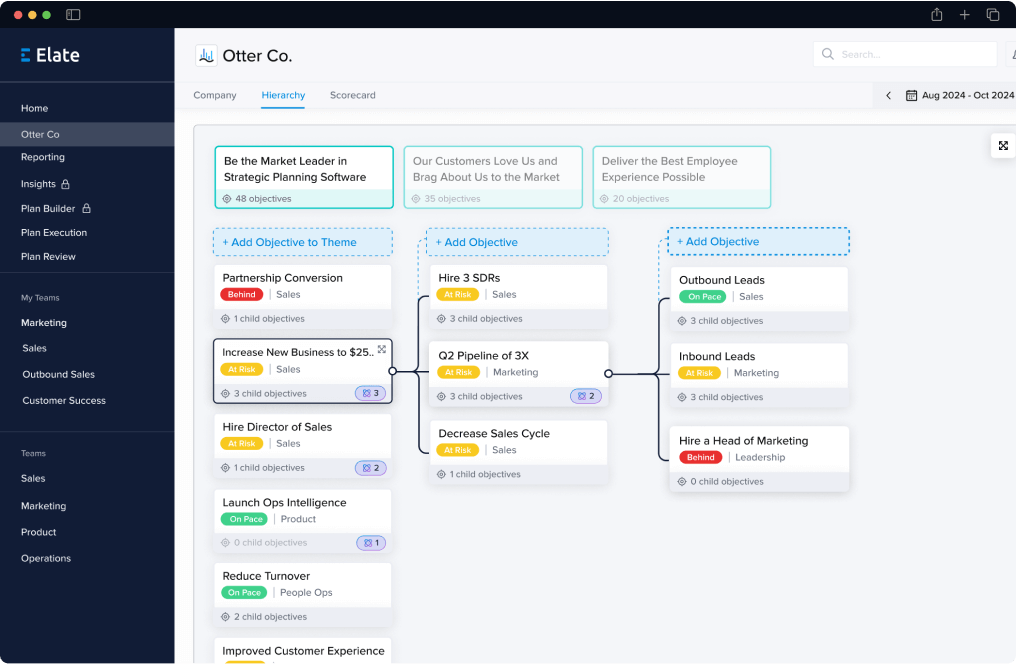
Elate helps education teams connect KPIs to the strategy story around them. Instead of copying metrics into reports each cycle, teams can pair selected KPIs with owners, narrative updates, risks, evidence, and cabinet or board-ready summaries.
Higher education operating reality
Most institutions already have data in SIS, BI, IR, finance, academic affairs, enrollment, student success, and accreditation systems. The harder question is which measures belong in strategic plan review and how those measures should be explained to cabinet, trustees, or institutional effectiveness teams.
What to include in the KPI set
- Student success and completion measures tied to strategic priorities.
- Enrollment, retention, persistence, and yield metrics where relevant.
- Workforce, community, or program outcomes for mission-specific priorities.
- Financial, operational, or capacity measures that affect execution.
- Equity, access, and student experience indicators where they are part of the plan.
- Owner updates explaining what changed and what action is needed.
- Evidence notes for institutional effectiveness or board reporting.
How to choose the right KPIs
- Start with the strategic priorities, not the available data catalog.
- Pick measures leadership will actually review on cadence.
- Separate true KPIs from supporting metrics.
- Assign one owner for each measure or outcome area.
- Pair each metric with a short narrative update.
- Review the KPI set each annual planning cycle.
What most institutions get wrong
The most common mistake is turning the strategic plan dashboard into a data warehouse. A strategic plan KPI set should help leaders decide what to discuss, where to intervene, and what evidence to preserve. It should not overwhelm the review with every available institutional metric.
Example KPI categories for higher education
- Student success: retention, persistence, completion, course success, or transfer outcomes.
- Enrollment: applications, yield, headcount, credit hours, program mix, or adult learner participation.
- Workforce and community impact: employer partnerships, credential completion, placements, or regional priorities.
- Financial and operational health: budget progress, capacity, staffing, or resource alignment.
- Strategic initiatives: milestones, owner updates, risks, and evidence tied to priority outcomes.
The right KPI set depends on the institution and its plan. The goal is to choose measures that help leadership review progress and make decisions, not to create a universal scorecard.
Best fit and not best fit
Best fit: Elate is a strong fit for education teams that need KPI visibility, owner updates, cabinet reporting, trustee updates, and institutional effectiveness evidence in one review rhythm.
Not the best fit: Elate is not a SIS, BI warehouse, or accreditation platform replacement. It works best as the strategy execution layer that connects selected evidence to ownership, cadence, and reporting.
Related resources
- Higher education strategy execution
- Higher education operating guide
- Higher ed strategy execution playbook
- Higher education strategic plan reporting software
- Strategic plan roll-forward checklist for higher education
- Strategy execution software
- Strategic planning and execution software
- Strategy execution reporting
- Higher education strategic plan dashboard
FAQ
What KPIs should an education strategic plan include?
It should include a small set of student success, enrollment, financial, operational, workforce, and mission-specific measures tied to strategic priorities and owners.
How many KPIs should a higher education strategic plan track?
Track enough to support leadership decisions, but not every institutional metric. Many teams start with a small set for each priority and expand only when the review rhythm is working.
How does Elate help with education strategic plan KPIs?
Elate helps connect KPIs to priorities, owners, narrative updates, risks, evidence, and cabinet or board-ready reports.