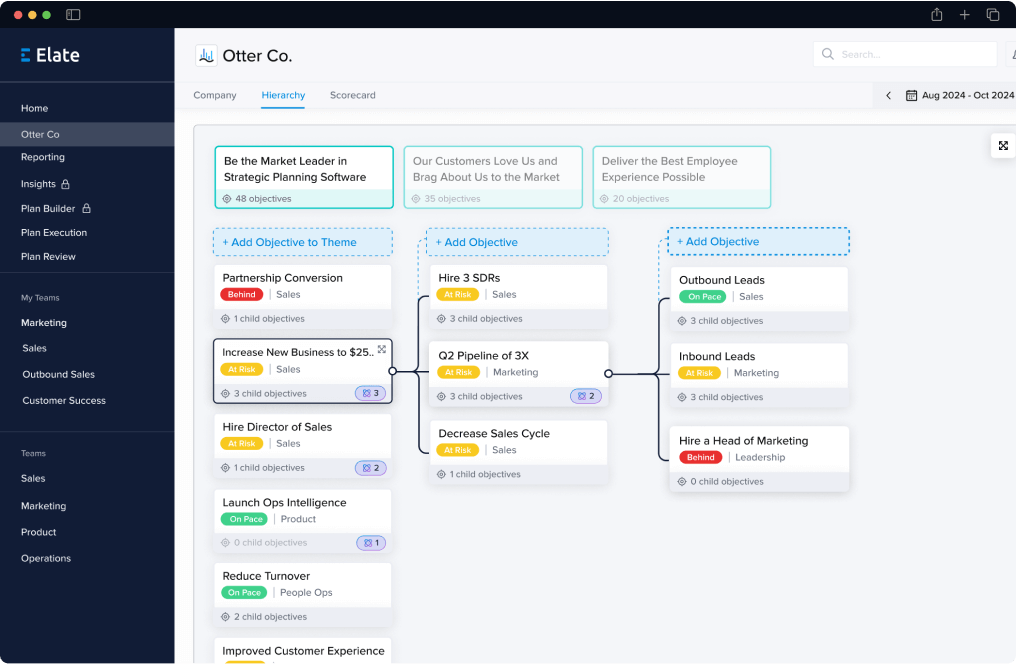











Quick answer: Universities report strategic plan progress to trustees by turning priority updates, KPI evidence, owner narratives, risks, and decisions needed into a concise board-safe pre-read. The strongest trustee updates show what changed, what is on track, what is at risk, who owns the work, and what leadership needs the board to understand or support.
Where Elate fits: Elate helps higher education teams collect owner updates, connect selected KPIs and evidence, identify risks, and create trustee-ready reporting views from the same system used for cabinet, institutional effectiveness, and annual planning reviews.
Use this page if: your university is preparing a board of trustees update, trustee committee packet, annual strategic plan progress report, or cabinet pre-read that will later become board-facing.
Who this is for: president office teams, Chiefs of Staff, cabinet operations, strategy leaders, institutional effectiveness teams, board liaisons, and anyone responsible for trustee-ready progress reporting.
Best next step: Use this page with the Annual Strategic Plan Progress Report Template for University Trustees, Higher Education Strategic Plan Reporting Software, and Annual Strategic Plan Review Software.
What trustees need in a strategic plan progress update
Trustees do not need every operational detail. They need a governance-level progress story that is specific enough to trust and concise enough to consume before the meeting.
A trustee-ready update should answer:
- Which strategic priorities are on track, at risk, or off track?
- What changed since the last update?
- What evidence or KPI movement supports the status?
- Who owns the priority or initiative?
- What risks or blockers need attention?
- What decision, support, or follow-up is needed?
- What carries forward into the next review cycle?
Recommended trustee progress report structure
1. Executive summary
Start with the two-minute version. Show overall progress, major changes, and the few items requiring trustee or cabinet attention.
2. Strategic priority status
Organize updates by the strategic priorities trustees approved. Use consistent status language so progress is comparable across priorities and cycles.
3. KPI and evidence snapshot
Include only the metrics that explain strategic progress. Pair each metric with plain-language narrative so trustees know what the number means.
4. Risk and decision section
Call out the initiatives or outcomes that are at risk, why they are at risk, and what action leadership is taking.
5. Appendix or detail layer
Keep supporting detail available, but do not force every trustee to read every operational update. The main report should stay board-safe and concise.
Trustee reporting workflow
- Four weeks before the meeting: confirm the reporting scope, trustee audience, priority list, and owners.
- Three weeks before: collect owner updates, KPI snapshots, evidence links, and risk notes.
- Two weeks before: identify the progress story, clean up unclear status language, and separate internal commentary from board-facing language.
- One week before: review with cabinet or the executive sponsor for board-safe framing.
- Three to five days before: send the trustee pre-read.
- After the meeting: capture follow-ups and roll them into the next review cycle.
What makes a trustee update board-safe
Board-safe does not mean vague. It means the update is clear, accurate, appropriately scoped, and ready for governance consumption.
- Use consistent status definitions.
- Remove raw internal commentary that needs context.
- Show risks without creating unnecessary alarm.
- Separate decision-needed items from general progress.
- Make ownership clear without overloading the board with org chart detail.
- Preserve the source evidence for follow-up questions.
What most universities get wrong
The most common mistake is rebuilding the trustee update as a one-time deck instead of maintaining a current strategy execution record throughout the year. That creates a reporting sprint before every board meeting and makes it harder to compare progress over time.
The second mistake is treating the report like a dashboard. Dashboards can show the number, but trustees need the operating story: owner, narrative, risk, evidence, and next action.
How Elate helps universities report progress to trustees
Elate helps universities connect strategic priorities, cabinet and department owner updates, selected KPIs, evidence, risks, and board-ready reporting views. Teams can keep the strategy execution story current during the year, then prepare trustee updates from the same information instead of rebuilding reports from scratch.
Elate does not need to replace Power BI, Tableau, SIS, IR systems, spreadsheets, or accreditation tools. It acts as the governance and reporting layer that connects selected evidence to ownership, narrative, cadence, and trustee-ready progress reporting.
Related resources
- Higher Education Strategy Execution Software
- Annual Strategic Plan Progress Report Template for University Trustees
- Higher Education Strategic Plan Reporting Software
- Higher Education Strategic Plan Progress Report
- Higher Ed Strategy Execution Playbook
FAQ
How do universities report strategic plan progress to trustees?
Universities report strategic plan progress to trustees with a concise board-safe pre-read that shows priority status, KPI evidence, owner narrative, risks, decisions needed, and next steps.
How often should universities report strategic plan progress to trustees?
Many universities provide trustee-level progress updates quarterly or annually, with cabinet reviewing progress more frequently. The right cadence depends on the board calendar and strategic plan cycle.
What should be included in a trustee strategic plan report?
Include executive summary, priority status, key evidence, narrative context, owner accountability, risks, decisions needed, and follow-up actions.
How does Elate help universities prepare trustee reports?
Elate connects priorities, owners, updates, KPIs, risks, and evidence so universities can generate trustee-ready progress views from a current strategy execution record.