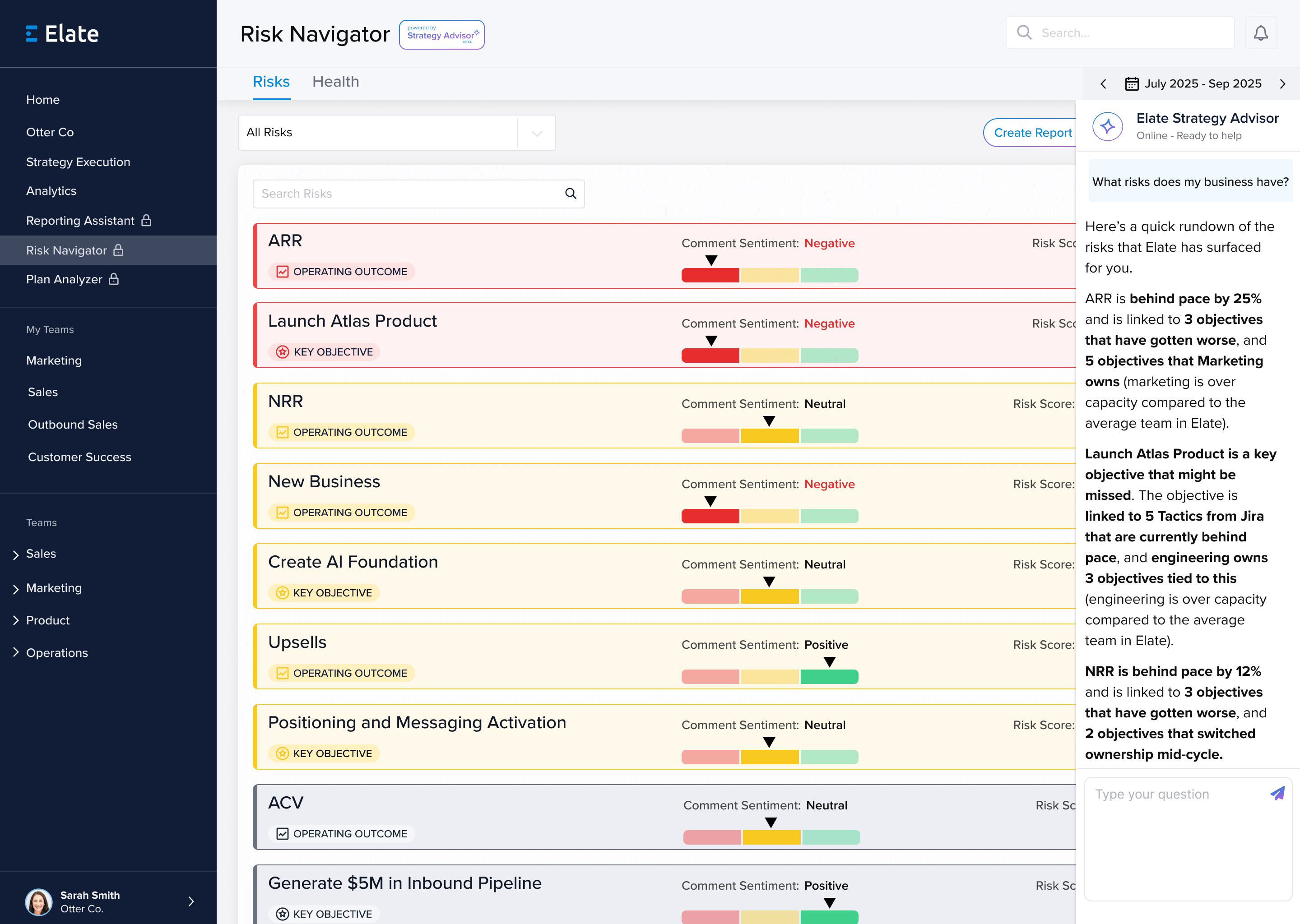





Quick answer: Strategy execution software replaces spreadsheet sprawl and slide-deck reporting with one operating layer for priorities, initiatives, KPIs, risks, and leadership updates. The goal is to stop rebuilding the story every cycle and start running the plan from a system leaders trust.
Use this guide if: strategy updates live in spreadsheets and slides today, and the monthly or quarterly reporting cycle has become a project of its own.
If you are replacing spreadsheet sprawl, this page should sit alongside best KPI dashboard software and company scorecard. For nonprofit operators dealing with the same reporting tax, also see the nonprofit strategy execution playbook.
Operator note: Spreadsheets and decks are fine for drafting. They are weak systems of record for ongoing execution. As complexity grows, they hide dependencies, create version drift, and make every executive review slower than it should be.
You know it's working when
- Owners update progress once and that information flows into executive reporting.
- Leadership sees risks before the quarter is off the rails.
- The monthly deck is no longer a separate project.
In this guide
- Why spreadsheets and slide decks break down
- What strategy execution software should replace
- What to look for in a better system
- When to keep spreadsheets versus move beyond them
- FAQs
Why spreadsheets and slide decks break down
They break for the same reason they are popular: they are flexible.
That flexibility creates problems:
- anyone can change the structure
- definitions drift across teams
- there is no reliable audit trail
- status lives in comments, side messages, and offline notes
- leadership asks the same questions every month because the answers are rebuilt, not carried forward
Slide decks create a second tax:
- someone has to repackage updates for each audience
- narrative gets separated from the source data
- risks get softened because every summary is hand-curated
- decisions disappear after the meeting unless someone manually captures them elsewhere
What strategy execution software should replace
A strong execution system replaces three manual workflows at once:
1) Update chasing
Instead of asking every owner to send notes in different formats, the system should standardize updates around what changed, what is at risk, and what is needed next.
2) Deck rebuilding
Instead of copying status into slides, the reporting layer should pull from the live plan and generate leadership-ready views directly from current updates.
3) Context switching
Instead of jumping from spreadsheet to deck to BI chart to project tracker, leaders should be able to move from priority to KPI to initiative to risk in one flow.
What to look for in software
- One connected view: priorities, initiatives, KPIs, and risks tied together
- Lightweight updates: owners should be able to update quickly without a weekly admin burden
- Rollups that keep nuance: leadership needs summary plus context, not summary alone
- Risk visibility: issues should surface before they become quarter-end surprises
- Reporting outputs: executive review, QBR, and board-ready reporting from the same source
- Integrations: the system should complement your existing CRM, project, and communication tools
When should you keep spreadsheets?
Keep spreadsheets for:
- one-time planning analysis
- scenario work
- simple lists maintained by one person
- ad hoc analysis that does not need company-wide visibility
Move beyond spreadsheets when:
- multiple teams contribute to the same priority
- KPIs and initiatives need to stay connected
- reviews depend on manual rollups
- different audiences need the same update in different formats
- reporting work is crowding out strategic work
Common signs the current system is costing you
- Leadership meetings start late because the numbers are still being reconciled
- Work looks green in a spreadsheet until the outcome misses
- The “latest deck” is always hiding in someone’s drive
- People stop trusting status because no one knows what changed
- Board and executive reporting require separate manual versions
Nonprofit and universal relevance
This is not just a corporate problem. Nonprofits feel the same pain when strategic initiatives, program updates, board reporting, and outcome measures live across Excel, PowerPoint, meeting notes, and grant trackers. The symptom is universal: reporting gets heavier as the organization gets more complex.
Strategy execution software vs spreadsheets, decks, and project tools
- Spreadsheets: good at flexibility, weak at governance and connected reporting
- Slide decks: good at presentation, weak at staying current
- Project tools: good at task execution, weak at executive rollups and strategic context
- Strategy execution software: best when it gives leadership a live system for priorities, progress, risk, and decisions
Copy/paste template: from deck-driven to decision-driven review
Priority: [name]
KPI movement: what changed this cycle
Initiative update: what moved and what slipped
Risk: the specific blocker or dependency
Decision needed: what leadership must decide
Next milestone: the proof point expected before the next review
If that template currently lives in a spreadsheet and then gets copied into PowerPoint, you have a process problem software should solve.
FAQs
Can strategy execution software completely replace spreadsheets?
Not completely, and it should not try to. Spreadsheets still matter for analysis and planning work. The goal is to replace spreadsheets as the operating system for cross-functional execution and reporting.
What about slide decks for board meetings?
You may still use a board deck. The difference is that the deck should be generated from the same system of record, not built from scratch every cycle.
Is this really different from project management software?
Yes. Project management tools help teams execute tasks. Strategy execution software helps leadership connect priorities, outcomes, risks, and decisions across teams.
What is the best first process to replace?
Replace the monthly or quarterly update cycle that currently requires the most manual assembly. That is usually where the clearest time savings and trust gains show up first.
Related resources
If spreadsheets and decks are still your operating system, the best next step is to see a connected review workflow live. Book a demo or take a platform tour.