










Quick answer: Nonprofits reduce manual work in board and funder reporting by standardizing what gets reported, assigning clear owners, collecting short updates on a cadence, connecting metrics to the initiatives that drive them, and building board or funder-ready reports from the same operating rhythm each cycle.
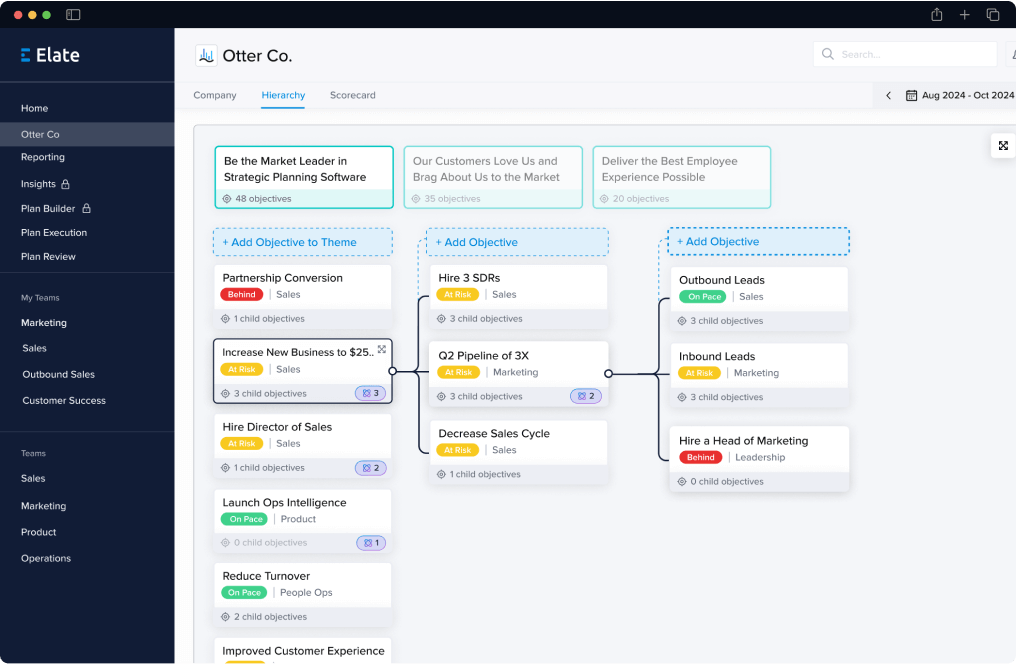
Where Elate fits: Elate helps nonprofits connect strategic priorities, program work, owners, outcomes, funder tags, board updates, and reporting views in one operating rhythm. Instead of chasing updates through spreadsheets, email, BI screenshots, CRM exports, and slide decks, teams can maintain current updates throughout the month and generate leadership, board, or funder reporting from the same system.
Use this page if: board reporting, funder reporting, grant updates, or leadership progress reviews require one person to chase program owners, reconcile metrics, rewrite narrative, and rebuild the same report every cycle.
Who this is for: nonprofit COOs, Chiefs of Staff, strategy leaders, operations teams, development and grants leaders, program leaders, and board liaisons responsible for credible progress reporting without adding more administrative work.
Best next step: Use this page with the Nonprofit Board Report Template, the Grant Reporting for Nonprofits guide, and the Nonprofit Operating Rhythm resource.
Why nonprofit board and funder reporting becomes so manual
Most nonprofits do not struggle because they lack commitment or information. Reporting becomes manual because the information needed for a credible update lives in too many places.
- The strategic plan lives in a document, slide deck, or website.
- Program updates live in emails, meeting notes, spreadsheets, or Teams folders.
- Outcome metrics live in CRM, BI, finance, grant systems, or program tools.
- Board packets are rebuilt separately from funder updates.
- Owners explain progress in different formats, which creates cleanup work before anything can be shared.
The hidden cost is not only time. Manual reporting makes the organization less confident in the story it is giving the board and funders. When progress, ownership, and outcomes are disconnected, leaders spend the reporting cycle reconciling instead of deciding.
The reporting system nonprofits actually need
A better process starts by separating source data from the operating story. CRM, finance, BI, and grant systems can stay where they are. The missing layer is the place where strategic priorities, owner updates, outcome evidence, and reporting cadence come together.
A practical nonprofit reporting system should include:
- Strategic priority structure: the board-approved goals, objectives, initiatives, and outcomes.
- Owner accountability: one clear owner for each initiative or outcome.
- Short narrative updates: what changed, what is blocked, and what happens next.
- Selected metrics: not every dashboard, only the metrics that explain progress.
- Funder or program tags: so updates can be filtered by grant, funder, program, site, or reporting requirement.
- Reusable report views: board, funder, executive team, and program views built from the same underlying updates.
Workflow: from update chase to repeatable reporting rhythm
- Confirm the reporting audiences. Define what the board, funders, executive team, and program leaders each need to see.
- Map the strategic plan to reporting categories. Connect priorities to programs, grants, initiatives, outcomes, and accountable owners.
- Create a short update standard. Every update should answer status, evidence, risk, owner, and next step.
- Collect updates before the meeting. Use reminders and deadlines so the report is not rebuilt the night before it is due.
- Separate internal detail from external reporting. Keep internal notes, risks, and follow-ups available without putting raw commentary into board or funder packets.
- Reuse the same source for multiple reports. Board and funder reports should be different views of the same current operating record, not separate projects.
What to standardize first
Do not start by building a perfect dashboard. Start by standardizing the parts of reporting that create the most rework.
1. Status language
Define what on track, at risk, off track, and complete mean. If every program uses different status language, leadership cannot compare progress across the organization.
2. Update format
Ask owners for the same five things each cycle: status, evidence, what changed, risk or blocker, and next step. This makes narrative updates easier to scan and easier to reuse.
3. Metric ownership
Every metric should have an owner, a source, a reporting period, and a plain-language explanation. A number without ownership still creates follow-up work.
4. Reporting tags
Tag work by program, funder, grant, strategic priority, site, or department so the same update can support multiple reporting needs.
5. Review cadence
Set the rhythm before reporting season begins. Monthly leadership reviews and quarterly board reports are common starting points, with funder deadlines layered in as needed.
Manual reporting vs a repeatable operating rhythm
- Manual: staff copy progress into a deck. Repeatable: owners update the work where leadership reviews it.
- Manual: funder reports are built separately. Repeatable: updates are tagged by funder, program, or grant.
- Manual: board packets rely on last-minute cleanup. Repeatable: board-ready views are prepared from current updates.
- Manual: metrics show what happened but not who owns the response. Repeatable: metrics sit next to owner narrative and next action.
- Manual: reporting knowledge lives with one operator. Repeatable: reporting history stays connected to the plan.
How Elate helps nonprofits reduce reporting work
Elate gives nonprofits a strategy execution and reporting layer that sits above spreadsheets, CRM, BI, finance, grant, and program systems. Teams can structure the plan, assign owners, collect updates, connect selected metrics, tag work by program or funder, and create board or funder-ready reporting views from the same operating record.
Elate is especially useful when the same information needs to support multiple audiences. The executive team may need an at-risk list. The board may need a concise progress pack. A funder may need updates tied to a specific grant or program. The goal is not to make every audience use the same report. The goal is to stop rebuilding the underlying information from scratch.
What most nonprofits get wrong
The most common mistake is treating board and funder reporting as a formatting problem. A cleaner deck helps, but it does not solve the update chase. The real fix is a reporting rhythm where owners update consistently, metrics connect to outcomes, and leadership uses the output to make decisions.
If the board packet is beautiful but the team still spends weeks chasing updates, the process is still broken.
Related resources
- Nonprofit Strategy Execution Software
- Nonprofit Board Report Template
- Grant Reporting for Nonprofits
- Nonprofit KPI Dashboard
- Nonprofit Strategy Execution Guide
FAQ
How do nonprofits reduce manual work in board and funder reporting?
They reduce manual work by standardizing update formats, assigning owners, connecting metrics to strategic priorities, tagging work by funder or program, and using one operating record to create board and funder-ready reports.
What causes nonprofit reporting to become so time-consuming?
Reporting becomes time-consuming when updates, metrics, evidence, and narratives live across spreadsheets, emails, CRM exports, BI dashboards, and slide decks with no consistent owner or cadence.
Should nonprofits replace their CRM or BI tool to improve reporting?
No. CRM, BI, finance, and grant systems can remain systems of record. The missing piece is usually the strategy execution layer that connects those facts to priorities, owners, narrative, and reporting cadence.
How does Elate help with nonprofit board and funder reporting?
Elate connects strategic priorities, owners, updates, selected metrics, program or funder tags, and reporting views so nonprofits can prepare board and funder updates without rebuilding the same story manually every cycle.