










Quick answer: A nonprofit board should review strategic plan progress at least quarterly, with a deeper annual review tied to planning, budgeting, and board priorities. The executive team should usually review progress monthly, while program or initiative owners may update biweekly or monthly depending on the pace of work.
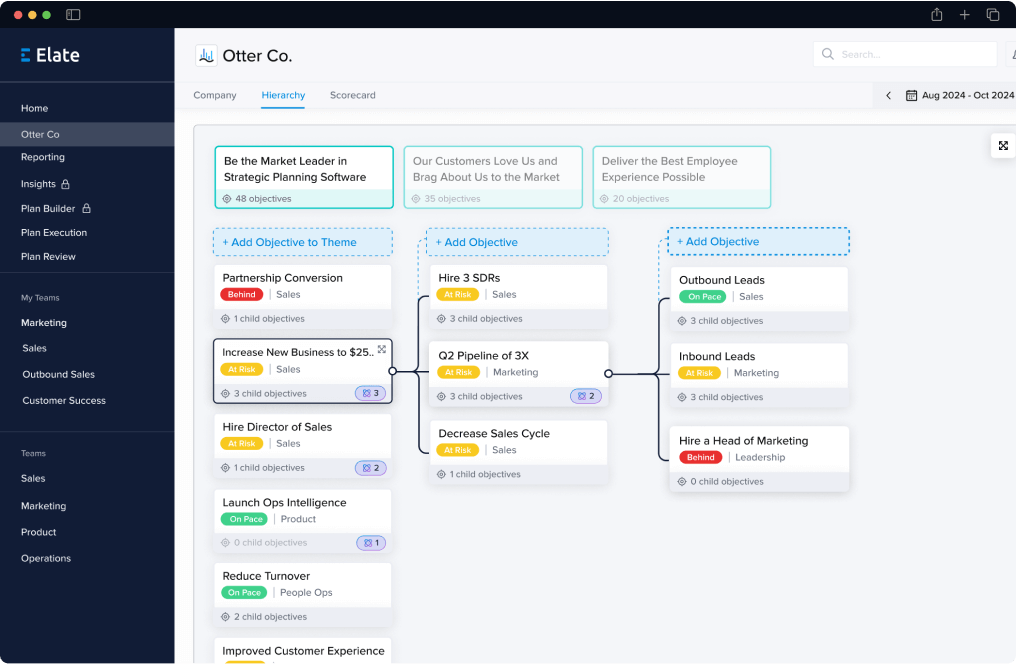
Where Elate fits: Elate helps nonprofits create the operating rhythm behind those reviews. Teams can collect owner updates, monitor overdue work, connect metrics to priorities, and prepare board-ready pre-reads without asking the board to log into a new system.
Use this page if: your organization has a strategic plan, but the board only sees progress once a year or the executive team rebuilds the update manually before each meeting.
Who this is for: nonprofit CEOs, COOs, Chiefs of Staff, board liaisons, strategy leaders, and operations teams responsible for keeping board-approved strategy active.
Best next step: Pair this cadence with the Nonprofit Board Report Template, Nonprofit KPI Dashboard, and Nonprofit Strategic Plan Implementation.
Recommended nonprofit strategic plan review cadence
Board review: quarterly
The board should review strategic plan progress at least quarterly. A quarterly review is frequent enough to surface risk and reallocate attention, but not so frequent that the board becomes an operating team.
Executive team review: monthly
The executive team should review the plan monthly, focused on what changed, what is at risk, what needs a decision, and which priorities need support.
Program or initiative owner updates: biweekly or monthly
Owners should submit short updates before the executive review. Fast-moving initiatives may need biweekly updates. Steadier work may only need monthly updates.
Annual board review: deeper reset
Once a year, the board and leadership team should review the full plan, assess outcomes, decide what carries forward, and connect the plan to budget, staffing, and funder commitments.
What the board should review quarterly
The board should not receive a raw activity report. The strongest board review focuses on governance-level progress.
- Strategic priority status.
- Major outcome metrics or evidence.
- What changed since the last review.
- At-risk priorities or blockers.
- Leadership decisions or support needed.
- Funder, compliance, or board commitments at risk.
- What will be reviewed next quarter.
A good board review helps trustees understand whether the organization is advancing mission priorities and where governance attention is needed.
What the executive team should review monthly
The executive team needs more operational detail than the board. A monthly strategic review should focus on:
- At-risk priorities first.
- Owner updates that changed since the prior month.
- Metrics that need interpretation.
- Cross-program dependencies.
- Staffing, funding, or capacity constraints.
- Decisions that unblock progress.
- Follow-ups from the prior review.
What program owners should update
Owner updates should be short. If updates are too long, people stop doing them. Ask each owner for the same core fields:
- Status: on track, at risk, off track, or complete.
- What changed since last update.
- Evidence or metric movement.
- Risk, blocker, or decision needed.
- Next action before the next review.
Signs your cadence is too weak
- The board only sees a polished annual update with no quarterly progress story.
- The executive team spends meetings asking for status instead of making decisions.
- One person manually chases every update.
- Program owners do not know what they are supposed to report.
- Metrics show what happened, but nobody can explain what the organization is doing about it.
Signs your cadence is too heavy
- Every update requires long narrative writing.
- The board receives operational detail it cannot govern.
- Staff experience the plan as extra reporting work.
- Leaders review everything, not just what changed or needs attention.
- The reporting process takes more time than the decisions it supports.
How Elate supports a nonprofit operating rhythm
Elate helps nonprofits structure priorities, owners, outcomes, updates, metrics, and reporting cadence in one place. Teams can send update reminders, identify stale work, create leadership review views, and generate board-ready summaries from the same current information.
That matters because the board does not need to live in a software platform. The board needs a clear pre-read. Elate supports the internal operating rhythm that makes that pre-read current, consistent, and easier to produce.
Related resources
- Nonprofit Strategy Execution Software
- Nonprofit Board Report Template
- Nonprofit Strategic Plan Implementation
- Nonprofit KPI Dashboard
- Nonprofit Strategy Execution Guide
FAQ
How often should a nonprofit board review the strategic plan?
A nonprofit board should review strategic plan progress at least quarterly, with a deeper annual review tied to planning, budgeting, and major board priorities.
Should the board review every initiative?
No. The board should review strategic priority status, key outcomes, major risks, and decisions needed. Detailed initiative management should stay with staff and leadership.
How often should nonprofit leadership review the strategic plan?
Most nonprofit leadership teams should review strategic plan progress monthly. Some fast-moving initiatives may need biweekly owner updates.
How does Elate help with nonprofit board review cadence?
Elate helps teams collect owner updates, track progress, surface risks, and generate board-ready pre-reads on a recurring cadence.