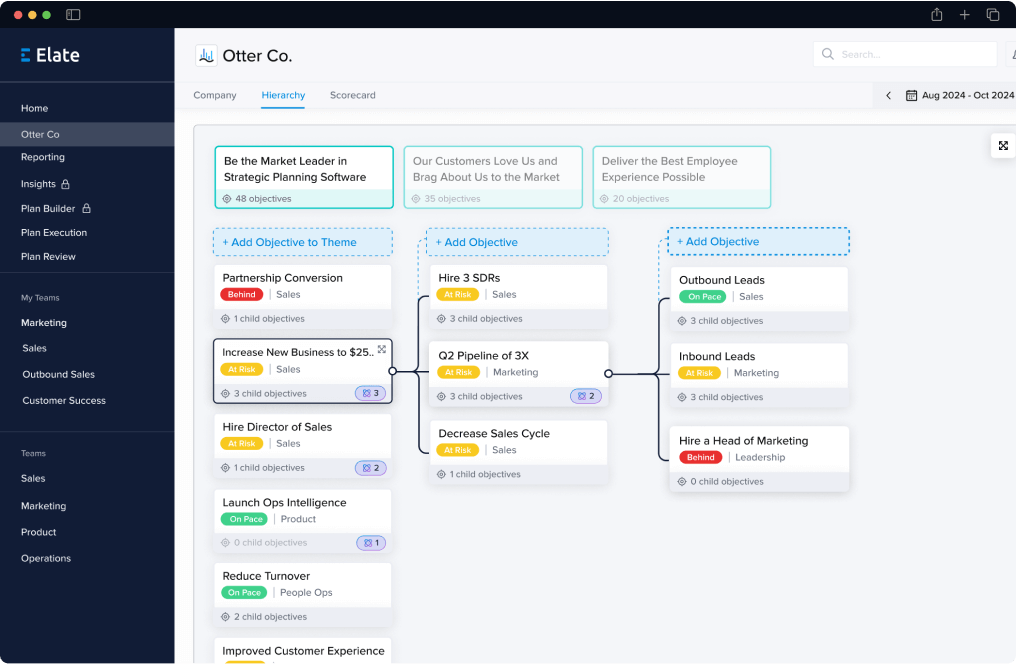











University trustee reporting should make strategic plan progress easy to review without burying trustees in operational detail. A useful pre-read shows what changed, what is on track, what is at risk, which KPIs matter, who owns the work, and which decisions or leadership questions need attention.
Elate helps higher education teams prepare trustee-ready strategic plan reports from the same operating rhythm used to collect updates and review progress. Instead of rebuilding board packets from spreadsheets, BI dashboards, slide decks, and emails, teams can connect owner narratives, KPI context, risks, evidence, and cabinet-ready updates into a consistent governance report.
What trustee strategic plan reporting software should do
Trustees do not need every operational detail. They need a clear line of sight from institutional priorities to progress, risk, and decisions. Trustee reporting software should help the institution:
- Summarize strategic priorities in a consistent format.
- Show current status and meaningful change since the last review.
- Connect selected KPIs with narrative context, not just dashboard screenshots.
- Preserve evidence for annual review, cabinet review, and institutional effectiveness needs.
- Identify risks, blockers, and leadership asks before the meeting.
- Create a board-safe pre-read that is concise enough to scan and detailed enough to trust.
The cabinet-to-trustee workflow
In practice, trustee reporting usually starts before the board packet is assembled. Cabinet or senior leadership needs to review progress, clean up language, decide what should be escalated, and make sure the update is safe to share. That requires a workflow, not just a report export.
A practical workflow looks like this:
- Owners submit short updates against assigned priorities.
- Institutional effectiveness, strategy, or cabinet operations teams review status and evidence.
- Leadership confirms which KPIs, risks, and decisions belong in the trustee pre-read.
- The final report is formatted for governance consumption.
- Questions, decisions, and follow-ups roll into the next review cycle.
What to include in a trustee-ready pre-read
A trustee-ready strategic plan update should usually include:
- Executive summary: the short version of what changed and what needs attention.
- Progress by priority: status, owner, update, and related evidence.
- KPI plus narrative: selected measures with context about why they moved.
- Risks and blockers: items that require leadership awareness or support.
- Decisions or asks: the questions trustees or cabinet should be prepared to discuss.
- Next-cycle focus: what rolls forward before the next academic or fiscal period.
Where Elate fits
Elate is useful when trustee reporting depends on manual consolidation from Excel, Teams, Power BI, Tableau, SIS, ERP, institutional effectiveness systems, and planning documents. Those systems can remain in place. Elate connects the selected strategy context leaders need to review: priorities, owners, updates, KPI context, risks, evidence, and reporting cadence.
For higher education teams, Elate can support cabinet-ready pre-reads, trustee-ready progress updates, annual strategic plan review, plan roll-forward, institutional effectiveness evidence, and reporting workflows that keep ownership visible between governance meetings.
Best fit and not the best fit
Best fit: Elate is a strong fit for institutions with an active strategic plan, recurring cabinet or trustee review, cross-unit ownership, KPI plus narrative reporting needs, and a team responsible for preparing governance-ready updates.
Not the best fit: Elate is not a replacement for BI, SIS, ERP, accreditation, assessment, or board portal systems. It works best as the strategy execution and governance reporting layer above those systems, where progress, ownership, evidence, and review cadence come together.
Related resources
- Strategic Plan Reporting Software for Higher Education
- Annual Progress Report Template for University Trustees
- Best Higher Education Strategic Planning Software
- Higher Education Annual Strategic Plan Review Software
- University Strategic Plan Reporting to Trustees
- Strategic Plan Roll-Forward Checklist for Higher Education
- Request a Demo
FAQs
What is university trustee strategic plan reporting software?
It is software that helps institutions prepare trustee-ready updates on strategic plan progress. The best reporting process connects priorities, owners, KPI context, narrative updates, evidence, risks, and decisions in a format trustees can review before or during governance meetings.
How should universities report strategic plan progress to trustees?
Universities should report progress with a concise pre-read that shows priority status, KPI context, owner narrative, risks, blockers, and decisions. Operational detail can stay in supporting materials, while the trustee report focuses on governance-level progress and tradeoffs.
Does Elate replace board portals or BI dashboards?
No. Board portals and BI dashboards can stay in place. Elate helps create the strategy execution context that feeds governance reporting, including owner updates, KPI plus narrative, risks, evidence, and follow-up.