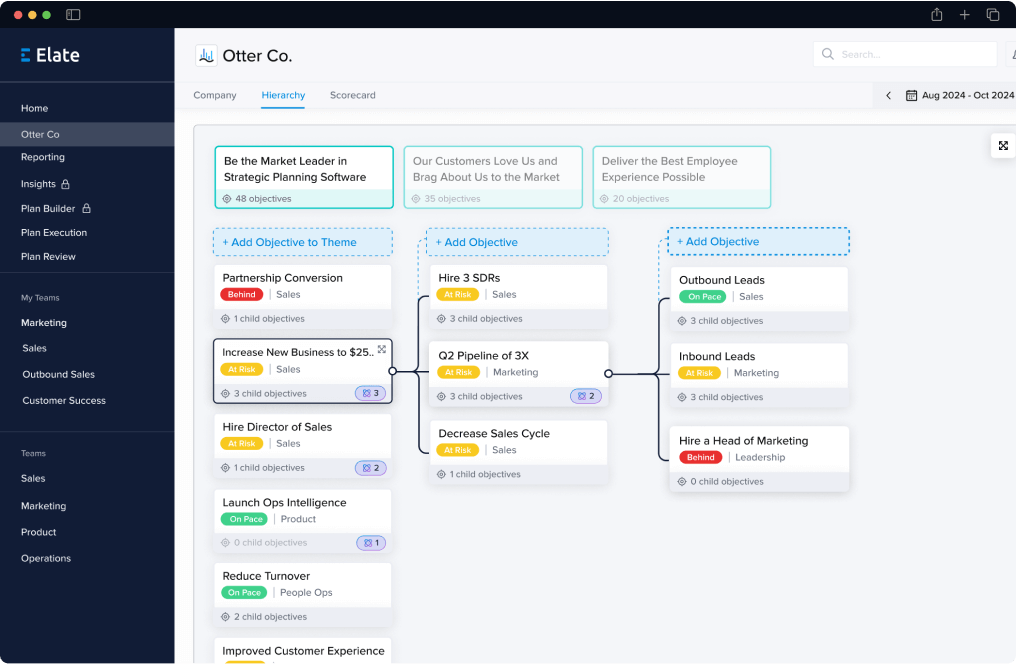











Quick answer: A credit union executive pre-read should give leaders the shortest useful view of strategic plan progress before a board, ELT, or committee meeting. It should summarize what changed, what is at risk, which metrics need attention, who owns each issue, and what decisions need to be made in the meeting.
Where Elate fits: Elate helps credit unions create push-first strategy pre-reads that leaders can consume before the meeting, then drill into when something needs attention. The goal is not another dashboard. The goal is a governed review rhythm that makes status, ownership, metrics, risks, and follow-ups visible in one place.
Use this page if: your credit union spends too much time assembling leadership updates, copying KPI screenshots, chasing owners, or running meetings where executives ask for status instead of discussing decisions.
Why this matters for credit unions: Executive attention is scarce. A strong pre-read respects how leaders actually work. It pushes the right summary before the meeting, keeps the format stable, and lets leaders pull detail only when something needs review.
Best next step: Use this page for the meeting workflow, then review Elate for credit unions and the Credit Union Strategy Execution Playbook for the full operating rhythm.
What an executive pre-read for a credit union strategic plan should accomplish
The pre-read should reduce meeting friction. Leaders should arrive aligned on the current state of the strategic plan and spend meeting time on decisions, risks, tradeoffs, and support.
- Show what changed since the last review.
- Highlight at-risk or blocked priorities first.
- Connect each issue to an owner.
- Show the few metrics that matter.
- Clarify where decisions or executive support are needed.
- Carry follow-ups into the next review.
Recommended executive pre-read structure
1. One-screen summary
- Overall strategy execution status.
- Top three changes since the last review.
- Top three items needing attention.
- Decision requests for the meeting.
2. Exceptions-first priority view
- At-risk priorities.
- Blocked initiatives.
- Metric trends that changed status.
- Late or missing updates.
- Items needing executive escalation.
3. Priority-by-priority snapshot
- Priority name and owner.
- Status and confidence level.
- Short owner narrative.
- Selected KPI context.
- Next action and due date.
4. Decision log and follow-up view
- Decisions needed today.
- Decisions made last meeting.
- Follow-ups still open.
- Items rolling into the next review.
Push summary, pull detail
The most useful credit union pre-read does not assume every executive will log into a system before every meeting. It pushes a concise summary where leaders already work, then gives them a way to drill into the detail when a risk, metric, or owner update needs attention.
This is why the format matters. A stable pre-read builds the habit. A shifting report recreates the same friction as a manually rebuilt deck.
Manual pre-read vs. executive pre-read in Elate
Manual pre-read
- Strategy Ops or leadership staff chase owners for updates.
- KPI screenshots are copied from BI or spreadsheets.
- Status language changes by department.
- Meetings start with explanations instead of decisions.
- Follow-ups get lost between cycles.
Pre-read in Elate
- Owners update against a consistent cadence.
- Priority status, KPI context, risks, and narrative live together.
- Executives see exceptions first.
- Meeting discussion starts with what needs attention.
- Follow-ups carry into the next review cycle.
What makes a pre-read useful to credit union leaders
A pre-read is useful when it changes the meeting. If leaders still spend most of the meeting asking for basic status, the pre-read is not doing enough.
- Fast scan: leaders can understand the current state quickly.
- Stable format: the report looks familiar every cycle.
- Trusted metrics: status colors and thresholds are governed.
- Clear ownership: every priority and risk has an accountable owner.
- Decision focus: the pre-read makes the meeting agenda obvious.
How Elate supports executive pre-reads for credit unions
Elate helps credit unions run a repeatable pre-read rhythm by connecting strategic priorities, owners, KPIs, risks, and updates before the meeting. Leaders can review the summary, drill into what needs attention, and carry decisions and follow-ups forward.
Elate also supports the governance realities of a credit union rollout. Teams can plan for SSO, permissions, vendor management, report access, and the right level of visibility before broad adoption.
Related resources
- Credit union strategic plan board update template
- Credit union strategic plan metric governance guide
- Credit union strategic plan execution software
- Elate for credit unions
- Credit Union Strategy Execution Playbook
- AI reporting assistant
- Elate platform
- See an Elate product demo
FAQ
What is an executive pre-read for a credit union strategic plan?
It is a concise update sent before a leadership, board, or committee meeting so leaders can review strategic plan progress, risks, metrics, and decision needs before the discussion begins.
What should a credit union executive pre-read include?
It should include an executive summary, at-risk priorities, KPI context, owner updates, decisions needed, and follow-ups from prior meetings. The best format is exceptions-first, not a long report sorted by department.
How do credit unions reduce manual work in executive pre-reads?
They reduce manual work by collecting updates on a cadence, standardizing status definitions, connecting selected KPIs to priorities, and generating the pre-read from the current execution record. Elate helps run that rhythm without rebuilding a deck every cycle.
Should executives have to log into software to consume the pre-read?
Not always. Many leaders prefer a push-first summary they can scan before the meeting, with the option to drill into details. Elate supports the operating rhythm behind that pre-read so the summary stays current and trusted.
How does Elate help credit union leaders use meeting time better?
Elate helps leaders start with what changed, what is at risk, who owns it, and what decision is needed. That shifts the meeting away from status collection and toward action, support, and follow-up.