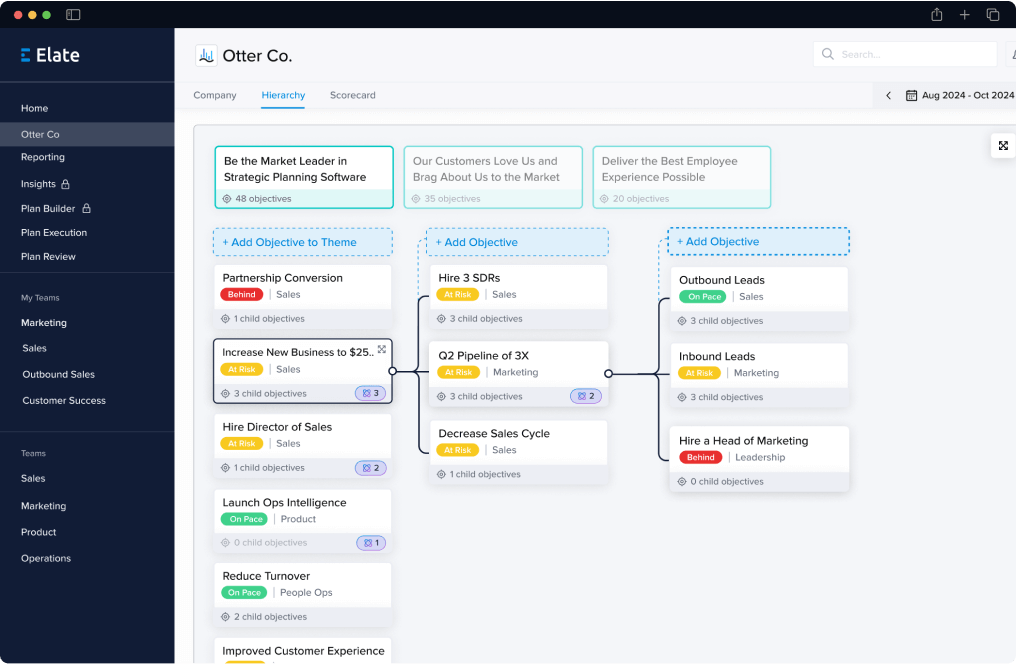











Quick answer: A credit union strategic plan board update should give directors a concise, governed view of what changed, what is on track, what is at risk, who owns each priority, which metrics matter, and what decisions or support are needed next. The best board update is not a long status deck. It is an exceptions-first pre-read with consistent sections, clear owners, selected KPIs, risk flags, and follow-up items.
Where Elate fits: Elate helps credit unions turn strategic plan board updates into a repeatable governance rhythm. Instead of rebuilding packets from Excel, Power BI, Planner, Teams, and slides, Elate connects priorities, owners, KPI context, narrative updates, risks, decisions, and board-ready reporting in one execution layer.
Use this page if: your credit union needs a practical board update structure for strategic plan progress, quarterly committee reviews, annual planning updates, or executive reporting to directors.
Why this matters for credit unions: Credit unions are board-governed, member-focused, and often operating across multiple strategic priorities at once. Directors need enough context to govern well, but not so much detail that the packet becomes an operational dashboard. The update should make progress, risk, and decisions easy to see.
Best next step: Start with the Elate credit unions page for the vertical overview, then use the Credit Union Strategy Execution Playbook for the broader operating model.
Board update template for credit union strategic plans
Use this structure when preparing a board packet, committee update, or executive strategy review. The goal is to help directors quickly understand progress against the strategic plan without forcing every leader into another system.
1. Board-ready executive summary
- Reporting period and meeting date.
- Overall strategic plan status.
- Three to five most important changes since the last update.
- Top risks, blockers, or tradeoffs.
- Decisions, guidance, or support requested from the board.
2. Strategic priority snapshot
- Priority name.
- Executive owner.
- Status: on track, at risk, off track, complete, or paused.
- Short narrative update.
- Selected KPI or evidence point.
- Next action before the next board or committee review.
3. KPI and outcome context
Do not turn the packet into a dashboard dump. Select the metrics that explain strategic progress and pair each one with context.
- Metric name and owner.
- Current value or trend.
- Goal, threshold, or benchmark if available.
- Directionality: higher is better, lower is better, or range-based.
- Source system, such as Power BI, Excel, core banking data, CRM, finance, or manual owner update.
- Plain-English interpretation.
4. Risks, blockers, and decisions
The board does not need every task. It needs the issues that could affect member outcomes, financial priorities, compliance posture, operating capacity, or strategic timing.
- What is at risk?
- Who owns the response?
- What decision is needed?
- What happens if action is delayed?
- When will leadership review this again?
5. Follow-ups and accountability
- Decisions made in the meeting.
- Questions to answer before the next review.
- Owners for follow-up actions.
- Due dates and review cadence.
- Items to carry forward into the next packet.
The two-minute board update test
A strong board update should pass a simple test. In two minutes, a director should be able to answer:
- What changed since the last review?
- Which priorities are on track?
- Which priorities are at risk?
- Who owns the next move?
- Which metrics require attention?
- What decision, guidance, or support is needed?
If the packet cannot answer those questions quickly, the meeting becomes a status chase instead of a governance discussion.
Manual board deck vs. governed board update in Elate
Manual board deck
- Updates are collected through email, spreadsheets, Teams messages, and meetings.
- KPIs are copied from dashboards or spreadsheets into slides.
- Status definitions vary by owner or department.
- Board packets are rebuilt every cycle.
- Follow-ups live in meeting notes or separate trackers.
Governed board update in Elate
- Strategic priorities, owners, updates, KPIs, risks, and follow-ups stay connected.
- Selected metrics are paired with owner narrative and status context.
- Leadership reviews an exceptions-first view before the meeting.
- Board-ready reporting can be generated from current updates.
- History carries forward so the next update starts from the last review.
How Elate helps credit unions prepare strategic plan board updates
Elate helps credit unions create a governed rhythm for board and executive strategy updates. Teams can structure priorities, assign owners, collect short updates, connect selected KPIs, surface risks, and prepare board-ready reporting without replacing the systems that already hold data.
That matters because credit union strategy execution usually lives across many tools. Elate does not need to replace Power BI, Excel, Teams, Planner, finance, or operational systems. It creates the operating layer that makes progress reviewable and decision-ready.
Related resources
- Credit union executive pre-read for strategic plan reviews
- Credit union strategic plan metric governance guide
- Credit union strategic plan execution software
- Elate for credit unions
- Credit Union Strategy Execution Playbook
- Board update software for strategy execution
- Strategy execution software
- See an Elate product demo
FAQ
What should a credit union strategic plan board update include?
It should include a short executive summary, strategic priority status, owner updates, selected KPIs, risks, decision points, and follow-ups. The best board updates are concise, consistent, and designed for governance review.
How do credit unions report strategic plan progress to the board?
Credit unions should collect owner updates, confirm metric context, flag risks, and prepare an exceptions-first summary before the meeting. Elate helps make that process repeatable by connecting priorities, owners, KPIs, updates, risks, and reports in one operating rhythm.
Should a credit union board update include every KPI?
No. Board updates should include the metrics that explain progress, risk, and decision needs. Detailed dashboards can stay in BI tools. The board packet should focus on the few metrics that connect directly to strategic priorities.
How often should credit unions report strategic plan progress to the board?
Many credit unions review strategic plan progress quarterly with the board and more frequently with executives. The right cadence depends on board calendar, leadership rhythm, and how often priorities materially change.
How does Elate help with credit union board updates?
Elate helps credit unions connect strategic priorities, owners, metrics, risks, narrative updates, and follow-ups so board updates can be created from current strategy execution data instead of rebuilt manually each cycle.