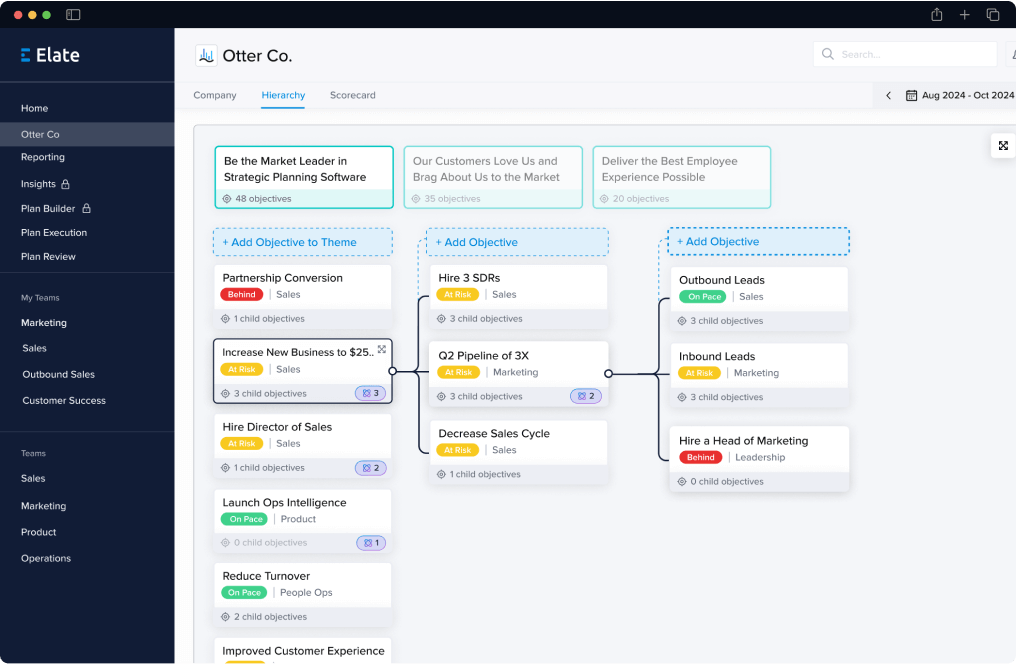











Institutional effectiveness teams are often asked to prove strategic plan progress, support annual reporting, preserve evidence, and prepare leadership-ready updates. The challenge is that the evidence usually lives across assessment systems, BI dashboards, SIS or ERP data, spreadsheets, accreditation materials, departmental updates, and planning documents.
Elate helps institutional effectiveness, strategy, and cabinet teams connect selected KPIs, owner updates, evidence, risks, and narrative context into a repeatable strategic plan progress reporting rhythm. It does not replace assessment, accreditation, SIS, ERP, IR, or BI systems. It helps make the strategic plan reviewable across those inputs.
Why institutional effectiveness reporting needs more than dashboards
Dashboards can show numbers, but institutional effectiveness work also needs context. Leaders need to understand which priorities are moving, which owners are responsible, what evidence supports the status, where risks are emerging, and what needs attention before the next cabinet, trustee, accreditation, or annual review cycle.
When that context is scattered, IE teams become the reporting integrator. They collect updates, reconcile measures, chase owners, preserve evidence, and translate progress into a narrative leaders can use. Software should reduce that manual reconstruction, not create another disconnected reporting layer.
What IE teams need to connect
A practical strategic plan progress workflow for institutional effectiveness should connect:
- Strategic priorities: the institutional goals or objectives being reviewed.
- Owners: the cabinet member, division, department, or initiative lead responsible for progress.
- KPIs and measures: the selected metrics that belong in the strategy story.
- Narrative updates: what changed, why it changed, and what happens next.
- Evidence: links, artifacts, notes, and supporting context needed for review.
- Risks and blockers: items that need leadership attention.
- Reporting outputs: cabinet updates, trustee pre-reads, annual reports, and planning-cycle summaries.
KPI plus narrative matters
Institutional effectiveness reporting often fails when it becomes either too numeric or too narrative. A KPI without context can create confusion. A narrative without evidence can feel subjective. The stronger model is KPI plus narrative: a selected measure, the owner responsible for the work, the evidence behind the update, and a short explanation of what leaders should know.
This is especially important during annual review and plan roll-forward. The institution needs to preserve evidence from the current cycle while preparing owners, measures, and cadence for the next cycle.
Where Elate fits
Elate gives IE and strategy teams a strategy execution layer for progress reporting. Teams can connect priorities, owners, updates, selected KPIs, risks, evidence, and executive-ready reporting so cabinet and trustee reviews are based on a shared operating view.
Elate works alongside existing higher education systems such as Excel, Teams, Power BI, Tableau, SIS, ERP, assessment tools, accreditation systems, and institutional research workflows. Those systems can remain the source for detailed data and evidence. Elate helps package the strategic plan context into a review rhythm leaders can use.
Best fit and not the best fit
Best fit: Elate is a strong fit for institutions where IE, IR, strategy, or cabinet operations teams need to connect strategic plan progress, evidence, owners, KPIs, risks, and leadership reporting across academic-year, fiscal-year, or accreditation-adjacent cycles.
Not the best fit: Elate is not a replacement for accreditation management, assessment systems, SIS, ERP, BI, or institutional research databases. If the need is only formal accreditation evidence storage or raw data analysis, those systems should remain primary.
Related resources
- Institutional Effectiveness Strategic Plan Progress Report Template
- Accreditation, Institutional Effectiveness, and Strategic Planning
- Strategic Plan Reporting Software for Higher Education
- Higher Education Annual Strategic Plan Review Software
- University Trustee Strategic Plan Reporting Software
- Strategic Plan Roll-Forward Checklist for Higher Education
- Elate Platform
- Request a Demo
FAQs
What is institutional effectiveness strategic plan progress software?
It is software that helps institutional effectiveness and strategy teams connect strategic priorities, KPIs, evidence, owner updates, narrative context, risks, and reporting outputs so progress can be reviewed consistently.
How should IE teams report strategic plan progress?
IE teams should connect KPI evidence with owner narrative, status, risks, and leadership-ready reporting. The goal is to make progress clear enough for cabinet, trustees, annual review, and planning-cycle decisions.
Does Elate replace accreditation or assessment systems?
No. Elate works alongside accreditation, assessment, SIS, ERP, BI, and institutional research systems. It helps connect selected evidence and updates to strategic plan ownership, cadence, and reporting.