










Quick answer: A nonprofit strategic plan defines the long-term priorities, outcomes, and direction the organization is committed to. A nonprofit operating plan translates that strategy into annual or quarterly work with owners, initiatives, metrics, timelines, resources, risks, and a review cadence.
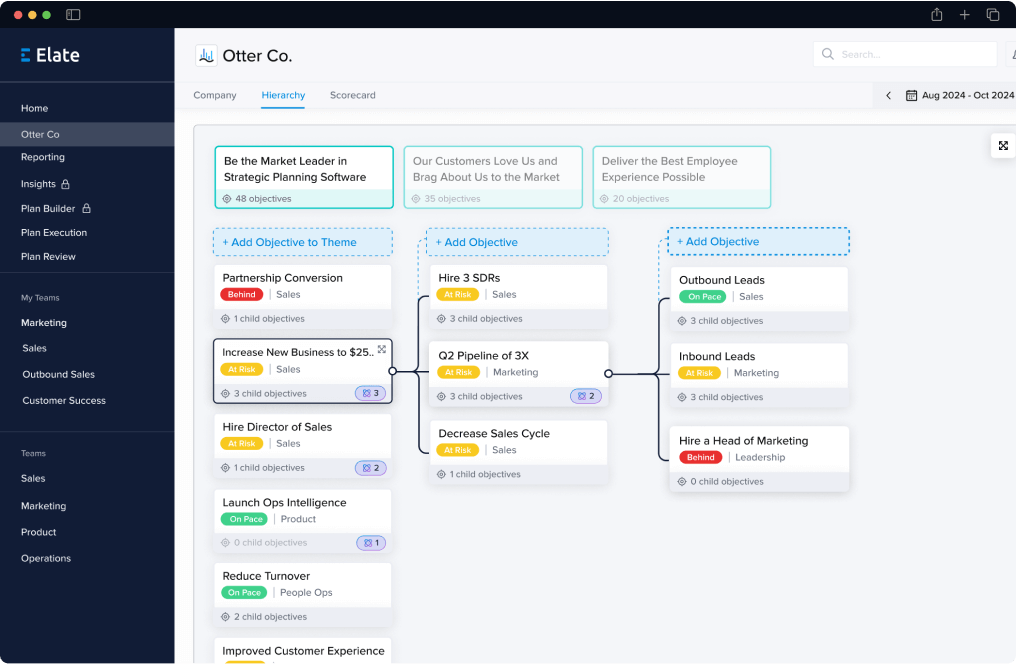
Where Elate fits: Elate helps nonprofits connect both layers. The strategic plan can live as priorities and outcomes, while the operating plan connects those priorities to initiatives, owners, updates, scorecards, risks, and board or funder reporting.
Use this page if: your organization has a board-approved strategic plan, but teams are not clear on what work should happen this quarter, who owns it, or how progress will be reported.
Who this is for: nonprofit executive teams, COOs, Chiefs of Staff, strategy leaders, program leaders, finance partners, and board liaisons translating strategy into execution.
Best next step: Use this with Nonprofit Strategic Plan Implementation, the Nonprofit Operating Rhythm page, and the Nonprofit KPI Dashboard.
Strategic plan vs operating plan
Strategic plan
The strategic plan answers where the organization is going and what outcomes matter most. It is usually approved by the board and covers a multi-year horizon.
A strong nonprofit strategic plan includes:
- Mission and vision context.
- Strategic priorities or pillars.
- Desired outcomes.
- High-level measures of success.
- Major commitments to communities, funders, or the board.
Operating plan
The operating plan answers how the organization will make progress now. It translates the strategic plan into work the team can own, review, and adjust.
A strong nonprofit operating plan includes:
- Annual or quarterly initiatives.
- Owners and supporting teams.
- Milestones and deadlines.
- Outcome metrics and evidence sources.
- Risks, dependencies, and capacity constraints.
- Leadership and board reporting cadence.
Why nonprofits need both
A strategic plan without an operating plan becomes a high-level document. An operating plan without strategy becomes a task list. Nonprofits need both because mission impact depends on connecting long-term commitments to day-to-day execution.
The strategic plan helps the organization choose. The operating plan helps the organization follow through.
Example: how the two layers connect
Strategic priority: Improve access to services across underserved communities.
Operating objective: Expand service availability in three priority regions this fiscal year.
Initiatives: launch referral partnerships, hire regional coordinators, update intake workflow, and build community outreach cadence.
Metrics: number of clients served, referral conversion, wait time, retention, and regional coverage.
Review cadence: monthly leadership review, quarterly board progress update, and funder-specific reporting as needed.
What should be in a nonprofit operating plan
1. Priority connection
Every operating initiative should ladder up to a strategic priority. If it does not, decide whether it is truly strategic or simply ongoing work.
2. Owner
Each initiative needs a clear owner. Supporting teams can contribute, but the plan should show who is accountable for progress.
3. Outcome or measure
Define how progress will be evaluated. Use outcome measures where possible and activity measures where they help explain execution.
4. Update cadence
Define how often owners update progress and where leadership reviews the update.
5. Reporting view
Decide what the executive team, board, and funders each need to see. Do this before reporting season begins.
Common mistakes
- Turning the strategic plan into a giant task list. The plan should stay focused on priorities and outcomes.
- Creating an operating plan with no board connection. The operating plan should support board commitments, not sit separately.
- Tracking activities without outcomes. Activity shows effort. Outcomes show whether the work is moving the mission forward.
- Overloading owners. If every team owns too many initiatives, nothing receives enough attention.
- Reviewing only once a year. Operating plans need a monthly or quarterly review rhythm.
How Elate connects strategic plans and operating plans
Elate helps nonprofits connect board-approved priorities to annual or quarterly operating work. Teams can structure priorities, objectives, initiatives, owners, scorecards, and updates in one system, then create leadership, board, or funder-ready reports from that operating record.
This keeps the strategic plan from becoming disconnected from execution. It also keeps the operating plan from becoming a task list with no link to mission, outcomes, or board commitments.
Related resources
- Elate for Nonprofits
- Nonprofit Strategic Plan Implementation
- Nonprofit Operating Rhythm
- Nonprofit KPI Dashboard
- Nonprofit Board Report Template
FAQ
What is the difference between a nonprofit strategic plan and an operating plan?
A strategic plan defines long-term priorities and outcomes. An operating plan translates those priorities into owned work, measures, timelines, resources, and review cadence.
Does every nonprofit need an operating plan?
Any nonprofit with a strategic plan, board reporting needs, multiple programs, or cross-functional initiatives should have an operating plan that makes execution clear.
How often should the operating plan be updated?
The operating plan should usually be updated monthly or quarterly, with a deeper annual reset tied to budgeting and strategic plan review.
How does Elate support nonprofit operating plans?
Elate connects strategic priorities to initiatives, owners, outcomes, updates, risks, and reports so the operating plan becomes a working system instead of another spreadsheet.