










Quick answer: Nonprofit strategic plan examples are useful when they help you evaluate structure, clarity, and execution-readiness, not when they tempt you to copy another organization’s language or priorities.
Operator note: The value of examples is not inspiration alone. It is pattern recognition. Good examples show you what belongs in the plan, how much detail is enough, and whether the format can survive real reviews later.
Why this matters: Teams usually look for examples because they want to calibrate depth, format, and level of specificity. The useful move is not to copy another plan. It is to see what good structure looks like and adapt it to your own operating reality.
At a glance:
- You can explain why one example is better for communication while another is better for execution.
- Your final plan borrows structure and discipline, not recycled nonprofit language.
- The finished plan is easier to review, update, and report on than the examples you started with.
On this page:
- What to look for in nonprofit strategic plan examples
- The most common strategic plan formats nonprofits use
- What strong examples include after board approval
- How to evaluate whether an example is actually useful
- A simple framework for adapting examples to your organization
- FAQs
What should you look for in nonprofit strategic plan examples?
When you review an example, do not ask only whether it looks polished. Ask whether it answers the core execution questions clearly.
- Can you quickly identify the top priorities?
- Does the plan describe outcomes, not just goals and aspirations?
- Is there evidence of ownership or accountability?
- Can the format translate into board reporting and leadership reviews?
- Would this still make sense six months into the year, not just on launch day?
The best examples help you see how an organization communicates strategy without hiding the hard parts of execution.
How should nonprofits use strategic plan examples?
The right way to use nonprofit strategic plan examples is to borrow structure, level of detail, and communication patterns, then rewrite the choices based on your own mission, constraints, and board reality.
- Use examples to compare formats, not to shortcut the strategic thinking.
- Look for examples that balance communication value and execution value.
- Study how examples handle priorities, metrics, ownership, and board readability.
- Create both a communication version and a working version if needed.
Common nonprofit strategic plan formats
1) The traditional multi-year plan
This format usually includes mission, vision, environmental context, strategic themes, goals, and key initiatives. It is useful for board approval and external communication, but it often needs a separate operating layer to stay actionable.
2) The one-page strategic summary
This is stronger for alignment and communication. It works best when the organization also keeps a more detailed working version behind it.
3) The theme-and-outcome model
This format groups objectives under 3 to 5 themes and pairs each one with measures and ownership. For many nonprofits, this is the most practical balance between strategy and execution.
4) The program roll-up model
This works well for multi-program or multi-site nonprofits that need an organizational view without losing local ownership.
5) The board-summary format
This is less a full plan and more a governance translation layer. It is useful when directors need the story in a concise format, but it should still map back to the actual working plan.
What strong nonprofit strategic plan examples include after board approval
The most useful examples do more than present priorities clearly. They show whether the plan can become a working system after the board approves it. That is where many nonprofit plans break down: the document is strong, but the operating rhythm is unclear.
When you review examples, look for the pieces that make the plan easier to run:
- Named ownership: Each major priority should have a clear owner or owning team, not just a broad department label.
- Outcome language: The plan should define what progress will look like, not only what activities the organization plans to complete.
- Reporting cadence: Leaders should know when updates will be reviewed, who contributes them, and how board or funder updates will be prepared.
- Program or site roll-up: Multi-program nonprofits need a way to see local progress without flattening the context that matters to each team.
- Board and funder readability: The plan should support concise updates that show progress, blockers, outcomes, and next steps.
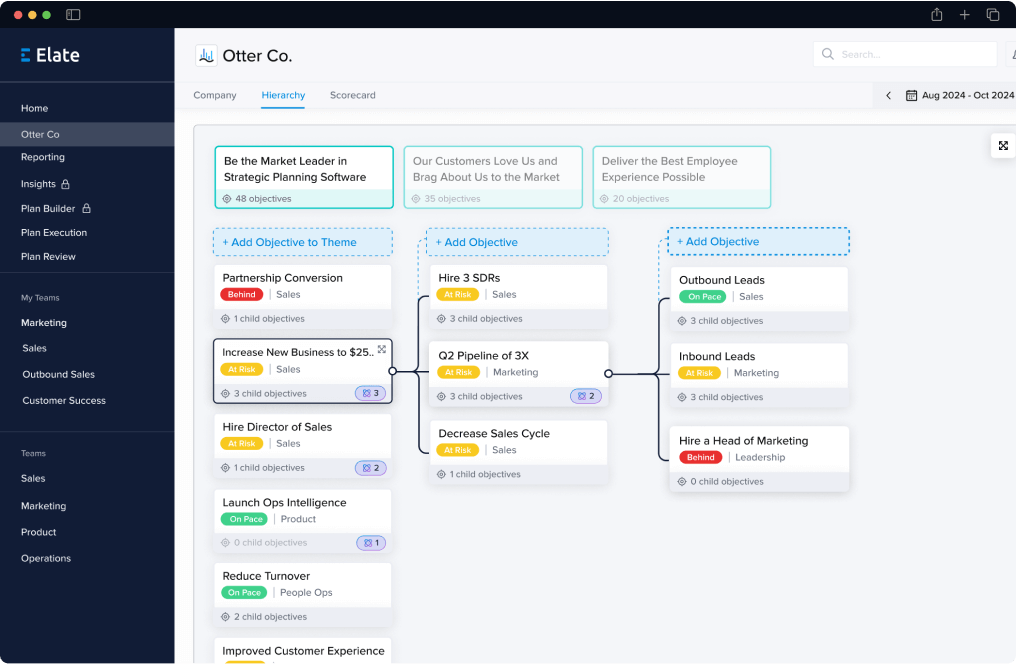
This is where a plan example starts to connect to execution. A nonprofit can have a polished strategic plan and still struggle if updates live in spreadsheets, board reporting is rebuilt every cycle, and program owners are chased manually. If the goal is to turn the plan into a repeatable operating rhythm, the next step is often nonprofit strategic planning software that connects priorities, owners, outcomes, and updates in one reviewable flow.
For board and funder reporting, the same principle applies. The plan should make it easier to explain what changed, what is at risk, and what needs attention. That is why many nonprofit teams also need a cleaner way to produce board and funder reporting without rebuilding the story from scratch each cycle.
If you need a starting point to build your own structure, use the nonprofit strategic plan template. If you already have a plan and need to make it operational, see how to approach nonprofit strategic plan implementation or build a stronger nonprofit operating rhythm.
How to evaluate whether an example is actually useful
Use this quick rubric:
- Clarity: Can someone new understand the priorities quickly?
- Specificity: Are the objectives concrete enough to track later?
- Ownership: Is accountability implied clearly, or totally absent?
- Measurement: Are there real outcomes, or only broad ambition statements?
- Reviewability: Could leadership and the board use this in recurring reviews?
If an example scores well on communication but poorly on reviewability, it may still be worth using for board-facing design. Just do not mistake that for a working execution plan.
How to adapt an example without copying it
- Borrow the structure. Keep the layout or section logic that makes the example easy to understand.
- Rewrite the priorities from first principles. Your mission, constraints, and board reality are not identical to anyone else's.
- Add measures and owners where examples are vague. This is where many public-facing plans stop short.
- Design the review rhythm now. Do not assume you will figure it out later.
- Create both versions. Use one version for communication and one for running the work.
If your team also needs a way to report progress once the plan is live, start with nonprofit board report template and nonprofit operating rhythm.
Copy/paste example review framework
Example scenario: Use this when your team is reviewing 3 to 5 nonprofit strategic plan examples before drafting your own plan.
Example source: [organization or URL]
What this example does well: [clarity, structure, communication, use of themes, board readability]
What this example is missing: [owners, measures, update logic, operating cadence]
What we should borrow: [specific structural choice]
What we should not borrow: [language, level of vagueness, format mismatch]
How this informs our plan: [specific decision for your template or planning process]
Common mistakes when using strategic plan examples
- Copying language instead of solving your own choices.
- Choosing the prettiest example instead of the most usable one.
- Ignoring how the example would hold up in quarterly reviews.
- Using only public-facing examples. Those often hide the working layer leaders actually use.
- Skipping the translation to operating rhythm, measures, and reporting.
Related resources: After reviewing examples, move straight into the nonprofit strategic planning process, The Nonprofit Operating Guide, and the nonprofit strategy execution playbook.
FAQs
Where can nonprofits find strategic plan examples?
Many nonprofits publish strategic plans publicly, especially when the document is useful for donors, communities, funders, or board transparency. Use those examples as references for format and structure, not as a shortcut to your own strategic choices.
What is the best format for a nonprofit strategic plan?
The best format is the one your organization can both communicate and run. In practice, that often means a concise summary version plus a more detailed working version with measures, owners, and review cadence.
Should nonprofit strategic plans include metrics?
Yes. Without measures, the organization will struggle to tell whether a priority is progressing, drifting, or stalled.
Can small nonprofits still use strategic plan examples?
Yes, but they should simplify aggressively. Small teams benefit even more from a clear, lightweight format because they have less capacity for document overhead.
How do we keep our final plan from becoming shelfware?
Do not stop at the example. Pair the plan with a working template, a recurring operating rhythm, and a board reporting format that uses the same structure.
Want to see how nonprofit teams turn strategic plans into a working review system? Explore how Elate connects priorities, ownership, outcomes, and reporting.