










Quick answer: Nonprofits build a strategic plan that teams actually use by keeping the plan simple enough to run, translating priorities into owned work, defining a review cadence, connecting metrics to outcomes, and making progress visible in the meetings where decisions happen.
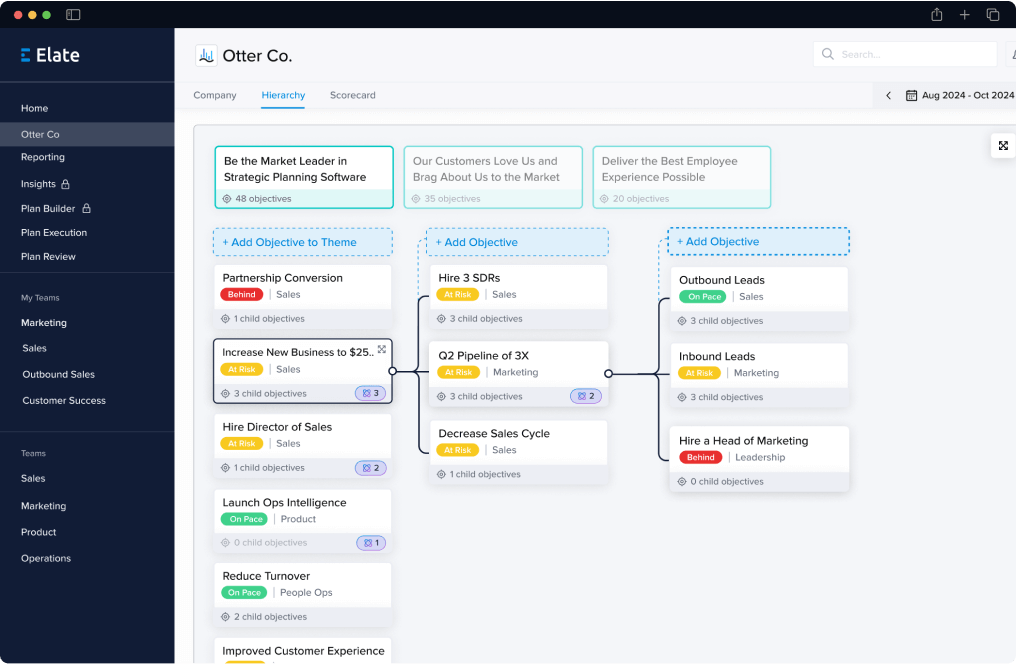
Where Elate fits: Elate helps nonprofits turn the strategic plan into a living system. Teams can connect mission priorities to objectives, initiatives, owners, measures, risks, and updates, then use those updates in leadership, board, and funder reporting.
Use this page if: your nonprofit has a thoughtful strategic plan, but program teams, leaders, or board members struggle to see how the plan connects to their actual work.
Who this is for: nonprofit executive leaders, COOs, Chiefs of Staff, strategy and operations teams, program leaders, and board liaisons who need a plan that supports action, not just alignment.
Best next step: Use this page with the Nonprofit Operating Plan Template, Nonprofit Strategic Plan Implementation, and Nonprofit KPI Dashboard.
What makes a nonprofit strategic plan usable
A usable nonprofit strategic plan is not longer, more polished, or more comprehensive. It is easier to translate into decisions, work, ownership, and reporting.
Teams are more likely to use the plan when it answers:
- What are the few priorities that matter most?
- What outcomes are we trying to move?
- Who owns each priority or initiative?
- What work is in scope this year?
- What metrics or evidence will show progress?
- Where will progress be reviewed?
- What happens when something is off track?
The structure teams need
Most plans fail at the middle layer between board-approved strategy and program execution. Build the plan with this structure:
1. Mission and strategic priorities
Start with a small set of board-approved priorities that explain what the organization will focus on over the planning period.
2. Outcomes
Define what should change for the people, communities, programs, funders, or operating model the plan is meant to affect.
3. Initiatives
Translate each priority into a manageable set of initiatives or workstreams. This is where teams understand what they actually need to do.
4. Owners
Assign one accountable owner for each initiative or outcome. Shared work is fine, but shared ownership without a clear lead creates drift.
5. Cadence
Define when updates are due, who reviews them, and what decisions the review should support.
6. Reporting
Decide how progress will be reported to leadership, the board, funders, and program teams before the first reporting cycle begins.
How to make the plan useful to program teams
Program teams will use the plan when it helps them prioritize, protect capacity, and show progress. They will avoid it when it feels like an unrelated reporting exercise.
To make the plan practical:
- Use the language teams already use where possible.
- Limit the number of active initiatives per priority.
- Make ownership explicit.
- Collect short updates, not long reports.
- Show how program work ladders up to mission outcomes.
- Use the plan in meetings that already exist.
- Review risks and blockers before reviewing everything that is on track.
How to make the plan useful to leaders and the board
Leaders need a concise view of progress, risk, and decisions. The board needs a governance-level story, not every operational detail.
A leadership or board-ready view should include:
- Priority status.
- Owner or accountable team.
- Key outcome metrics.
- Short narrative on what changed.
- Risks, blockers, and decisions needed.
- Next review date or follow-up action.
What most nonprofits get wrong
The biggest mistake is building a plan for approval instead of execution. A plan can be inspiring and still not be usable. If the plan does not tell teams what to own, what to update, and how leadership will use the update, it will fade after launch.
The second mistake is turning the plan into a task tracker. Nonprofits need task systems, but a strategic plan should show whether the work is advancing mission outcomes, not just whether tasks are complete.
How Elate helps nonprofits build plans teams actually use
Elate helps nonprofits structure the plan into priorities, objectives, initiatives, owners, and outcomes. Teams can submit short updates, connect selected metrics, identify risks, and create board or funder-ready reports from the same system.
That makes the strategic plan easier to use because it becomes part of the operating rhythm. Program owners update where leadership reads. Leaders review progress where decisions happen. Board and funder reports come from the same current record.
Related resources
- Elate for Nonprofits
- Nonprofit Operating Plan Template
- Nonprofit Strategic Plan Implementation
- Nonprofit Operating Rhythm
- Nonprofit Strategy Execution Guide
FAQ
How do nonprofits build a strategic plan teams actually use?
They build around a small set of priorities, clear owners, measurable outcomes, recurring updates, leadership review, and reporting that connects the plan to board, funder, and program needs.
Why do teams ignore strategic plans?
Teams ignore plans when they are too abstract, disconnected from their work, missing ownership, or not used in leadership decisions and reporting.
Should a nonprofit strategic plan include every initiative?
No. It should include the initiatives that matter most to mission, outcomes, board commitments, and major operating priorities. Too much detail makes the plan harder to use.
How does Elate make a nonprofit strategic plan easier to use?
Elate connects priorities, initiatives, owners, metrics, updates, risks, and reporting so teams can use the plan in their normal operating rhythm instead of treating it as a static document.