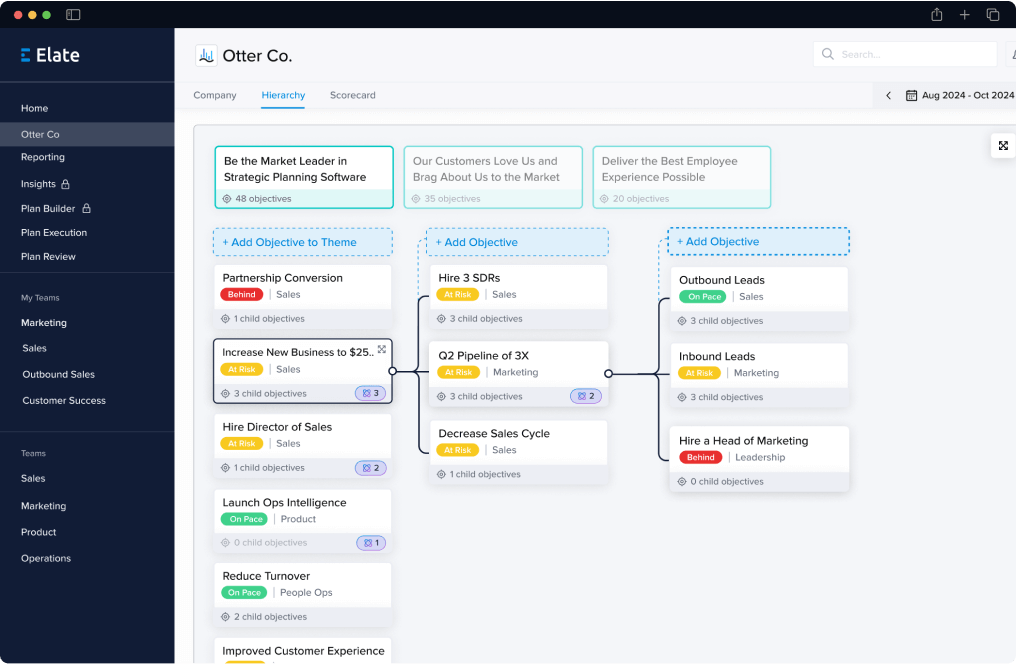







Quick answer: Nonprofit strategic planning software helps organizations connect strategic priorities, owned initiatives, measurable outcomes, and recurring reporting in one system instead of across disconnected files and tools.
Operator note: The question is not whether software sounds useful. The question is whether your current workflow can still support trusted visibility and reporting without manual rollups, version drift, or leadership chase work.
Why this matters: Teams on this query are usually trying to decide whether software will reduce manual work or just add another layer. The useful test is whether the system makes ownership, progress, and board-ready reporting easier in the workflow the organization already has.
You know software may be worth it when:
- Your nonprofit coordinates work across multiple programs, sites, or leadership owners.
- Leadership spends too much time chasing updates and reconciling conflicting versions.
- Board or funder reporting has become a recurring manual rebuild.
On this page:
- What nonprofit strategic planning software should do
- When software is worth it and when it is not
- How it differs from project tools, BI dashboards, and document storage
- What to look for during evaluation
- A copy/paste software evaluation checklist
- FAQs
What is nonprofit strategic planning software?
The best nonprofit strategic planning software should connect the pieces that usually sit in separate places:
- Strategic priorities and objectives
- Owned initiatives and workstreams
- Mission and operating metrics
- Status updates, commentary, and risks
- Leadership, board, and funder reporting outputs
In other words, it should help the organization run strategy, not just write it.
If you are earlier in the journey and still defining the plan itself, start with the nonprofit strategic planning process and strategic plan template first.
Who uses nonprofit strategic planning software?
The best-fit users are usually leaders responsible for keeping the strategic plan active, measurable, and reportable across a growing nonprofit organization.
- COOs and operations leaders who need cross-program visibility.
- Chiefs of Staff, strategy leaders, and transformation leaders who need a repeatable operating cadence.
- Executive leaders who need cleaner board and funder reporting.
- Organizations that already use CRM, BI, or PM tools but still manage ownership and reporting in spreadsheets.
When nonprofit strategic planning software is worth it
Software tends to create the most value when complexity is no longer small enough to manage informally.
It is usually worth evaluating when:
- You operate across multiple programs, sites, regions, or business units.
- You have recurring board, funder, or compliance reporting pressure.
- Leadership visibility is fragmented across spreadsheets, docs, slides, BI, and task tools.
- Ownership is unclear and progress is hard to trust between meetings.
- Teams need a repeatable review cadence, not just a repository.
It may not be worth it yet if you are a smaller, simpler organization with one main program, limited strategic complexity, and a planning process that can still be managed cleanly with lightweight tools.
How strategic planning software differs from other nonprofit tools
- Project management tools are built to track tasks and projects. They are helpful, but they usually do not provide a strategy layer, board-ready rollups, or clear linkage from priorities to outcomes.
- BI dashboards show what happened in the numbers. They usually do not manage ownership, initiative progress, commentary, or the cadence to review and course-correct.
- Documents and spreadsheets are flexible, but they break once multiple teams need to update, leadership needs roll-up visibility, and the board wants trustworthy reporting.
- Board portals distribute governance materials well, but they are not usually the system where execution is managed.
A useful test is this: when a key metric slips, can your current tools also show what work is meant to move it, who owns that work, and what the risk is? If not, the stack is incomplete.
Capabilities that matter most in nonprofit strategic planning software
- Clear hierarchy. Themes, objectives, initiatives, and metrics should be easy to structure and review.
- Simple owner updates. If updates are too heavy, adoption dies.
- Status and risk visibility. Leadership should be able to see what is on pace, at risk, and behind without digging.
- Board and funder reporting. Reporting should be a natural output, not a separate rebuild.
- Works with your existing systems. It should complement BI, CRM, and collaboration tools rather than create another silo.
- Reasonable implementation path. The system should fit existing meeting rhythms and team capacity.
What to avoid when evaluating software
- Overbuilt planning frameworks. If the tool is heavier than your organization’s real planning maturity, adoption will stall.
- Reporting that still needs manual cleanup. That means the software is not solving the core problem.
- Beautiful dashboards with no ownership model. Visibility without accountability does not fix execution.
- Too much required admin. Capacity-constrained nonprofits will reject tools that add more process than value.
- Poor fit with board reality. Boards often still consume progress in PDFs or curated summaries, not inside the platform.
How to evaluate nonprofit strategic planning software
Do not start with feature hunting. Start with the workflow you need to improve.
- Name the failure mode. Is the biggest issue ownership, cadence, roll-up visibility, board reporting, funder reporting, or all of the above?
- Map the current workflow. How do updates happen today? Where does the story break?
- Choose the must-haves. Prioritize the capabilities that directly fix the workflow.
- Pressure-test adoption. Can busy program and functional leaders actually keep the system current?
- Ask to see real reporting outputs. Especially leadership pre-reads, board summaries, and how risk is surfaced.
If you are already struggling with board-friendly progress visibility, pair this with the nonprofit board dashboard guide.
Copy/paste nonprofit strategic planning software evaluation checklist
Example scenario: Use this when leadership agrees the current spreadsheet and slide workflow is no longer enough and wants a cleaner way to run strategy across the organization.
Current planning workflow: [docs / spreadsheets / PM tool / BI / email / meetings]
Primary failure mode: [update chasing / board reporting / unclear ownership / weak visibility / tool sprawl]
Who needs to update: [executive team / program leads / functional leads]
Who needs to consume reporting: [leadership / board / funders / committee leads]
Must-have capabilities: [hierarchy, status, metrics, risk, board reporting, integrations]
Nice-to-have capabilities: [AI summaries, advanced dashboards, share links, automation]
Adoption constraints: [staff capacity, board format preferences, IT requirements, permissions]
Success criteria: [less manual reporting, faster updates, clearer ownership, earlier risk visibility]
Pilot scope: [one division / one strategic priority / leadership-only / board reporting pack]
Related resources: Software evaluation is easier when the execution model is clear first. Read The Nonprofit Operating Guide, the nonprofit strategy execution playbook, and the nonprofit operating rhythm before you lock in tooling decisions.
FAQs
How is strategic planning software different from project management tools?
It is software that helps a nonprofit define strategic priorities, connect them to owned work and measurable outcomes, and review progress consistently. The real value is not the plan file. It is the execution and reporting workflow around the plan.
Is strategic planning software the same as project management software?
No. Project tools help teams execute tasks and projects. Strategic planning software should help leadership connect priorities, ownership, outcomes, risk, and governance-level reporting across the organization.
Do small nonprofits need strategic planning software?
Not always. Smaller nonprofits with low structural complexity may be able to manage with simple tools for a while. The need usually becomes stronger as programs, stakeholders, reporting burdens, and cross-functional dependencies increase.
What is the best way to pilot a tool?
Start narrow. Pick one strategic priority, one leadership team workflow, or one board reporting cycle. Prove the system reduces manual work and improves visibility before expanding to the rest of the organization.
Want to see what this looks like in practice? Elate helps nonprofit organizations turn strategic priorities into owned work, measurable progress, and board-ready reporting without spreadsheet chaos.