










Quick answer: Nonprofit strategic plans usually fail after board approval because the plan is not translated into owned work, recurring updates, measurable outcomes, leadership review, and board or funder-ready reporting. The plan may be approved, but the operating system to keep it alive never gets built.
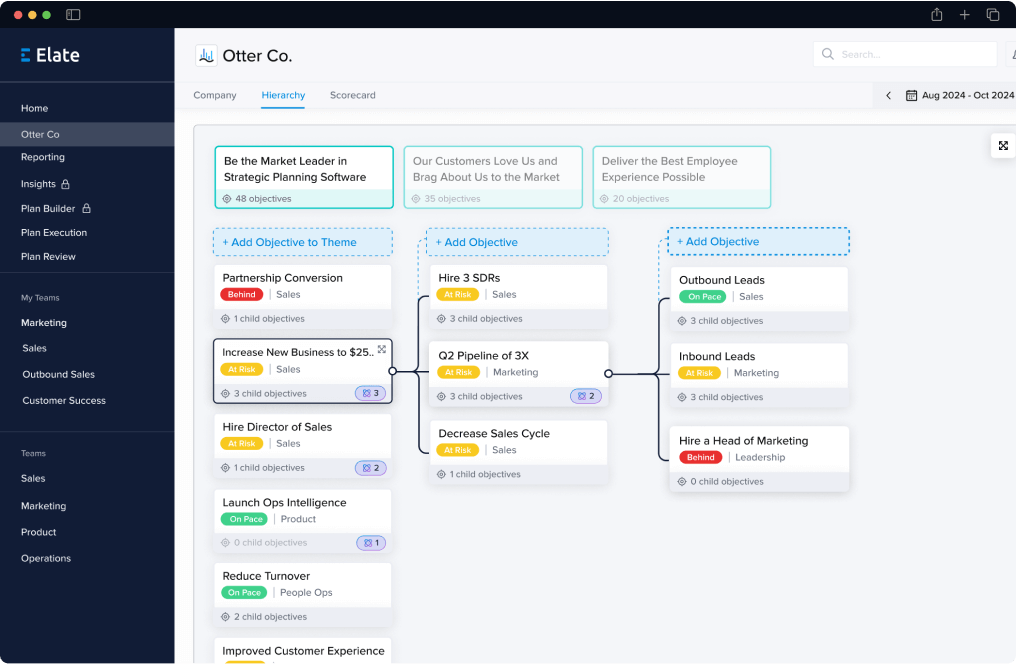
Where Elate fits: Elate helps nonprofits turn board-approved strategy into priorities, owners, outcomes, updates, risks, and reports. Instead of leaving the plan in a document after approval, Elate gives teams a living system for execution, accountability, and board-ready progress reporting.
Use this page if: your nonprofit has a strategic plan that was approved by the board, communicated once, and then slowly became disconnected from program work, leadership meetings, and reporting.
Who this is for: nonprofit executive directors, COOs, Chiefs of Staff, strategy leaders, board liaisons, program leaders, and operations teams responsible for making the plan real after approval.
Best next step: Pair this page with Nonprofit Strategic Plan Implementation, the Nonprofit Operating Rhythm guide, and Nonprofit Strategic Planning Software.
The real failure point is the handoff
Board approval is not the finish line. It is the start of the execution handoff. Many nonprofit plans are well-written, mission-aligned, and board-approved, but still fail because the organization does not create the operating rhythm required to use the plan.
The plan becomes a reference document instead of a management system. Leaders may agree with the priorities, but teams do not know what to update, what to stop, what to measure, or how progress will be reviewed.
Seven reasons nonprofit strategic plans fail after board approval
1. No clear owner for each priority
If every priority is owned by the organization, no priority is truly owned. Each strategic priority needs an accountable executive owner, supporting teams, and a clear update expectation.
2. The plan is not translated into operating work
Board-approved strategy often stays at the level of goals, themes, and aspirations. Teams need the next layer: objectives, initiatives, milestones, measures, dependencies, and decisions needed.
3. The review cadence is missing
A plan cannot stay current if nobody reviews it. Nonprofits need a rhythm that connects program updates, leadership review, board reporting, and annual planning.
4. Metrics are disconnected from ownership
Many nonprofits have outcomes and dashboards, but metrics alone do not explain execution. Every key metric needs a responsible owner and a narrative explaining what changed, why it changed, and what action follows.
5. Reporting becomes a scramble
If the board update requires weeks of chasing, copying, and rewriting, the strategic plan is not operating. It is being reconstructed for the board packet.
6. Teams experience the plan as extra work
Nonprofit teams are already capacity constrained. If strategic plan updates feel like another administrative burden, adoption will drop. The process has to replace existing status chasing, not add more work.
7. The plan is not used in leadership decisions
Teams will stop updating a plan that leadership does not use. The plan becomes active when leaders use it to decide what needs support, what is at risk, what should pause, and what should carry forward.
What should happen in the first 90 days after board approval
Days 1 to 30: translate the plan
- Confirm the strategic priorities and definitions.
- Assign owners for each priority, objective, or initiative.
- Identify the first set of measures and evidence sources.
- Define status language and update expectations.
- Decide which leadership meeting will review progress.
Days 31 to 60: run the first update cycle
- Collect short updates from owners.
- Review what is on track, at risk, or blocked.
- Pair metrics with narrative context.
- Use the update in a leadership meeting.
- Capture follow-ups and decisions.
Days 61 to 90: turn the process into a rhythm
- Standardize the board or leadership progress view.
- Set the next update deadline.
- Identify stale or ownerless work.
- Adjust the plan based on what leadership actually needs to review.
- Expand to additional programs or departments only after the first rhythm works.
Board approval should trigger an operating model
A board-approved plan should answer five operating questions:
- Who owns each priority?
- What work is required to make progress?
- What evidence will show progress?
- When will leadership review progress?
- What will the board see each quarter or year?
If those questions are not answered, the plan may be approved but still not executable.
What most nonprofits get wrong
Most nonprofits try to improve execution by communicating the plan more often. Communication matters, but it does not replace ownership and cadence. A plan becomes usable when people know what they own, what they need to update, and where leadership will use that update.
The plan should not live only in a PDF, spreadsheet, or board packet. It should become the structure for leadership meetings, program alignment, board reporting, and funder-ready evidence.
How Elate helps nonprofits keep the plan alive after approval
Elate helps nonprofits move from board approval to execution by structuring the plan into priorities, outcomes, initiatives, owners, measures, and updates. Teams can collect status updates, surface risks, connect metrics to work, and generate leadership or board-ready reporting from the same system.
This matters because the failure mode is not a lack of planning. It is the lack of a repeatable execution layer after planning. Elate gives nonprofits that layer without forcing the organization to replace every tool it already uses.
Related resources
- Nonprofit Strategic Plan Implementation
- Nonprofit Operating Rhythm
- Nonprofit Operating Plan Template
- Nonprofit Board Report Template
- Elate for Nonprofits
FAQ
Why do nonprofit strategic plans fail after board approval?
They fail because the approved plan is not translated into ownership, operating work, cadence, metrics, leadership review, and board reporting.
What should nonprofits do immediately after board approval?
They should assign owners, translate priorities into initiatives and outcomes, define update cadence, identify the first metrics, and schedule the first leadership review.
How often should the board revisit the plan after approval?
Most nonprofit boards should review strategic plan progress at least quarterly, with an annual deeper review tied to planning and budgeting. Management teams usually need a monthly or biweekly review rhythm.
How does Elate help after board approval?
Elate helps nonprofits turn the approved plan into a living operating system with priorities, owners, updates, outcomes, risks, and board-ready reports.