Key Performance Indicator (KPI) vs. Key Result (KR)
KPIs and key results are often used together, but they do different jobs. A KPI shows the ongoing health of a business or function. A key result measures progress against a specific objective within a defined time period.
That difference matters in strategy execution. Leadership teams need KPIs to understand performance trends, key results to clarify what must change, and a review rhythm that connects both to owners, risks, and decisions.
In this guide, we will define KPIs and key results, show examples of each, and explain how to use them in executive scorecards, strategic plans, and strategy execution reporting.
Key Performance Indicator (KPI)
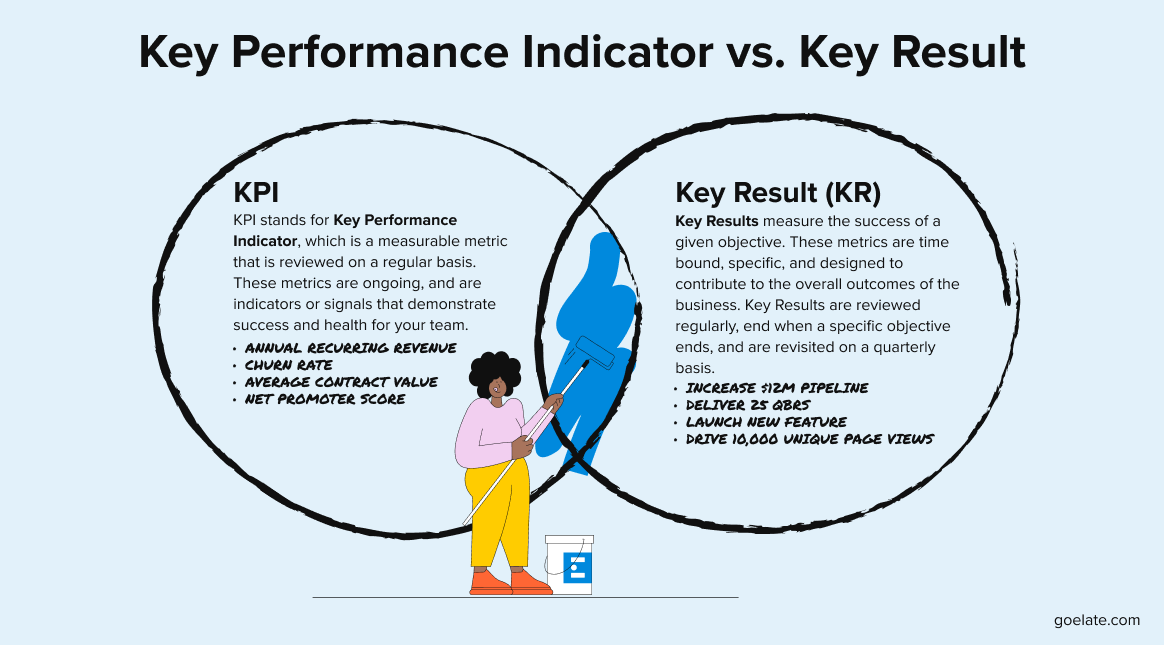
KPI stands for Key Performance Indicator, which is a measurable metric that is reviewed on a regular basis. These metrics are ongoing, and are indicators or signals that demonstrate success and health for your team.
Some example KPIs include:
- Annual Recurring Revenue
- Churn Rate
- Average Contract Value
- Net Promoter Score
Key Result (KR)
Key Results measure the success of a given objective. These metrics are time bound, specific, and designed to contribute to the overall outcomes of the business. Key Results are reviewed regularly, end when a specific objective ends, and are revisited on a quarterly basis.
Some example Key Results (KRs) include:
- Increase $12M Pipeline
- Deliver 25 QBRs
- Launch new feature
- Drive 10,000 unique page views
When To Use KPIs and Key Results
KPIs often measure the success of company-level objectives, while Key Results contribute to the larger KPIs, and are measured at a team level.
How KPIs and Key Results Fit Into Strategy Execution
KPIs and key results become more useful when they are connected to the priorities, owners, and decisions leadership reviews on a regular cadence. A KPI might show whether customer retention is healthy. A key result might show whether a specific retention initiative is on track this quarter. Together, they give leaders both the outcome and the work behind it.
That is where Elate fits. Elate helps leadership teams connect strategic priorities, owners, updates, KPIs, risks, and executive-ready reporting so leaders can see what is moving, what is stuck, and what needs attention without rebuilding manual reporting every cycle.
For related guidance, read our pages on KPIs vs metrics, company scorecards, and KPI dashboard software.
Request a demo to see how Elate supports KPI plus narrative reporting for executive operating reviews.