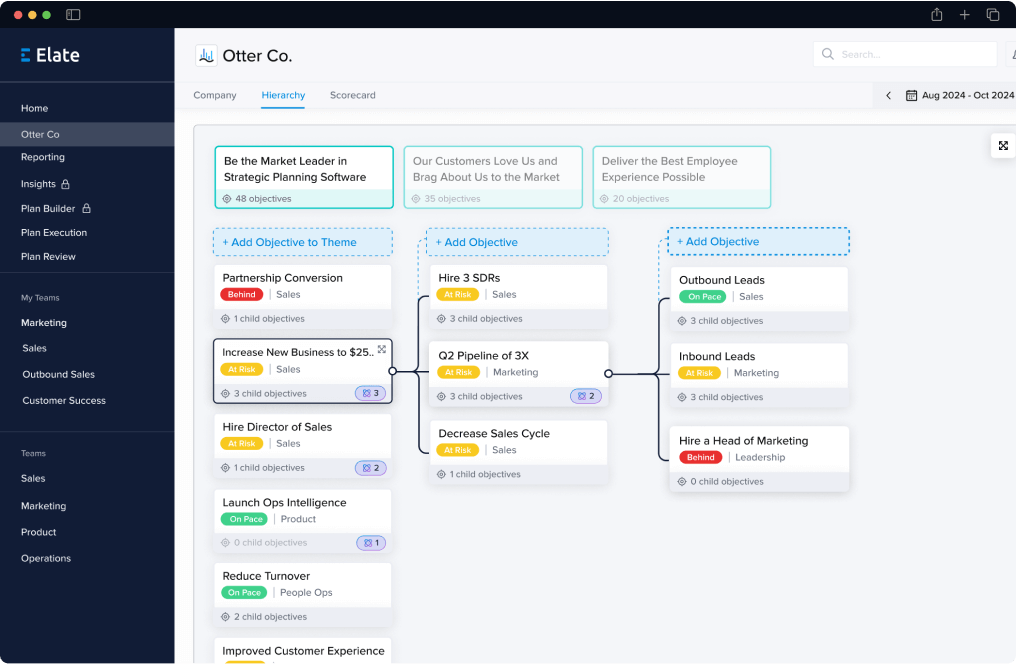











Quick answer: Construct a successful strategic plan by defining the few outcomes that matter, choosing the bets, translating them into owned initiatives, and committing to a monthly review and quarterly reset cadence.
Operator note: A strategic plan is not the deck. It is the set of choices your leaders will defend, the outcomes you will measure, and the cadence you will use to keep it alive.
You know it's working when:
- Every priority has an owner and a measurable definition of success.
- Leaders can point to what is in, what is out, and why.
- The plan shows up in weekly updates and quarterly reviews without reinventing the narrative.
In this guide:
- Before you start: what a “successful” plan produces
- Step-by-step: build the plan
- How to make sure the plan gets executed
- Common planning mistakes
- Copy/paste template
- FAQs
Before you start: what a “successful” plan produces
- Clear Themes and priorities
- Measurable objectives and success measures
- Initiatives with owners, milestones, and dependencies
- A review cadence leaders actually run
If you are planning an offsite, start with annual planning offsite.
Step-by-step: build the plan
- Clarify the context. What changed in the market, the customer, and the business model?
- Choose 3 to 5 Themes. The few bets that will matter most this cycle.
- Write objectives as outcomes. Describe what will be true when you succeed.
- Define measures. Pick KPIs and proof points leaders will review.
- Translate to initiatives. Assign owners, milestones, dependencies, and risks.
- Define the operating cadence. Put monthly reviews and quarterly resets on the calendar. Use the Operating Rhythm Planning Guide.
How to make sure the plan gets executed
The plan becomes real when leaders use it in decisions. Make reviews decision-focused and publish the tradeoffs.
For software considerations that help reduce drift and reporting churn, see software for strategic planning and strategy execution platform.
Common planning mistakes
- Too many priorities. Focus disappears.
- Unmeasurable objectives. Teams can only report activity.
- No quarterly reset. Priorities drift but are never corrected.
Checklist: strategic plan deliverables
- Themes and priorities (3 to 5)
- Objectives with measures and owners
- Initiatives with milestones and dependencies
- A company scorecard (see company KPI scorecard)
- Monthly review and quarterly reset cadence
Copy/paste template: strategic plan one-page summary
Example scenario: Right after the offsite, you turn decisions into a one‑page plan that leaders can reference in under two minutes. During weekly updates, teams tie progress and risks back to the themes and outcomes so the plan stays alive past kickoff.
This is the version of the plan leaders should be able to read in two minutes. Use it as the spine for your operating cadence.
Strategic choices: [what we will do, what we will not do]
Themes (3–5): [big bets for the period]
Outcomes: [the measurable results the Themes should produce]
Key initiatives: [the few initiatives that move the outcomes]
Scorecard KPIs: [the metrics leadership will review]
Operating cadence: weekly, monthly, quarterly reviews
FAQs
How long should a strategic plan take to build?
It depends on complexity, but the real work is not writing. It is making choices and tradeoffs. A focused cycle can be completed quickly if inputs are prepared.
Who should be in the room?
Core executives and the operators who will own major initiatives. If owners are not involved, the plan tends to become theoretical.
What is the best way to communicate the plan?
A simple, repeatable structure that teams can find and reference. Publish what changed, what stopped, and what the next review cadence is.
Want to make this easier to run every week? See a short Elate walkthrough, then decide if a live demo is worth your time.