










Why strategic planning matters after the plan is approved
Strategic planning matters because it gives leaders a shared way to decide what matters, where resources should go, and how progress will be reviewed. A plan can clarify direction, align teams, and help executives make tradeoffs. But those benefits only show up when the plan becomes part of the operating rhythm, not when it lives as a kickoff deck or annual document.
That is the practical gap many leadership teams run into. They finish the planning process, communicate priorities, and assume execution will follow. A few weeks later, updates are scattered across meetings, spreadsheets, dashboards, and side conversations. Leaders still care about the strategy, but they lack a consistent way to see what is moving, what is stuck, who owns the next step, and where a decision is needed.
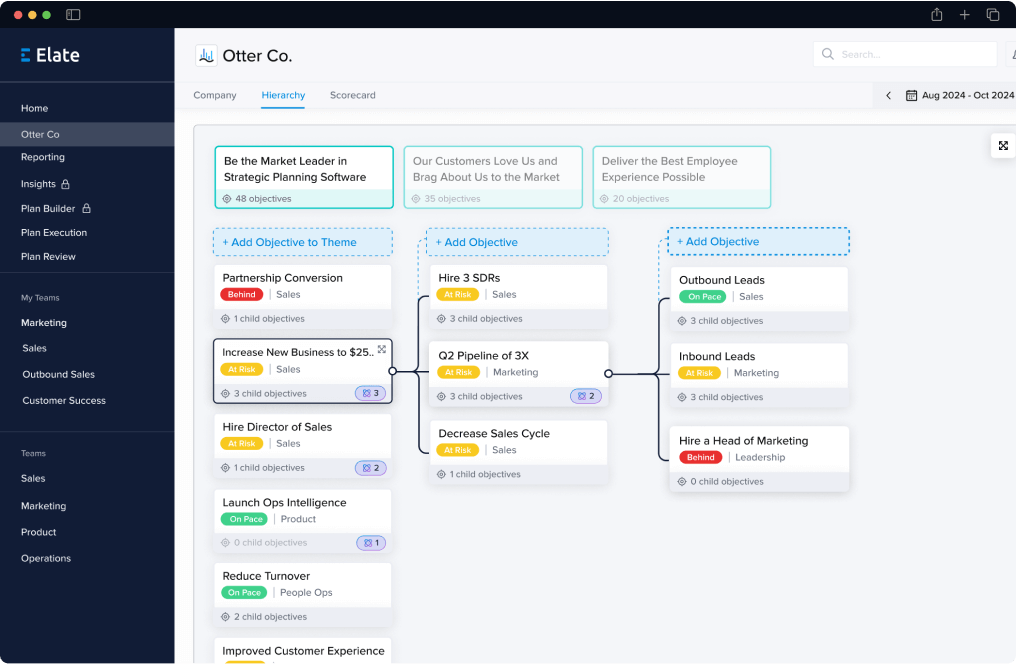
Elate helps teams close that gap by connecting strategic priorities to owners, updates, KPI context, risks, blockers, and executive-ready reporting. The goal is not to replace the planning process. The goal is to make the benefits of planning visible in the day-to-day cadence where decisions actually happen.
What is strategic planning?
Strategic planning is the process of defining where an organization is going, what outcomes matter most, and what actions will move the business toward those outcomes. A useful plan usually answers four questions:
- What are the most important priorities for this planning period?
- What outcomes or measures will tell us whether we are making progress?
- Who owns each priority, objective, or initiative?
- How will leadership review progress, risks, blockers, and decisions?
The first three questions are common in most planning processes. The fourth question is where many plans break down. Without a review cadence, owners may provide updates inconsistently, leaders may focus on the loudest issue instead of the highest-priority risk, and the organization may lose the thread between planning intent and execution reality.
The importance of strategic planning
Strategic planning is important because it creates focus. It helps leaders decide what to do, what not to do, and how to explain those choices across the organization. That focus is especially useful when teams are juggling too many initiatives, responding to market pressure, preparing for a board meeting, or entering a new planning cycle.
A strong plan also creates a shared language. Instead of every team describing progress differently, the organization can align around priorities, outcomes, owners, and status. That consistency makes it easier for executives to review progress without rebuilding the story from scratch before every leadership meeting.
Strategic planning also makes tradeoffs more explicit. When leaders can see which initiatives support which priorities, they are better equipped to decide where to invest, what to pause, and which risks need attention. A plan should not make every idea equal. It should help the organization protect the work that matters most.
The practical benefits of strategic planning
When strategic planning is connected to execution, the benefits are practical and operational. Leaders get clearer alignment. Teams understand what they own. Updates become easier to compare. Reporting becomes less manual. Meetings shift from status recaps to decisions, support, and follow-up.
The most useful benefits usually include:
- Clearer direction: Leadership can point the organization toward a smaller set of priorities instead of a loose collection of initiatives.
- Better ownership: Each priority has a person or team responsible for keeping progress current.
- More consistent reporting: Updates follow a shared structure, so executives do not have to translate every team’s format.
- Earlier risk visibility: At-risk work can be surfaced before it becomes a surprise in a board, executive, or operating review.
- Stronger follow-through: Decisions, blockers, and next steps can be carried forward into the next review cycle.
Those benefits are difficult to sustain through a static plan alone. They require a system of ownership and cadence. Teams often start by looking for a way to choose strategic planning software that supports execution, but the bigger question is whether the software helps leaders keep the plan alive after launch.
Why plans lose momentum
Most strategic plans do not lose momentum because the original strategy was irrelevant. They lose momentum because the operating system around the plan is too manual. Updates are gathered through email. Metrics live in dashboards that do not explain ownership or risk. Meeting decks are rebuilt by hand. Teams use different definitions of green, yellow, red, complete, delayed, or at risk.
That creates avoidable friction. Owners spend time explaining status instead of solving blockers. Strategy leaders chase updates instead of preparing executives for decisions. Leaders consume stale information because the pre-read was assembled too late. Over time, the plan becomes a document people reference occasionally, not a management rhythm people use consistently.
How to make strategic planning benefits show up in execution
To make the benefits of strategic planning real, leadership teams need to define how the plan will be reviewed. That does not mean every person needs to live in a new tool. It means the organization needs a repeatable rhythm for owner updates, KPI context, risks, blockers, and executive reporting.
A practical plan-to-execution rhythm should include:
- Named owners for priorities, objectives, and major initiatives.
- A consistent update cadence tied to leadership meetings.
- Clear status definitions that reduce interpretation and debate.
- A short pre-read that shows what changed, what is at risk, and where leadership needs to act.
- A way to connect KPI plus narrative, so the number and the operating story are reviewed together.
- A follow-up loop so decisions and blockers do not disappear after the meeting.
This is where teams often need to connect strategic planning and execution in one operating rhythm. The plan creates direction, but the rhythm creates accountability.
Where Elate fits
Elate is designed for leadership teams that want strategic plans to become reviewable, owned, and reportable. It helps connect priorities to owners, updates, scorecards, risks, blockers, and executive-ready reporting while working alongside the tools teams already use for tasks, data, and collaboration.
Elate is a strong fit when your organization has a real strategy, a recurring leadership cadence, and a need to reduce manual reporting burden. It is not the right fit if the problem is only task management, a BI dashboard buildout, or a one-time planning document with no review rhythm.
For teams that are ready to move beyond planning artifacts, the next step is to build a repeatable strategy execution rhythm that keeps priorities visible, owned, and useful in executive review.