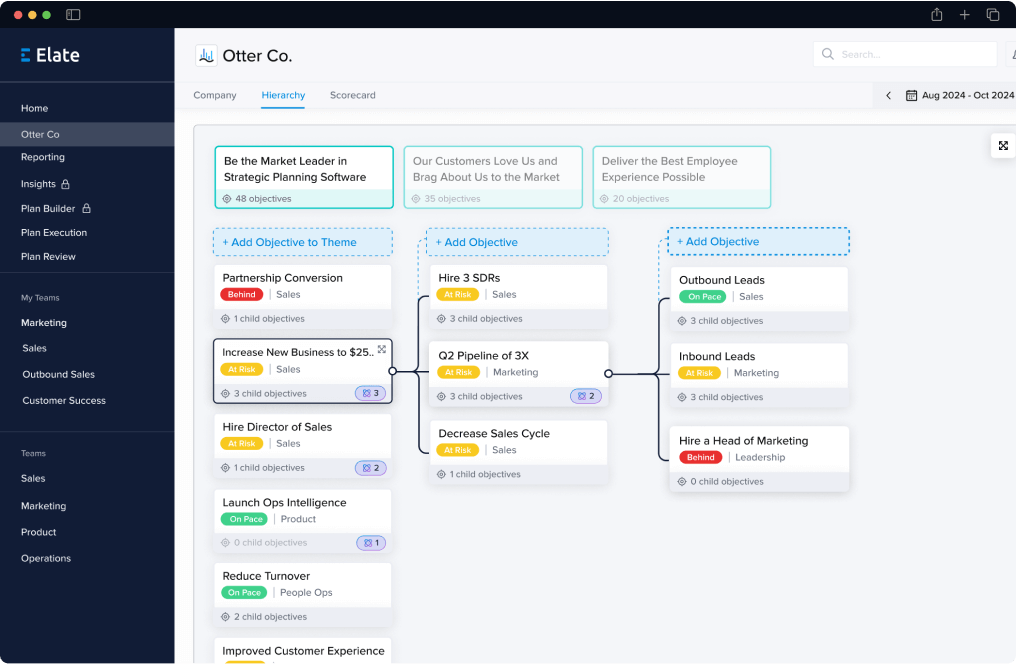











Operations dashboard software should help leaders review what is happening across the business and decide what needs attention. A useful dashboard does not stop at charts. It connects operating priorities, metrics, owners, risks, updates, and follow-up actions.
Elate fits when the team already has dashboards but still rebuilds the operating update manually. BI and operational systems can show the numbers. Elate helps connect those numbers to the priority, owner, risk, and decision needed so the leadership review becomes more actionable.
The dashboard problem most teams hit
Operations leaders usually have access to more data than they can use in a meeting. The hard part is deciding which metrics matter, who owns the response, what changed since the last review, and what leadership needs to decide.
- Dashboards show performance, but not always ownership.
- Project tools show activity, but not always strategic importance.
- Spreadsheets capture updates, but formats vary by team.
- Slide decks summarize progress, but quickly become stale.
- Risks and blockers are often discussed outside the system.
What an operations dashboard should include
- Operating priorities and annual initiatives.
- Selected KPIs that leadership actually reviews.
- Owner updates for each major priority.
- Risk and blocker visibility.
- Narrative context explaining why performance changed.
- Leadership asks, decisions needed, and follow-up actions.
- A review cadence that keeps the dashboard current.
A practical operating review agenda
- Start with priorities that are off track, blocked, or materially changed.
- Review the owner update and the metric together.
- Ask what changed, why it changed, and what decision or support is needed.
- Capture follow-up actions and owners before moving to the next priority.
- End by confirming which updates need to change before the next review.
Example leadership view
- Top operating priorities for the current quarter.
- Three to five metrics for each priority.
- Current owner update and last update date.
- Risk level and blocker notes.
- Decision or support needed from leadership.
- Follow-up items from the previous operating review.
This turns the dashboard from a static display into a review tool. The numbers still matter, but they are placed beside ownership, context, and action.
Best fit and not best fit
Best fit: Elate is a strong fit for operations teams that need to connect dashboards to strategy, owners, risks, updates, and executive reporting.
Not the best fit: Elate is not a replacement for BI, ERP, warehouse management, finance, or operational systems. It works best as the operating review layer above those systems.
Why teams use Elate
Teams use Elate when the dashboard is useful but the review still depends on manual interpretation. Elate helps leaders move from data visibility to action visibility by connecting each priority to ownership, risk, context, and follow-up.
Related resources
- Strategy execution software
- Strategic planning and execution software
- Strategy execution reporting
- Elate platform
- AI Strategy Advisor
- Product demo
- Business performance management software
- COO dashboard for strategic initiatives and risk
FAQ
What should operations dashboard software show?
It should show the few measures and priorities leadership uses to make decisions, plus owners, risk, narrative context, and follow-up actions.
How does Elate support operations dashboards?
Elate connects dashboard metrics to strategic priorities, owner updates, risks, and executive-ready reports so operating reviews focus on action.
Is Elate an operations analytics tool?
No. Elate is not a BI or operations analytics replacement. It helps leadership teams turn operating context into a repeatable review and reporting rhythm.