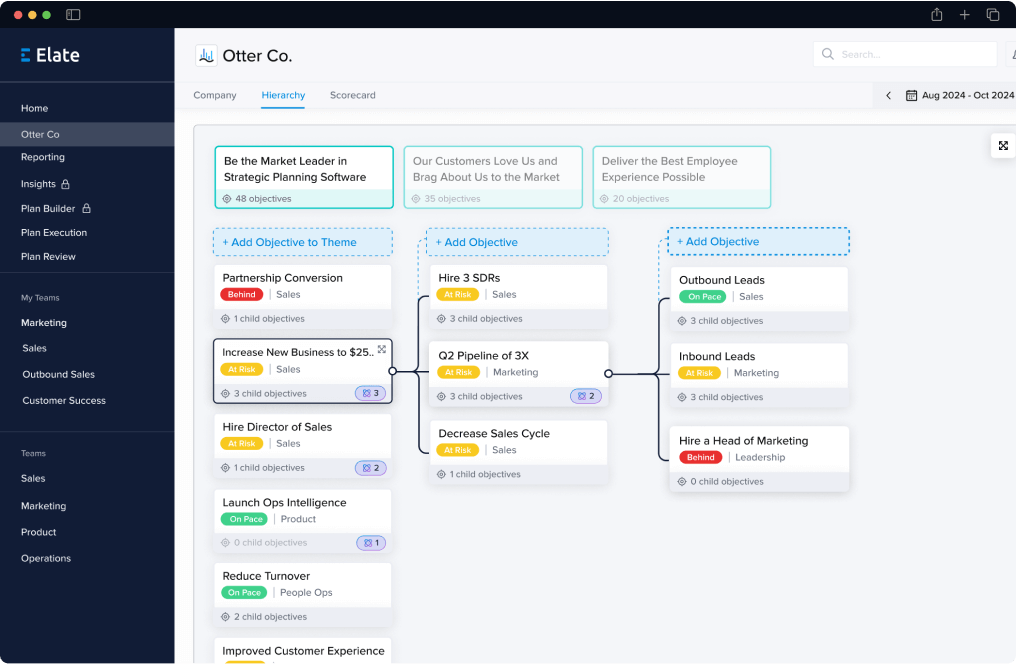











Quick answer: Make the case for strategic planning software when manual decks and spreadsheets create version drift, slow executive reporting, and unclear ownership across cross-functional priorities.
Operator note: A business case lands when it names the current cost of drift: time spent chasing updates, duplicated decks, and slow decisions. Tie the ROI to cadence, not just features.
You know it's working when:
- You can quantify time spent on manual updates and reporting today.
- Leaders agree on what improves: decision speed, focus, and fewer priority reversals.
- There is a clear rollout plan with owners, training, and a review cadence.
In this guide:
- The hidden costs of “manual strategy management”
- What to measure to quantify ROI
- What a connected system changes
- Decision checklist: are you ready for software?
- Software vs other tools
- Copy/paste template
- FAQs
The hidden costs of “manual strategy management”
Most organizations can build a plan. The costs show up later, when leaders need to review progress and teams need clarity.
- Reporting churn. Teams spend hours rebuilding updates and reconciling definitions.
- Version drift. Different leaders cite different priorities and metrics.
- Late risk detection. Dependencies surface when it is already expensive to fix.
- Meeting waste. Leadership time goes to roll-call updates instead of decisions.
If the core planning system is unclear, start with strategic planning, explained before you buy anything.
What to measure to quantify ROI
You do not need a perfect ROI model. You need an honest one. Start with time and decision quality.
- Hours per month spent creating decks, consolidating spreadsheets, and chasing updates
- Leadership meeting time spent on reporting versus decisions
- Cycle time from “risk identified” to “decision made”
- Rework rate due to unclear priorities or shifting definitions
What a connected system changes
Strategic planning software is easier to justify when the business case is tied to the work leaders already feel: chasing updates, rebuilding decks, reconciling metrics, and trying to understand what changed before the next review.
- Clear ownership. Priorities, initiatives, and outcomes have named owners, so progress is not buried in separate spreadsheets or status meetings.
- More useful updates. Owners provide structured updates once, and leaders can review progress, blockers, and risks in a consistent format.
- KPI plus narrative. Metrics are easier to trust when they are paired with owner context, status, risk, and the next decision or follow-up.
- Cleaner executive reporting. The same update rhythm can support leadership reviews, board updates, and operating reviews without rebuilding the story from scratch each cycle.
That is the practical business case. Spreadsheets and decks can still help teams draft plans. Project tools can still manage tasks. BI tools can still analyze data. The case for planning software gets stronger when leadership needs a repeatable way to connect priorities, owners, updates, selected KPIs, risks, and follow-up.
If reporting churn is the main pain, evaluate strategy execution reporting. If the gap is between annual planning and day-to-day execution, compare the broader strategic planning and execution software need. If leaders need a clearer KPI view with ownership and narrative, use a company scorecard as part of the evaluation.
Decision checklist: are you ready for software?
- You run monthly or quarterly reviews and need consistent reporting
- You have cross-functional initiatives with dependencies
- Ownership is unclear or updates are inconsistent
- Teams spend significant time on reporting work
Next steps
Use the strategic planning software guide to compare category fit. If execution consistency is the core issue, start with the strategy execution software guide and evaluate whether the platform can support ownership, cadence, reporting, and executive review.
Strategic planning software vs “what you already have”
- Spreadsheets and decks: fine for drafting, but painful for ongoing updates and governance. They create work every review cycle.
- Project management tools: help teams execute tasks, but they rarely provide leadership-level visibility into outcomes, tradeoffs, and decisions.
- BI dashboards: show metrics, not the strategy-to-execution thread. Leaders still ask “what are we doing about it?”
- Planning software: should reduce manual reporting by tying initiatives and metrics to the plan and your operating cadence.
Copy/paste template: business case one-pager
Example scenario: Your plan looks great in January, then fades into a folder while teams run on tribal knowledge. A system that supports frequent updates, structured reviews, and quarterly transitions keeps strategy visible when priorities shift.
Keep the business case concrete. Most buyers over-index on features and under-index on time saved and decision quality.
Current state: where the plan lives, how updates happen, how often leaders re-litigate decisions
Costs today: hours per cycle, duplicate reporting, stale decks, missed dependencies
Risks today: unclear ownership, delayed escalation, priority churn
Future state: single system for priorities, updates, and reviews
Expected impact: time saved per month and fewer “surprise” risks
Rollout plan: pilot scope, cadence, and adoption expectations
FAQs
Is strategic planning software worth it for smaller teams?
It depends on complexity. If you have a few priorities and tight alignment, templates may be enough. If you have cross-functional initiatives and recurring executive reporting needs, software can pay off quickly.
What should we pilot first?
A single portfolio of top initiatives or a single leadership cadence (monthly review or quarterly reset). Prove reporting and decision capture first.
How do we keep this from becoming another tool no one uses?
Keep updates lightweight, define standards, and make leadership reviews rely on the system. If leaders do not use it, no one will.
Want to see this as a system, not a deck? Elate helps strategy, operations, and chief of staff leaders keep priorities, initiatives, and exec updates connected so meetings drive decisions.