










Quick answer: Colleges and universities should launch fall strategy execution by confirming owners, resetting status definitions, scheduling update cycles, preparing the first cabinet pre-read, and reviewing at-risk priorities before the semester consumes leadership attention.
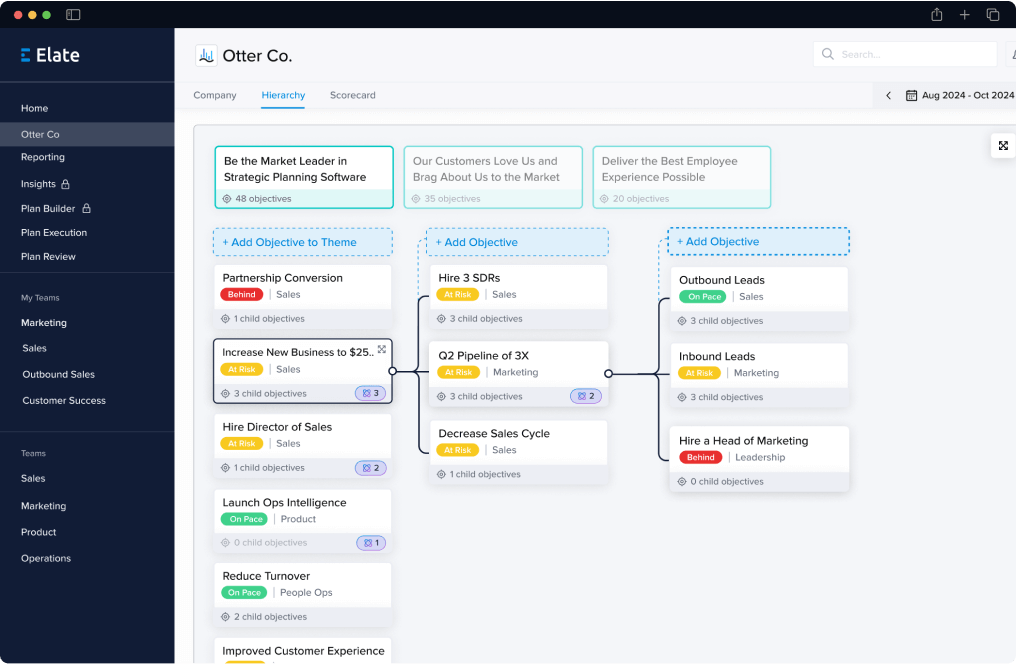
Where Elate fits: Elate helps higher education teams turn the fall launch from a kickoff meeting into an operating rhythm. Teams can connect priorities, owners, initiatives, KPIs, risks, updates, and pre-reads so cabinet and strategy leaders can review progress on cadence rather than rebuilding status reports manually.
Use this page if: your institution finished summer planning but still needs to turn priorities into owner updates, leadership reviews, dashboards, and follow-up discipline for the fall term.
Who this is for: strategy and planning leaders, Chiefs of Staff, institutional effectiveness teams, cabinet operations, provost office leaders, and anyone responsible for keeping strategic priorities active after the academic year begins.
Higher education operating reality: Fall launch is where strategic plans either become habits or drift back into ad hoc updates. The key is to connect owners, status definitions, cabinet review dates, KPI context, and follow-up before the semester pulls leadership attention elsewhere.
Why fall launch matters
Many higher education strategic plans lose momentum between summer planning and fall execution. The plan may be refreshed, but owners are not clear. The dashboard may exist, but no one knows which metrics matter for the first review. Cabinet may expect progress visibility, but the first pre-read gets rebuilt from spreadsheets and notes.
Fall launch is the moment to turn planning decisions into a rhythm. If the institution does not establish ownership, cadence, and review behavior early, updates decay and strategy becomes a document again.
Fall strategy execution launch checklist
1. Confirm the active priorities
- Identify which strategic priorities are active for the fall term.
- Separate continuing work from closed, paused, or reset initiatives.
- Make sure priorities still reflect the institution's cabinet, board, and academic-year focus.
2. Assign accountable owners
- Confirm one accountable owner for each priority, initiative, or outcome.
- Identify supporting teams, contributors, and reviewers.
- Remove or reset work that does not have ownership.
3. Define update cadence and status meanings
- Decide whether updates happen monthly, quarterly, or ahead of specific cabinet and trustee meetings.
- Define what on track, at risk, off track, and complete mean.
- Make status evidence-based so teams do not debate colors during leadership review.
4. Prepare the first cabinet pre-read
- Start with at-risk items and decisions needed.
- Include owner, status, update, KPI snapshot, risk, and next step.
- Keep the format consistent so leaders can scan it quickly.
- Separate internal detail from board-safe summary language.
5. Connect KPIs with narrative
- Choose a small set of metrics that leadership actually reviews.
- Explain why the metric changed, not just what the number is.
- Attach each metric to a priority and an owner.
- Keep BI and institutional systems as the source for data while using the strategic plan system to explain context and action.
6. Schedule the review and follow-up loop
- Put the first leadership review on the calendar.
- Start the meeting with blocked or at-risk priorities.
- Capture follow-ups, decisions, and owners.
- Roll those follow-ups into the next update cycle.
First 30 days of fall strategy execution
The first month should prove the rhythm works. A simple 30-day launch plan looks like this:
- Week 1: confirm priorities, owners, and status meanings.
- Week 2: collect first owner updates and KPI snapshots.
- Week 3: prepare the first cabinet or leadership pre-read.
- Week 4: run the review, capture follow-ups, and schedule the next cycle.
The goal is not perfection. The goal is a trusted loop where owners update, leaders review, and follow-ups carry forward.
What most institutions get wrong
The most common mistake is treating fall launch as a communication exercise. Sending the refreshed plan to campus is not the same as launching execution. A useful fall launch needs a review cadence, clear owners, a standard update format, and a leadership output that people actually use.
How Elate helps colleges and universities launch fall execution
Elate helps institutions move from plan refresh to execution cadence. Teams can assign owners, request updates, track freshness, connect selected KPIs, surface at-risk work, and prepare cabinet or trustee-ready pre-reads from the same operating view.
For higher education teams, that means strategy does not depend on one person rebuilding the update before every meeting. The review rhythm is built into how the plan is managed.
Related resources
- Summer Strategic Planning Checklist for Higher Education
- Fall Strategy Execution Launch Checklist for Colleges and Universities
- Cabinet Strategic Plan Update Template for Higher Education
- Community College Strategic Plan Progress Report Template
- Higher Education Strategy Execution Software
- Higher Ed Strategy Execution Playbook
- Higher Education Operating Guide
- Annual Strategic Plan Review Software for Higher Education
- Strategic Plan Roll-Forward Checklist for Higher Education
- Annual Strategic Plan Progress Report Template for University Trustees
- Higher Education Strategic Plan Reporting Software
- Institutional Effectiveness Strategic Plan Progress Software
- Higher Education Strategic Plan Dashboard
- Elate Platform
- Request a Product Demo
FAQ
How should colleges launch strategy execution in the fall?
They should confirm active priorities, assign owners, define cadence, collect first updates, prepare a leadership pre-read, and use the first review to focus on risks and decisions.
What should a fall strategic plan review include?
It should include priority status, accountable owner, recent update, KPI snapshot, risk or blocker, decision needed, and next step.
How does Elate help with fall strategy execution?
Elate helps higher education teams manage owner updates, cadence, KPIs, risks, and leadership-ready reporting in one operating rhythm.
Is fall launch different from annual planning?
Yes. Annual planning decides what should matter. Fall launch turns those decisions into ownership, updates, reporting, and review behavior.