










Quick answer: Higher education teams should use the summer planning window to close the current strategic plan cycle, preserve evidence, refresh owners and KPIs, prepare cabinet and trustee updates, and set the fall operating rhythm before the academic year gets busy.
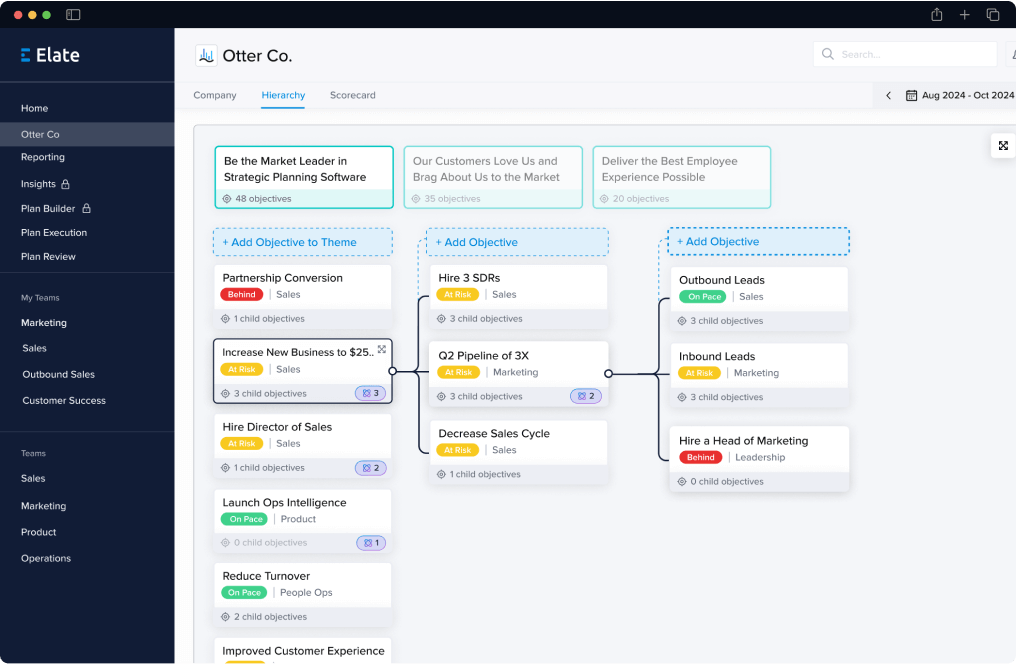
Where Elate fits: Elate helps colleges and universities turn summer planning from a one-time reporting project into a repeatable strategy execution rhythm. Teams can connect strategic priorities, owners, KPI snapshots, evidence, risks, updates, and leadership-ready reports in one place while keeping existing systems like Excel, Teams, Power BI, Tableau, SIS, and institutional effectiveness tools in place.
Use this page if: your institution is heading into summer review, fiscal-year closeout, annual progress reporting, cabinet planning, trustee updates, or fall execution planning.
Who this is for: Chiefs of Staff, strategy leaders, institutional effectiveness teams, cabinet operations, provost office teams, president office teams, and planning leaders responsible for turning strategic plans into progress that leadership can review.
Higher education operating reality: Summer is the handoff window between evidence collection, fiscal-year closeout, trustee or cabinet reporting, and fall execution. The institutions that use it well do not just recap the year. They turn annual review into a clean operating rhythm for the next academic cycle.
Why summer is the highest-leverage planning window in higher education
Summer is when many institutions have a narrow opportunity to make the strategic plan usable before fall. The academic year is either ending or resetting. Fiscal-year reporting may be closing. Cabinet and trustee updates need a clean progress story. Initiative owners may be changing. Metrics need to be frozen, refreshed, or reinterpreted. If the operating rhythm is not reset before fall, strategy work often returns to spreadsheets, slide decks, and one-off status requests.
The goal is not to rewrite the strategic plan every summer. The goal is to make the current plan reviewable, preserve what happened, and prepare the next cycle so leaders can focus on action instead of report assembly.
Summer strategic planning checklist for colleges and universities
1. Close the current cycle with evidence
- Collect final owner updates for each active priority, objective, initiative, and measure.
- Capture what changed, what was completed, what stalled, and what needs leadership attention.
- Save KPI snapshots before dashboards or reporting periods roll over.
- Document supporting evidence for trustee, cabinet, accreditation, and institutional effectiveness reporting.
2. Prepare the leadership progress story
- Summarize progress by strategic priority, not by department activity.
- Separate accomplishments from still-open risks.
- Identify decisions that cabinet, the president's team, or trustees need to make.
- Use a consistent format so leaders can compare progress across divisions.
3. Refresh owners, timelines, and status definitions
- Confirm accountable owners for every continuing initiative.
- Remove work that no longer has an owner, funding, or executive sponsor.
- Clarify what on track, at risk, off track, and complete mean before the next review cycle begins.
- Update reporting cadence by priority, cabinet meeting, trustee meeting, or academic-year milestone.
4. Decide what closes, carries forward, pauses, or resets
- Close completed initiatives and preserve final evidence.
- Carry forward work that still matters and has ownership.
- Pause work that lacks capacity, budget, or strategic relevance.
- Reset initiatives that need new measures, new owners, or a different operating approach.
5. Build the fall operating rhythm before fall starts
- Schedule the first owner update cycle.
- Build the first cabinet or leadership pre-read.
- Confirm which KPIs will be reviewed monthly, quarterly, or annually.
- Set the fall meeting agenda around at-risk items, decisions, and follow-ups instead of general status reporting.
Fiscal-year closeout belongs inside the summer planning process
Fiscal-year closeout does not need to be a separate content or reporting project. It should be a section of the summer planning workflow. Closeout is where the institution freezes evidence, confirms what happened, and decides how progress carries into the next academic or fiscal year.
A useful fiscal-year closeout should answer:
- What progress should be reported to cabinet, trustees, or institutional effectiveness?
- Which KPIs need a final snapshot before the reporting period changes?
- Which initiatives are complete, behind, stale, or still strategically important?
- Which owners need to be refreshed before the fall cadence begins?
- What risks or decisions need to be elevated before the next year starts?
Manual summer planning vs a repeatable operating rhythm
- Manual: updates are collected through email and spreadsheets. Repeatable: owners update the same operating record leadership reviews.
- Manual: KPI screenshots get copied into slides. Repeatable: selected KPIs sit next to owner narrative and status.
- Manual: annual progress reports are rebuilt from scratch. Repeatable: cabinet and trustee-ready pre-reads pull from current updates.
- Manual: fall starts with stale ownership. Repeatable: owners, cadence, and follow-ups are reset before the academic year begins.
How Elate supports summer planning for higher education
Elate gives higher education strategy teams a place to manage the work behind the summer planning window. Institutions can structure strategic priorities, assign owners, collect updates, preserve evidence, connect selected KPIs, identify risks, and turn updates into cabinet or trustee-ready reports.
Elate is not meant to replace every institutional system. BI, SIS, finance, institutional effectiveness, and departmental tools can remain systems of record. Elate creates the governance and execution layer where leadership can see what is moving, what is stuck, and what needs attention before fall.
Related resources
- Summer Strategic Planning Checklist for Higher Education
- Fall Strategy Execution Launch Checklist for Colleges and Universities
- Cabinet Strategic Plan Update Template for Higher Education
- Community College Strategic Plan Progress Report Template
- Higher Education Strategy Execution Software
- Higher Ed Strategy Execution Playbook
- Higher Education Operating Guide
- Annual Strategic Plan Review Software for Higher Education
- Strategic Plan Roll-Forward Checklist for Higher Education
- Annual Strategic Plan Progress Report Template for University Trustees
- Higher Education Strategic Plan Reporting Software
- Institutional Effectiveness Strategic Plan Progress Software
- Higher Education Strategic Plan Dashboard
- Elate Platform
- Request a Product Demo
FAQ
What should higher education teams do during summer strategic planning?
They should close out the current cycle, preserve evidence, prepare cabinet and trustee updates, refresh owners and KPIs, and launch the fall operating rhythm.
When should colleges start annual strategic plan review?
Many institutions start in late spring or early summer so progress reporting, fiscal-year closeout, trustee updates, and next-year planning can be connected before fall.
How does Elate help with summer planning in higher education?
Elate helps connect priorities, owners, updates, evidence, KPIs, risks, and leadership-ready reports so summer planning becomes a repeatable operating process instead of a manual reporting scramble.
Should fiscal-year closeout be a separate process?
Usually no. Fiscal-year closeout should be part of the summer planning workflow so the institution can preserve evidence and roll the right work forward into the next cycle.